By Tom Maguire
When people talk about transportation, we usually focus on traditional traffic engineering tools like traffic signals and bike lanes that can move people through the city. However, what happens at the curb can be just as important to the safe operation of our streets and the health of small businesses in our city.
San Francisco has long been at the forefront of managing our curbs, but we have traditionally focused on parking. Our residential permit parking program, established in the 1970s, was one of the country’s first, and in 2011 we implemented the ground-breaking demand-responsive meter pricing program, helping people find a space near their destination. Both of these programs have been adopted by other cities across the country to help manage demand for parking.
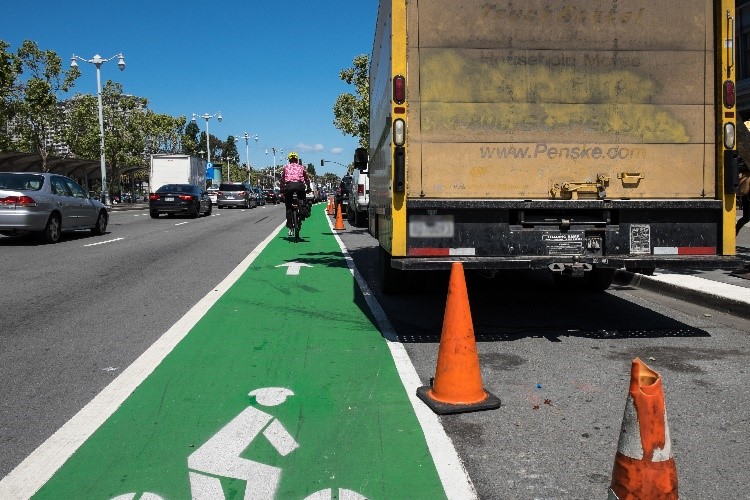
However, vehicle parking is just one use of the curb, and it’s not always the most efficient or effective at achieving our larger goals. For decades, the SFMTA Color Curb Program has worked to create loading and short-term parking zones based on constituent requests. This system has helped serve the needs of specific businesses and property owners, but it has its limits when it comes to planning proactively for the needs of a whole block or neighborhood. This has long been an issue for trucks, taxis, and even just regular drivers dropping off a family member– when there’s no room to pull over, people have to double-park.
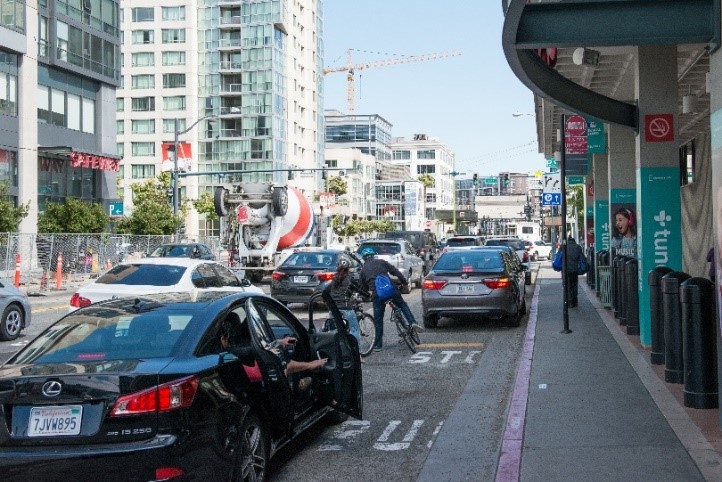
This has become especially important as our city has grown and demands on the curb have increased. The rise of transportation network companies (TNCs) like Uber and Lyft, food delivery services, and the increase of online shopping and home delivery have increased the pressure on loading and curb space.
These changes in the transportation landscape have resulted in more double parking, circling, and other behaviors counter to our goals of a safe, reliable, and well managed transportation system. The spread of bike and transit lanes across our city has made it even more important to cut down on double parking to improve safety and transit reliability.
Over the past year, the SFMTA has developed the nation’s first comprehensive, citywide Curb Management Strategy. The Strategy serves as a policy document guiding the Agency’s policies towards the curb across our divisions and recommends specific changes to state and local legislation, along with internal policies and processes. The document will complement the SFMTA’s existing outreach and approval processes to help achieve broader city goals such as safety and equity.
At the core of the Strategy is a framework to guide decisions around the curb across the city, recognizing that different neighborhoods have different needs. For example, the need for goods loading is much higher Downtown and on neighborhood commercial corridors than in residential areas. However, throughout the city, the need for safe access to the sidewalk from a bus or a train takes precedence over parking.
 Policy recommendations are organized under six key objectives, including advancing a holistic planning approach, accommodating growing loading needs, increasing compliance with parking and loading regulations, improving access to up-to-date data, rationalizing policies towards private users of curb space, and promoting equity and accessibility. The SFMTA has categorized recommendations by level of effort and impact, and staff will work in close coordination with internal and external stakeholders to prioritize these recommendations for implementation.
The humble curb has been underappreciated for years, but with the Curb Management Strategy, the SFMTA is making sure we think holistically and proactively about this important, and limited, resource. By making these strides, we can ensure the curb supports our City’s wider goals of Transit First, Vision Zero, the Climate Action Strategy, and business vitality
Published February 15, 2020 at 12:58AM
https://ift.tt/2USFKUY
Comments
Post a Comment