
Results Are In – How Should We Explore Extending The Central Subway?

Results Are In – How Should We Explore Extending The Central Subway?
By Phillip Pierce

The Central Subway is set to open in summer 2021 and will connect some of the city’s densest neighborhoods and job centers. It is expected to carry tens of thousands of riders everyday from Chinatown, through Union Square and SoMa before linking up with the current above-ground T Third line near the 4th/King Caltrain Station and on to Mission Bay, the Bayview, and Visitacion Valley.

While this new line will be vital for San Francisco’s growing population and workforce, we know that now is the time to continue planning for the future. 

In order to better understand the needs and goals of the community, we held open house meetings and developed an online survey to gauge interest and explore potential ways to extend the Central Subway. This online survey built on the prior 2015 feasibility study results and previous community meetings on the topic.

This interactive survey was given in English, Spanish and Chinese, and allowed users to drop markers in places where they thought subway stations should be analyzed. We were thrilled that the combination of interest in a new subway plus the ease of the survey technology on the web and mobile (thanks MetroQuest!) resulted in over 8,000 responses – a record for the SFMTA!

In general, the results showed that most people favored extending the subway to North Beach. It also showed clusters of interest in new connections near Fisherman’s Wharf, at the soon-to-be-complete Van Ness BRT and in the Marina neighborhood.

Results

After analyzing all 8,137 paper and online responses, which generated over 148,000 data points and 13,000 comments, we compiled the below graphics to summarize the results:

How do you currently get around San Francisco?
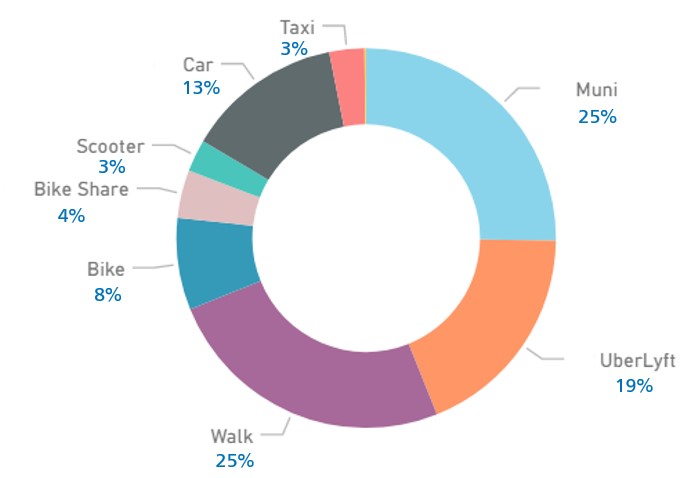
Typical travel choices of those that took the survey. Half of respondents regularly take Muni or walk. Most of those that take Muni do so 4 times per week or more.

Typical travel choices of those that took the survey. Half of respondents regularly take Muni or walk. Most of those that take Muni do so 4 times per week or more.

Which transportation goals would you like to see prioritized?
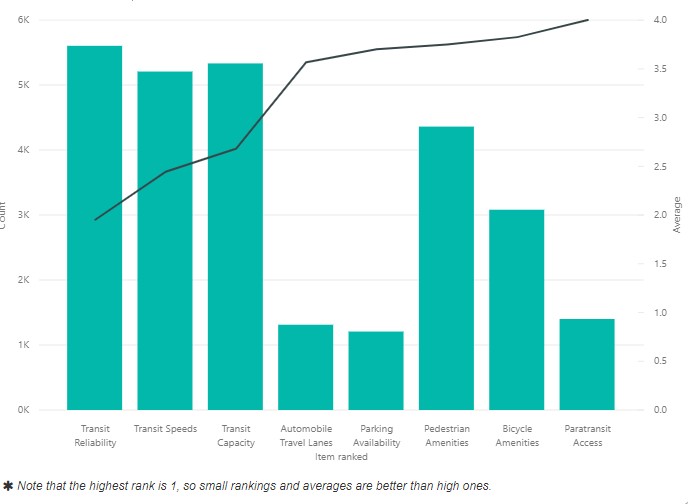
Transit related goals were ranked as the three highest.

Would an extension of the Central Subway help meet your transportation goals?
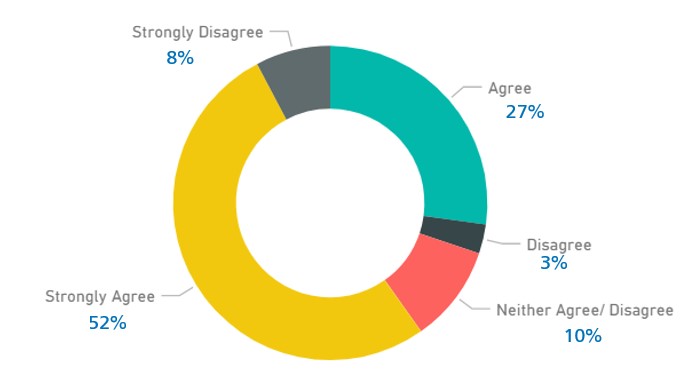
When asked if an extension of would help people meet their transportation needs, 79% either agreed or strongly agreed.

Should Central Subway be extended to North Beach using existing tunnels, with a new station near Washington Square?
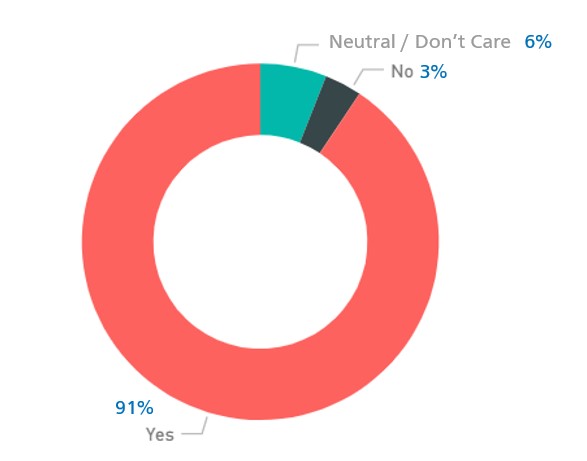
A large majority of people expressed a desire for a station in North Beach.

If the train extended from North Beach to Fisherman’s Wharf, would you prefer surface or underground?
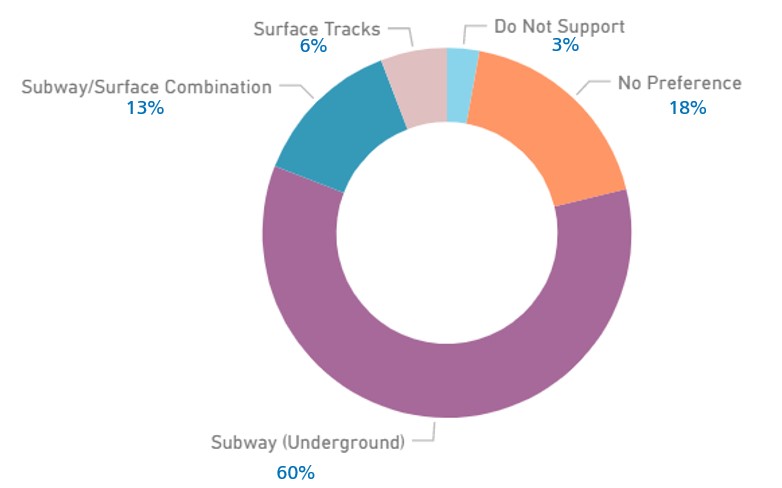
Most survey-takers indicated a preference for underground transit.

If the train extended from Fisherman’s Wharf towards Marina/Cow Hollow, would you prefer surface or underground?
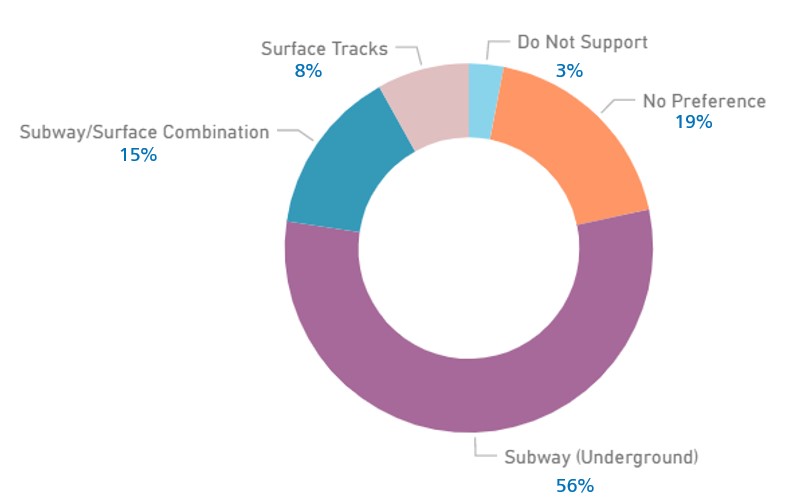
As with the previous question, most respondents preferred any extension to Marina/Cow Hollow be underground.

Where would you like to see new subway stations?
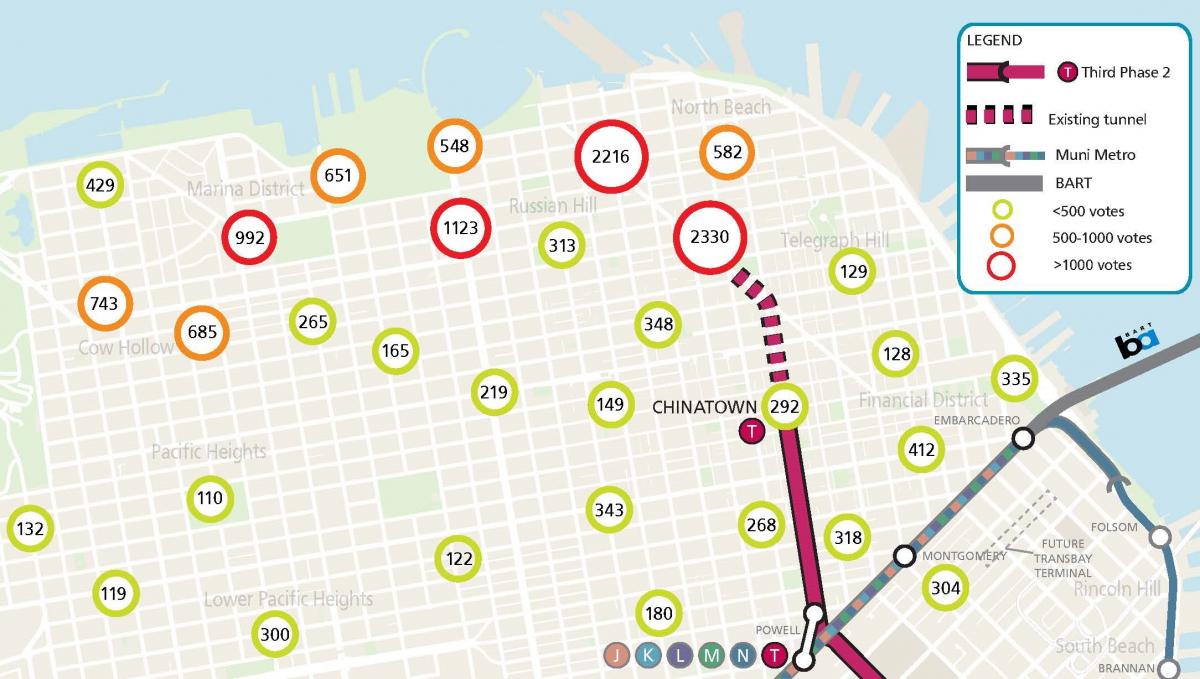
When compiling all the suggested station locations, clusters started to emerge, as shown in the above map.

Where do you live?
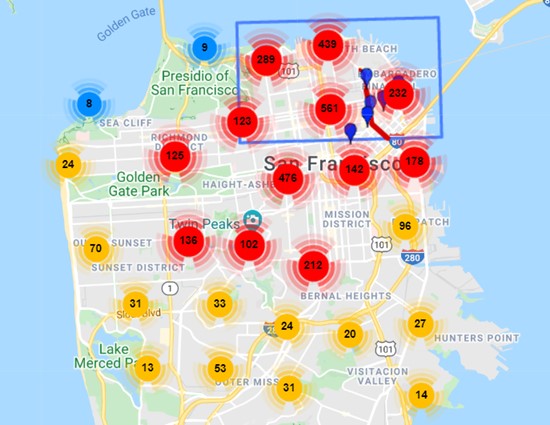
We received responses from all over the city with a high percentage people weighing in from inside the study area (blue box).

Where do you live?
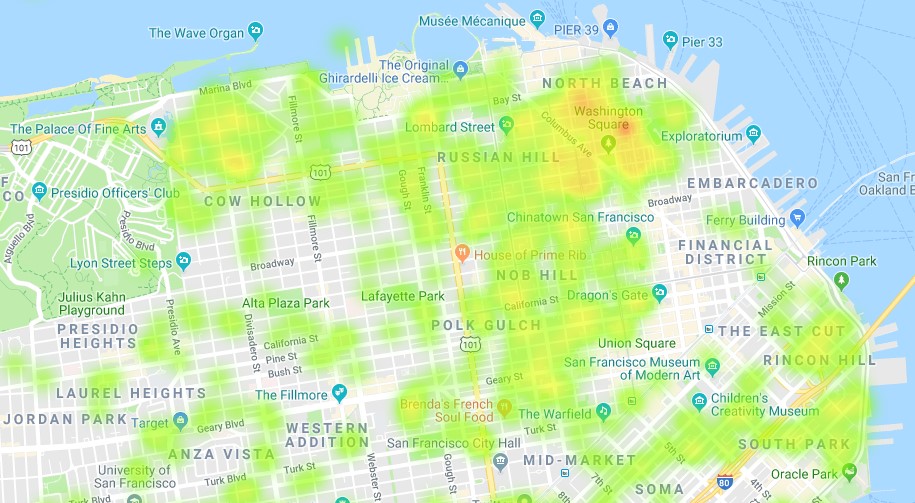
Zoomed in “home” view near the study area: Orange and red areas denote higher concentrations of responses.

Where do you work?
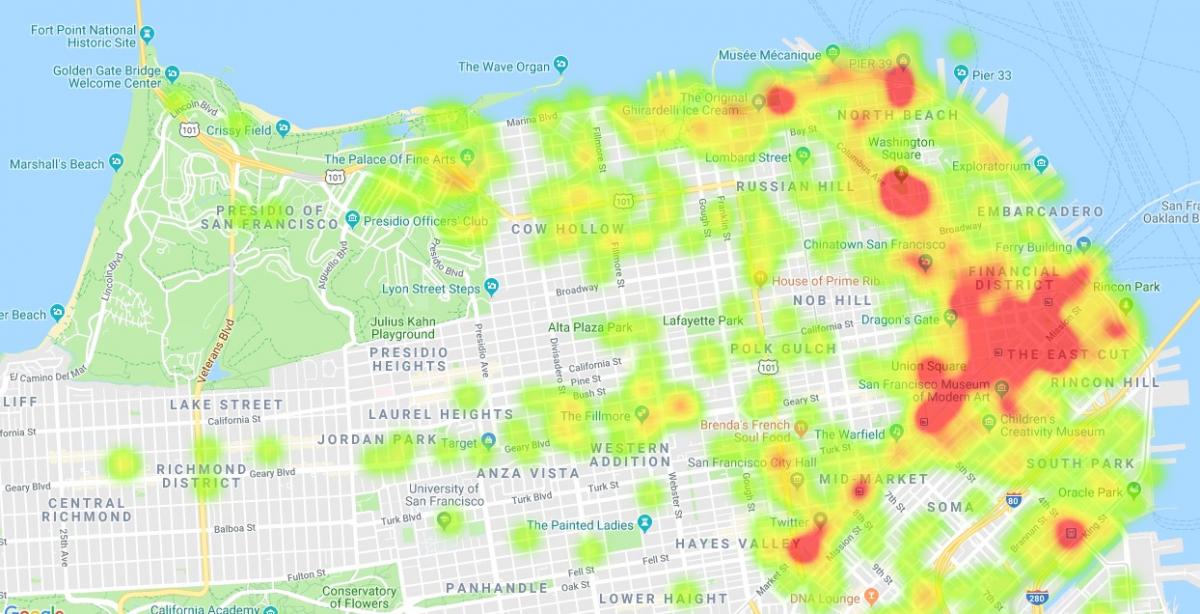
Orange and red areas denote higher concentrations of responses.

Next Steps

After compiling and further analyzing this feedback, we will begin looking at some potential extension routes from an engineering standpoint to better understand the potential trade-offs and benefits. We will reach out again to share them with the community for additional input. Our goal will be to narrow the options to two or three for further planning, environmental review, and design, contingent on identification of funding.

More Information

For more information, visit the Central Subway Extension project page where you can sign up for email updates.


Published February 27, 2020 at 03:38AM
https://ift.tt/2Ps4Qqd

Comments

Popular posts from this blog

150 Years Ago Today – The Cable Car is Born

150 Years Ago Today – The Cable Car is Born By Kelley Trahan August 2, 2023, marks the 150th anniversary of the world’s first successful cable railway, born right here in San Francisco. To celebrate the occasion, we bring you the story of Andrew Hallidie and the very first cable car company, the Clay Street Hill Railroad.  Andrew Hallidie (1834-1900) was a pioneering inventor and entrepreneur who changed urban transportation. In 1852, at the age of 18, Hallidie emigrated with his father from the United Kingdom to San Francisco during the California Gold Rush. His father, an engineer and inventor, had a wire rope patent that played a crucial role in his son's future success.   Portrait of Andrew Smith Hallidie in 1890. Inspired by his father's wire rope business, Hallidie developed a steel cable mineral mine hauling system in 1857. About a decade later, he designed a wire rope aerial tramway for transporting materials over mountainous terrain. Then, after a stint in bridg...

Shared Spaces are Here to Stay. Permit Renewals are Due January 15, 2023.

Shared Spaces are Here to Stay. Permit Renewals are Due January 15, 2023. By Anne Yalon Shared Spaces, amongst many other benefits, allows our residents and families to enjoy safe and social outdoor dining. Seen here are the the owners of Tio Chilo’s Grill and their children in the restaurant’s parklet on 24th Street in the Mission.  San Francisco’s popular Shared Spaces program allows merchants, restaurants and arts and culture organizations to use the curbside, sidewalk and other public spaces to conduct local business activities and stay afloat. What emerged as an economic lifeline during the pandemic is making San Francisco’s streets more energized, engaged and activated. Many of the Shared Spaces parklets have become central gathering places for the local community. “ Our parklet makes me feel like when I go to Mexico, where outdoor seating is everywhere. People end up joining their friends in our parklet. It is a space for our customers and our community," said Liz V...

Tenderloin Streets Transform During COVID-19

Tenderloin Streets Transform During COVID-19 By Kimberly Leung COVID-19 has disproportionately impacted people who live and work in the Tenderloin. As a result, the SFMTA has been working closely with District 6 Supervisor Matt Haney’s office, other city departments, the Tenderloin Traffic Safety Task Force and community members to address the public health issues and unique challenges in the neighborhood through innovative interventions.    The Tenderloin is home to many of our most vulnerable communities including historically marginalized groups such as people with disabilities, residents of SROs and supportive housing and limited-English proficient communities. With every single street in the Tenderloin on the city’s High Injury Network -- the 13 percent of San Francisco streets that account for 75 percent of severe traffic injury collision and fatalities -- thi...