Transportation is For All

Transportation is For All
By Lori Phelan

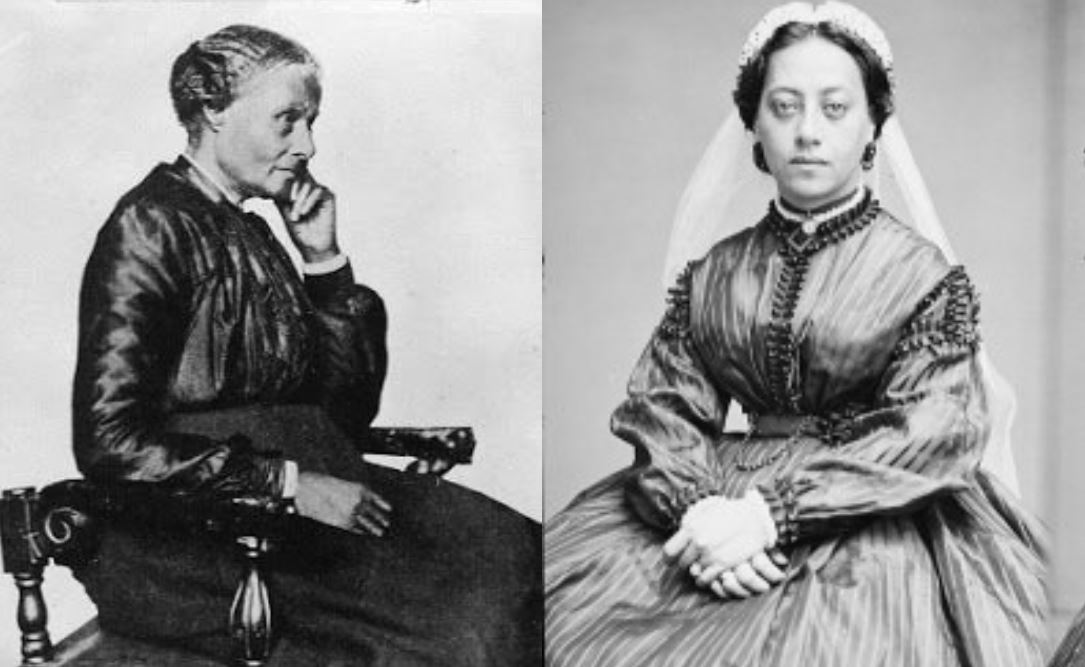
Charlotte Brown and Mary Pleasant

Like many cities across the United States, San Francisco's history of racial segregation and discrimination also runs deep. Nowhere is it more omnipresent than in the story of our City's own transportation history.

A century before Rosa Parks took a stand, others did here as well. Charlotte Brown was one such woman. She was en route to a doctor's appointment. Mary Ellen Pleasant was another. These two women had the courage and fortitude to stand up for their human rights and helped to lead the way for others to follow. Sadly, there's little historical background on their lives more than documented here, including photographs accurately identifying the women.

Charlotte L. Brown 

Charlotte Brown challenged racial segregation in the early 1860s when she filed a lawsuit against a streetcar company in San Francisco after being forcibly removed from a horse-drawn streetcar because of her race. She sued the Omnibus Railroad and Cable Company again following a subsequent incident and was eventually awarded $500; valued at about $15K today.

Born in 1839 in Maryland, one of several children, Charlotte Brown moved to San Francisco with her family sometime between 1850 and 1860. Little more is known about her life or when she died. What is written can be found in San Francisco's own Rosa Parks, published in the San Francisco Chronicle, Jan. 16, 2012.

Mary Ellen Pleasant 

Like Brown, Mary Ellen Pleasant is best known for successfully challenging racial discrimination in San Francisco after she and two other black women were ejected from a city streetcar in 1866. 

She took the Omnibus Railroad Company to court twice, of which the second lawsuit filed was taken to the California Supreme Court. The Court ruled that streetcar exclusion based on race was unlawful. Both lawsuits changed racist practices, and in 1893 the state Legislature enacted a prohibition on streetcar segregation. 

Most sources have recorded that Mary Ellen Pleasant was born Aug. 19, 1814, in Virginia and spent her early years in Nantucket, Massachusetts. Her gravestone at Tulocay Cemetery in Napa, however, states 1812. She died Jan. 4, 1904, at the age of 89.

Born into slavery, Pleasant became a Gold Rush-era millionaire, defying conventions of what a black woman could be in the 19th century. Much of her life is shrouded in mystery such as her birth year. As an abolitionist, she worked on the Underground Railroad, helping to bring others to California during the Gold Rush Era, and she identified herself as "a capitalist by profession" in the 1890 United States census. 

Legal proceedings late in life left her in poverty by the time she died. The Mary Ellen Pleasant Memorial Park located on Octavia Street was named in her honor. 


Published February 12, 2020 at 04:07AM
https://ift.tt/38vIHic

Comments

Popular posts from this blog

150 Years Ago Today – The Cable Car is Born

150 Years Ago Today – The Cable Car is Born By Kelley Trahan August 2, 2023, marks the 150th anniversary of the world’s first successful cable railway, born right here in San Francisco. To celebrate the occasion, we bring you the story of Andrew Hallidie and the very first cable car company, the Clay Street Hill Railroad.  Andrew Hallidie (1834-1900) was a pioneering inventor and entrepreneur who changed urban transportation. In 1852, at the age of 18, Hallidie emigrated with his father from the United Kingdom to San Francisco during the California Gold Rush. His father, an engineer and inventor, had a wire rope patent that played a crucial role in his son's future success.   Portrait of Andrew Smith Hallidie in 1890. Inspired by his father's wire rope business, Hallidie developed a steel cable mineral mine hauling system in 1857. About a decade later, he designed a wire rope aerial tramway for transporting materials over mountainous terrain. Then, after a stint in bridg...

Shared Spaces are Here to Stay. Permit Renewals are Due January 15, 2023.

Shared Spaces are Here to Stay. Permit Renewals are Due January 15, 2023. By Anne Yalon Shared Spaces, amongst many other benefits, allows our residents and families to enjoy safe and social outdoor dining. Seen here are the the owners of Tio Chilo’s Grill and their children in the restaurant’s parklet on 24th Street in the Mission.  San Francisco’s popular Shared Spaces program allows merchants, restaurants and arts and culture organizations to use the curbside, sidewalk and other public spaces to conduct local business activities and stay afloat. What emerged as an economic lifeline during the pandemic is making San Francisco’s streets more energized, engaged and activated. Many of the Shared Spaces parklets have become central gathering places for the local community. “ Our parklet makes me feel like when I go to Mexico, where outdoor seating is everywhere. People end up joining their friends in our parklet. It is a space for our customers and our community," said Liz V...

Tenderloin Streets Transform During COVID-19

Tenderloin Streets Transform During COVID-19 By Kimberly Leung COVID-19 has disproportionately impacted people who live and work in the Tenderloin. As a result, the SFMTA has been working closely with District 6 Supervisor Matt Haney’s office, other city departments, the Tenderloin Traffic Safety Task Force and community members to address the public health issues and unique challenges in the neighborhood through innovative interventions.    The Tenderloin is home to many of our most vulnerable communities including historically marginalized groups such as people with disabilities, residents of SROs and supportive housing and limited-English proficient communities. With every single street in the Tenderloin on the city’s High Injury Network -- the 13 percent of San Francisco streets that account for 75 percent of severe traffic injury collision and fatalities -- thi...