By
The last month has brought about dramatic changes in virtually all aspects of our lives, including how we use our Muni transit system. When we implemented our Core Service Plan that focused our limited resources on 17 lines that were serving the majority of our customers, we also transitioned our service operation from a schedule-based system to a headway or frequency-based system. This means vehicles depart their terminals at regularly timed intervals instead of at specific times. In so doing, we also had to make adjustments on how this information was processed by NextMuni to generate reliable arrival time predictions.
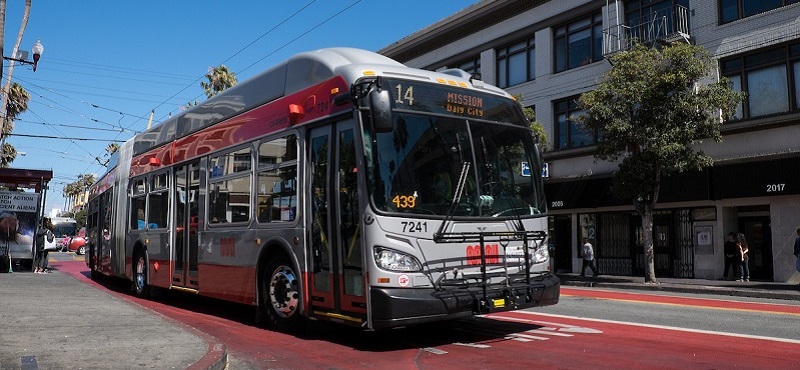
Up until now, if a Muni vehicle departed the terminal before its scheduled departure time, it would register on NextMuni as being on break and would not generate predictions, even though it was on its regular route. When we transitioned to a headway-based system, and as the buses experienced fewer delays on their routes, we started to see a lot of these vehicles depart before their scheduled times. The stopgap solution has been for a small but dedicated team in our Transit division to manually reassign these early departure vehicles within NextMuni, thereby allowing this system to generate predictions. Recently this team has been making about 300 such reassignments per day. This was neither efficient nor sustainable.
Working with our NextMuni vendor, we were able to modify the prediction software to better handle this situation. When generating predictions, the software will now basically disregard any scheduled times and instead rely only on the vehicle’s location.
With this change, arrival time predictions will now only become available once a vehicle has left the terminal. What this means is that if you are waiting at a stop, especially stops near the beginning of the route, you may see “No Prediction Available” when you check either the bus shelter display (should one be available) or NextMuni’s online predictions. This will mean that a vehicle has not yet departed the terminal. In this case, please check either our website or that bus shelter’s display to see the frequency for that particular route. Our website also has a live map which will show the location of each bus on the route, including those at the terminals that are not yet generating predictions. Simply use www.sfmta.com/the letter or number of the Muni route you want to check (For example, www.sfmta.com/22 takes you the live map for the 22 Fillmore.
While this is not ideal, our other option was to make no change and have vehicles operating in service without generating predictions at all. The current changes will make sure most vehicles have predictions most of the time. Another benefit of this change will be that prediction times will now only reflect an actual vehicle that is in service, thus eliminating the dreaded “ghost bus,” which has been the bane of many transit riders.
Please note that our Core Service Plan operates daily from 5 a.m. to 10 p.m. Between 10 p.m. and 5 a.m. our Owl Service Plan is in operation. Frequency times on each of the 10 Owl routes in service will be about 30 minutes. Please visit our Owl Service Plan webpage for further details.
Our team continually reviews the performance of our prediction system and suggests changes when they believe it will result in more accurate information to our riders. In addition to that continuing effort, we are in the process of rolling out a Next Generation Customer Information System as the replacement to NextMuni. When deployed, this new system will allow us to provide more reliable information to our riders, including being able to generate more reliable predictions near the terminals.
For more updates on all SFMTA services during this public health crisis, please visit SFMTA.com/COVID19.
Published April 20, 2020 at 11:50PM
https://ift.tt/2z9IGUq
Comments
Post a Comment