By Mariana Maguire
If you’re taking Muni for essential trips along Market Street you might see SFMTA’s yellow-vested Ambassadors wearing face masks or coverings and directing customers to maintain safe physical distance at curbside bus stops and boarding islands. What you can’t see are their smiles behind their masks as they work throughout the day to help San Francisco “flatten the curve.”
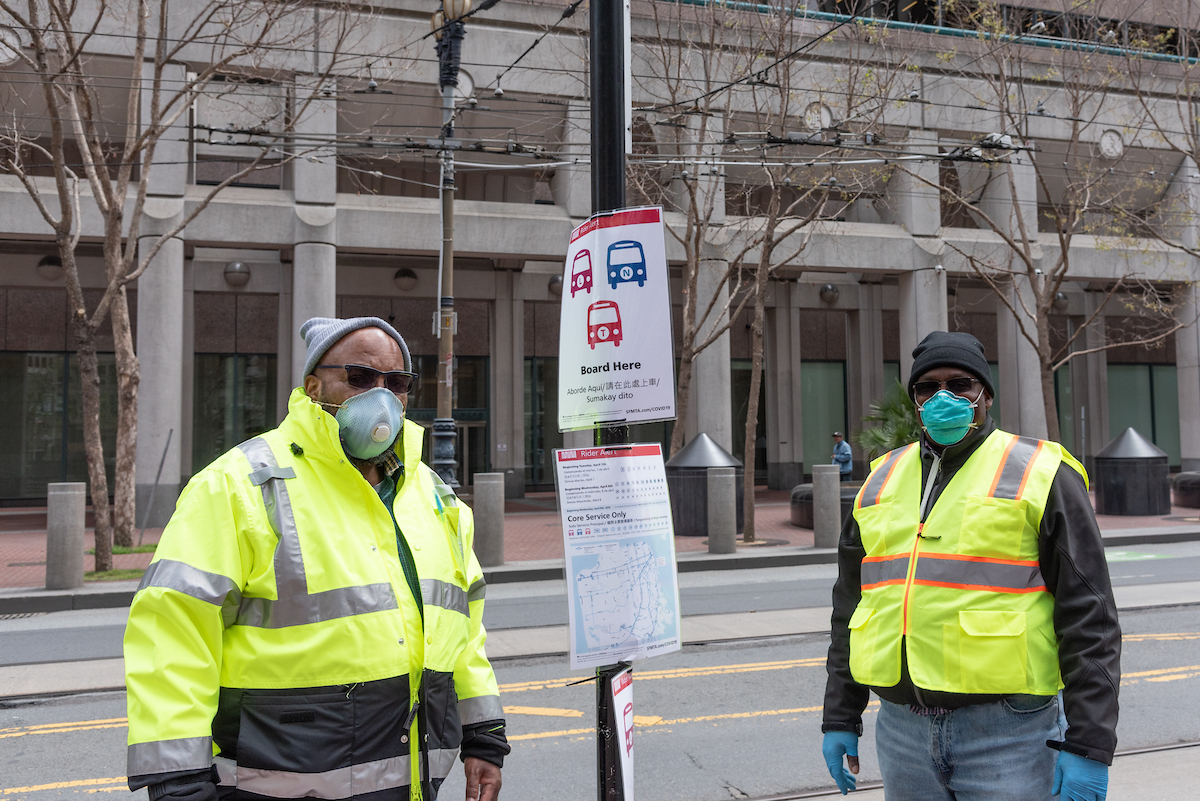 COVID-19 Ambassadors at a bus stop on Market Street.
Last week, the SFMTA launched our COVID-19 Ambassador Program. Although overall ridership is down, during peak times in certain areas we sometimes still see crowding at bus stops and on buses. If a bus is too crowded, our operators will stop picking up new passengers until there is enough room for more. We know that this and other changes are tough on everyone.
That’s where our Ambassadors come in. Their aim is to encourage customers to practice good public health behavior throughout the entire Muni experience – waiting, boarding, riding – as well as informing customers about alternatives to Muni like our new ETC discount taxi program for older adults and people with disabilities. They also have information on the temporarily modified routes or can explain why a bus may have just passed up riders.
In some places, we added markings on the ground at bus stops to signal where the customers can wait at an appropriate physical distance from one another, just like those at many area supermarkets and other essential businesses.
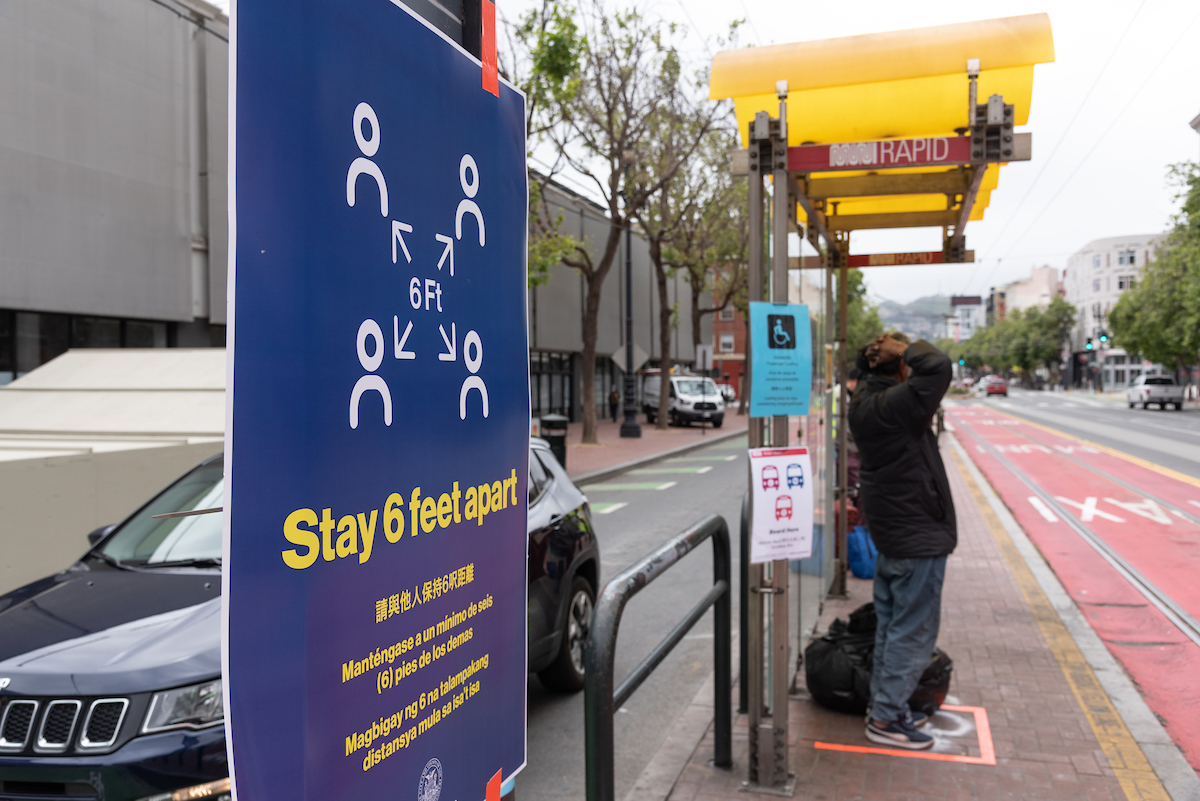 Signage and ground markings at Muni stops encourage physical distancing.
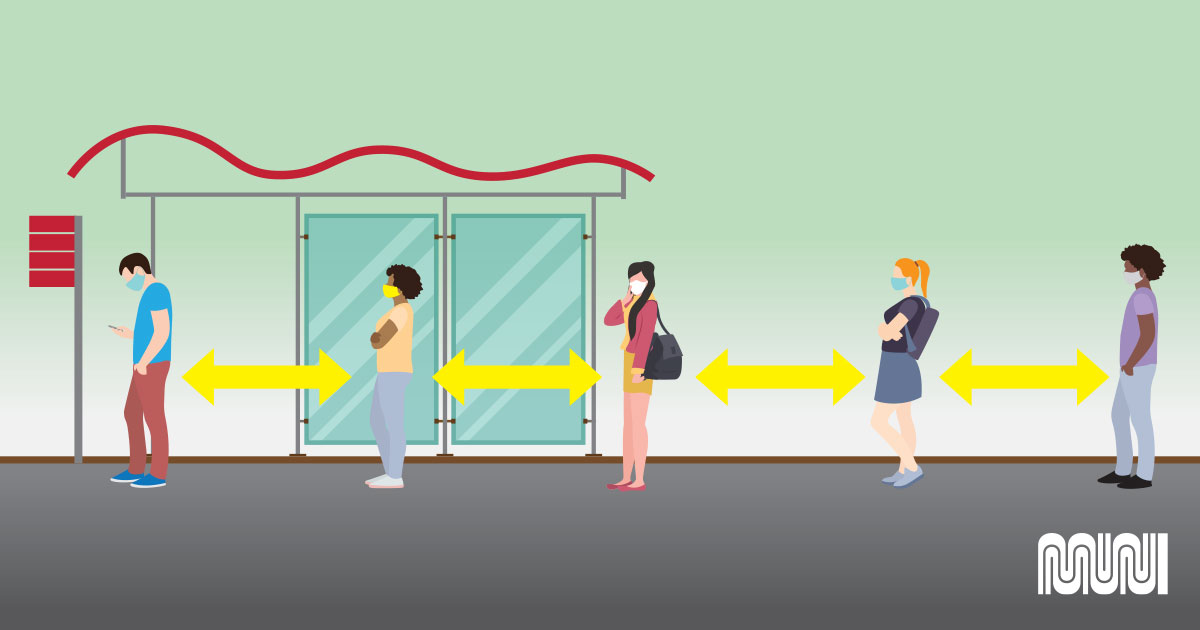 Graphic showing physical distancing at Muni stops
To encourage customers to give each other space on and off Muni, when buses arrive about half full or more, Ambassadors may ask customers to wait for the next bus. And, once a bus arrives the Ambassadors remind waiting customers to give space to those offloading, explain that customers are required to wear a cloth face covering or mask, and ask customers to maintain physical distance inside the bus throughout their ride.
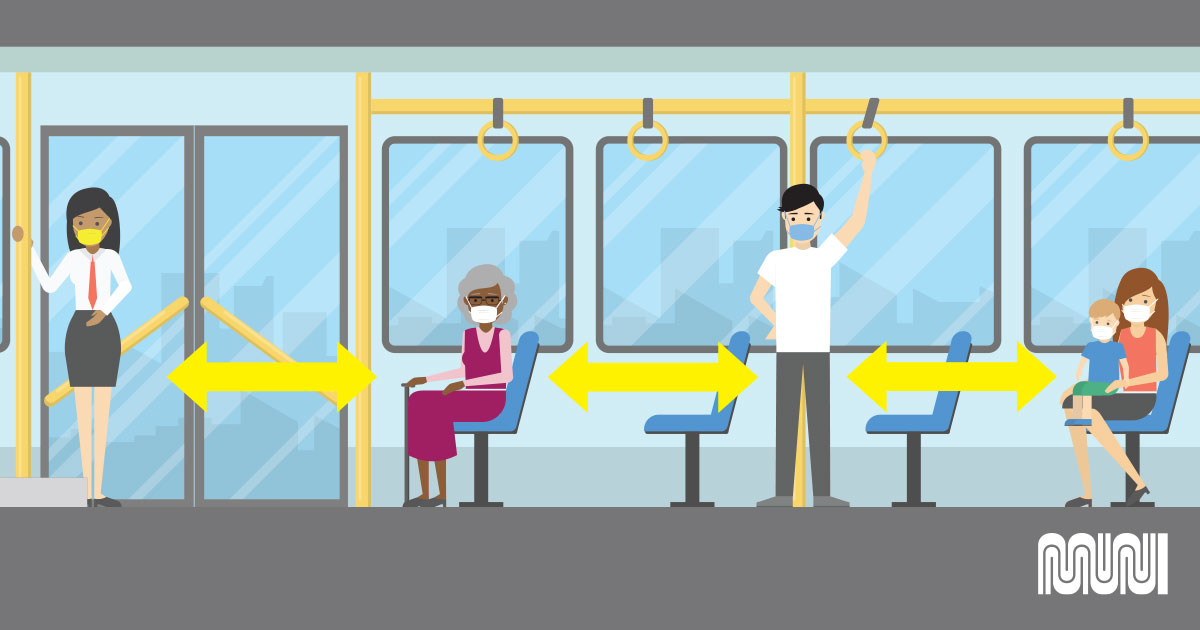 Example of physical distancing on Muni buses: Wear a mask or face covering and give space for fellow riders.
We have also launched new onboard announcements and two social media campaigns encouraging customers to #stayhome and use Muni for #essentialtripsonly. New signs inside Muni buses and ads on the outside of buses are coming soon to remind customers to give space and wear face coverings or masks.
Now that wearing face coverings is a citywide order, customers are required to wear these when riding Muni. Operators may skip stops if those waiting don’t have face coverings. Operators have been instructed that they may also skip stops if the bus is already more than half full to maintain appropriate physical distancing on board.
Though ridership has decreased dramatically thanks to people staying home in observance of the shelter-in-place, Muni continues to serve approximately 100,000 customers daily. These customers are largely hospital workers, social service providers, grocery store workers and other essential workers. Any time you take another mode of transportation, you save a seat for those who rely on Muni. If you need to ride, be sure to wave hello to our Ambassadors.
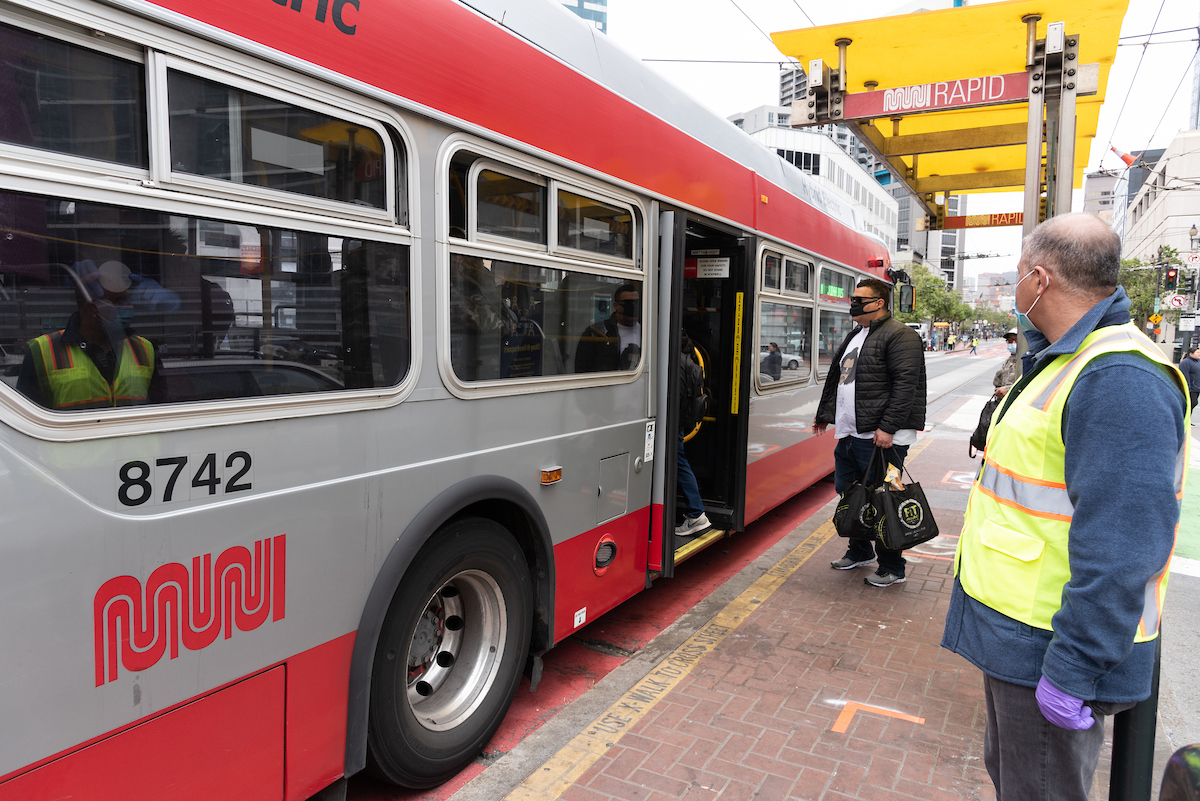 Muni Ambassador looks on as customer wearing a mask waits to board through the back after taking an essential trip for groceries.
Published April 24, 2020 at 02:58AM
https://ift.tt/2Vxhx6N
Comments
Post a Comment