By
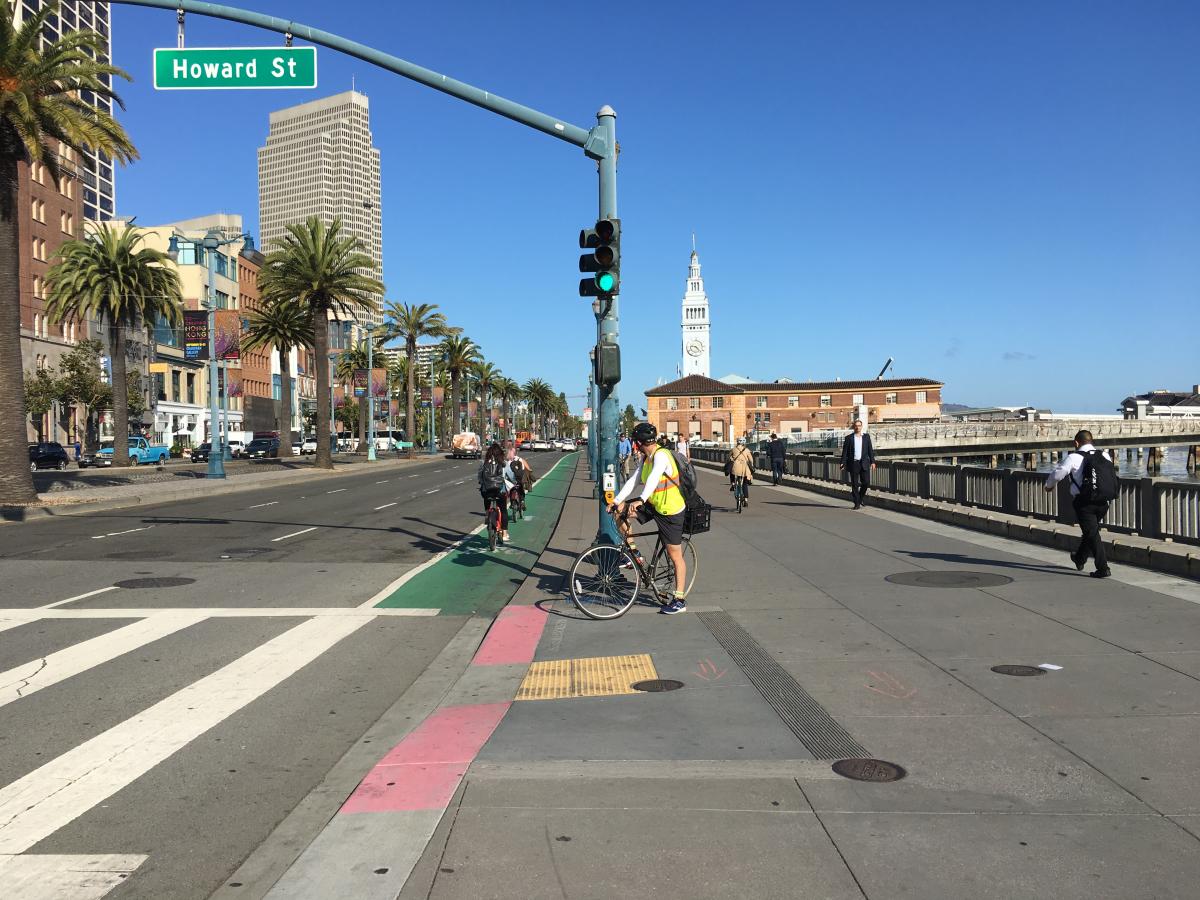
Traveling along The Embarcadero can be challenging at peak times. With bicyclists, pedestrians, scooterists and drivers all competing for the same space, conflicts arise regularly. The Embarcadero is also a prominent portion of the Vision Zero High Injury Network, something we would like to change. The community has voiced numerous safety concerns. SFMTA and the Port of San Francisco are listening.
In partnership with the Port of San Francisco, we will begin construction of The Embarcadero Quick Build projects in mid-June. These projects will change the way people travel on the waterfront and mark a pivotal starting point in creating a safer environment for all. Most notably, bicyclists will be able to travel seamlessly into more areas of the City freeing up space for pedestrians on the Prominade.
Quick Build projects can be built and evaluated within months, as opposed to years of planning and design. This allows SFMTA to achieve safety goals in the near-term, while preparing for longer-term capital improvement projects on the Vision Zero High Injury Network.
These projects also allow greater personal distancing by separating transportation methods, which will be critical to combatting COVID-19. These projects will offer sustainable choices as transportation is reimagined and improved throughout the City. Investment in this important infrastructure supports the City's renewal and recovery while promoting public health--SFMTA's top priority.
The Embarcadero Quick Build projects will be built in three key areas: Pier 35, Ferry Terminal, and Rincon Restaurant Zone
The Pier 35 Quick Build between Bay and North Point streets will establish a new protected bikeway to reduce conflicts between bikes and passenger loading activities at the Pier 35 Cruise Terminal. The flexible design will also accommodate the unique loading demands for cruise calls and other large-scale events that are major components of the Pier's maritime activities.
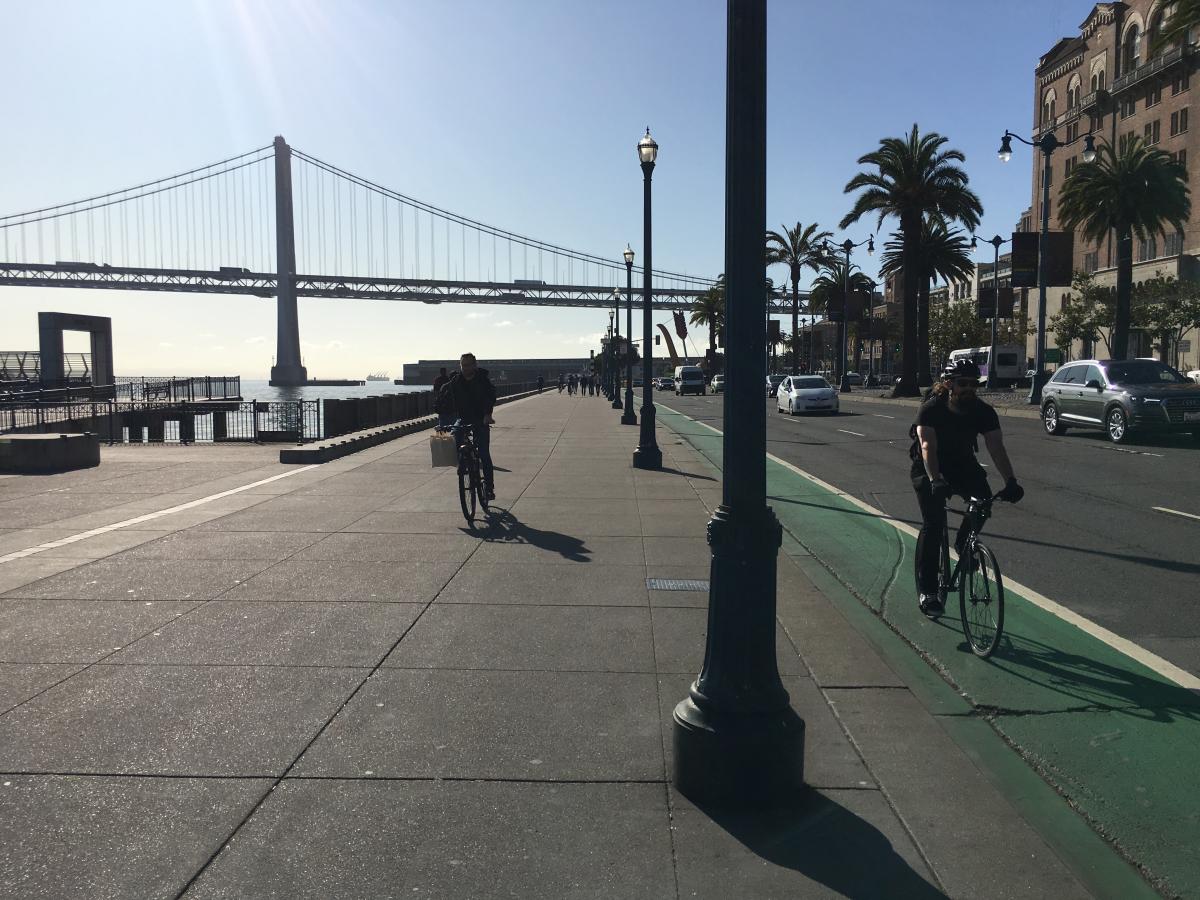
From Mission to Folsom streets, the Ferry Terminal Quick Build will construct a water-side, two-way protected bikeway to improve safety for all users and enhance connections to the ferry terminal from the South of Market (SOMA) neighborhood. This two-way protected bikeway will be a preview of the Embarcadero Enhancement Project's planned safety improvements for the remainder of the corridor.
The Rincon Restaurant Zone Quick Build, from Harrison Street to Folsom Street, will establish a protected bikeway for northbound bicyclists and expand capacity for commercial and passenger loading. The protected bikeway will also reduce potential conflicts between all forms of transportation on the Promenade.
This construction is a great starting point, but The Embarcadero has more work planned. We will continue to partner with the Port of San Francisco and community stakeholders to ensure that The Embarcadero continues to be a vibrant gateway to our world-class City.
What is next?
Construction is currently planned for a period of three months. During this time, construction crews will be repaving roadways, adding new paint to the road and curbs, removing and installing metered parking, and installing pedestrian/bicycle waiting areas and protected bikeways. For more Information, please visit The Embarcadero Quick Build project website.
Published June 06, 2020 at 03:31AM
https://ift.tt/2BxJO5r
Comments
Post a Comment