The California Street Safety Project is Complete!

The California Street Safety Project is Complete!
By Erin McMillan

You may have already noticed the fresh paint and new lane configuration on California Street from Arguello Boulevard to Park Presidio. This recently completed ‘road diet’ painted on California Street changed the lane configuration from four lanes to three with a center turn lane to help improve safety along the corridor. 
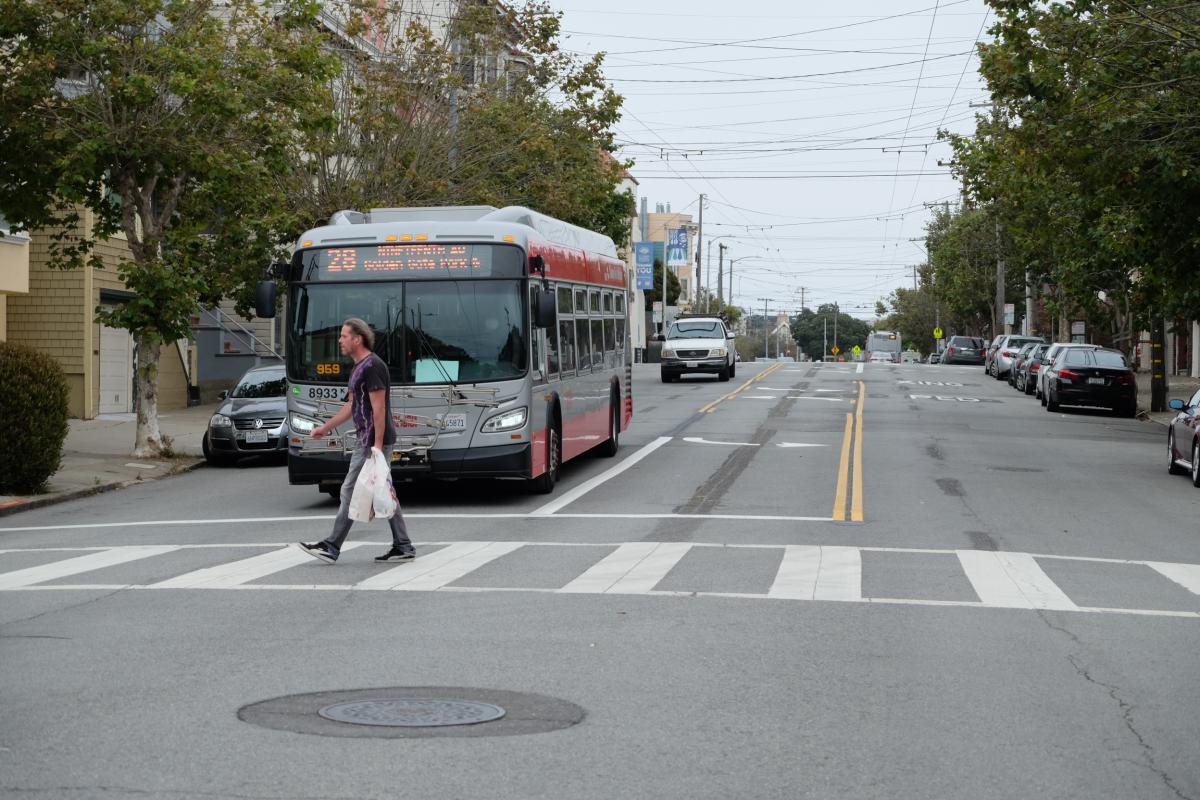
Man walking in crosswalk in front of a bus
California Street and 10th Avenue post-construction

This was the final safety element to be implemented as part of the California Street Safety Project, which began earlier this year with “daylighting” to increase visibility at intersections.  

Why a road diet on California? 

California Street is part of the city’s Vision Zero high-injury network -- the 13% of city streets that account for 75% of severe and fatal collisions. 

This section of California had 73 injury collisions in five years with 7 involving pedestrians. In addition, there have been 35 Muni-involved collisions, many due to narrow lanes. 

  • Road diets reduce speeding and risk of collision by reducing the number of lanes 
  • Wider lanes provide room for safer operation of Muni vehicles 
  • A separate turn lane allows turning traffic to be separate from traveling traffic  
  • Fulton Street: Road diet reduced collisions by over 40%  
  • 25th Avenue: Road diet reduced collisions by 20%   

Earlier this year, several safety elements for pedestrians were installed, including:   

  • Daylighting: Red painted curbs at intersection approaches to improve visibility for all road users 
  • Higher visibility zebra-striped continental crosswalks 
  • Updated pavement markings 

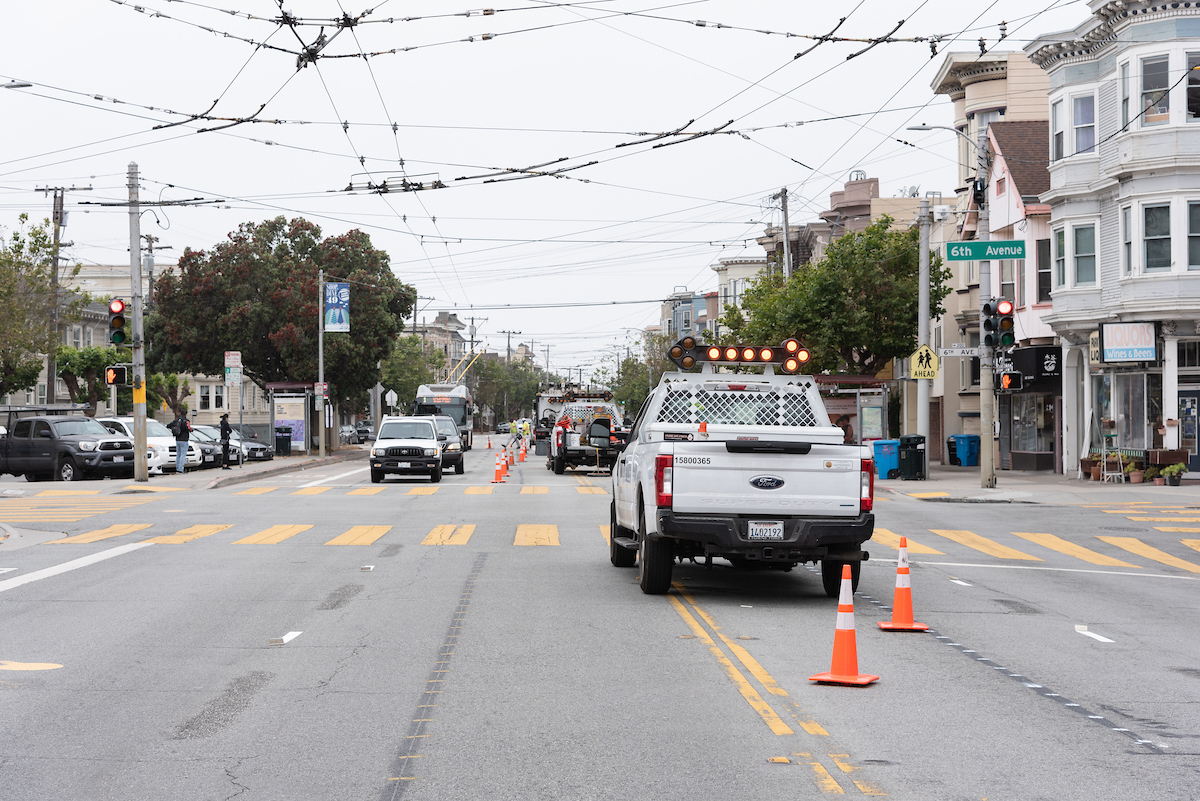
Construction crews working at California and 6th
Construction crews working at California Street and Sixth Avenue pre-construction

Starting this fall summer, we’ll begin the evaluation of the project. The evaluation will include traffic and street-level data, such as tracking changes in collisions, traffic volumes on California and side streets, and driving behavior. In addition to traffic and street-level data collection, we’ll be collecting experiential feedback from neighbors via email. Given the impacts of COVID-19, we’ll also be waiting to collect some post-implementation data until the city’s traffic returns to pre-COVID levels. 

We also received extensive feedback during project outreach in 2019 and will be using that input to shape our evaluation and monitoring of the project. Thank you to everyone who chimed in on this important project and we that will improve the area for years to come. 

To learn more, visit www.SFMTA.com/CaliforniaSafety. Want to give your feedback on any element of the California Street Safety Project? Email us at CaliforniaSafety@SFMTA.com


Published August 14, 2020 at 12:01AM
https://ift.tt/3g1lcko

Comments

Popular posts from this blog

150 Years Ago Today – The Cable Car is Born

150 Years Ago Today – The Cable Car is Born By Kelley Trahan August 2, 2023, marks the 150th anniversary of the world’s first successful cable railway, born right here in San Francisco. To celebrate the occasion, we bring you the story of Andrew Hallidie and the very first cable car company, the Clay Street Hill Railroad.  Andrew Hallidie (1834-1900) was a pioneering inventor and entrepreneur who changed urban transportation. In 1852, at the age of 18, Hallidie emigrated with his father from the United Kingdom to San Francisco during the California Gold Rush. His father, an engineer and inventor, had a wire rope patent that played a crucial role in his son's future success.   Portrait of Andrew Smith Hallidie in 1890. Inspired by his father's wire rope business, Hallidie developed a steel cable mineral mine hauling system in 1857. About a decade later, he designed a wire rope aerial tramway for transporting materials over mountainous terrain. Then, after a stint in bridg...

Shared Spaces are Here to Stay. Permit Renewals are Due January 15, 2023.

Shared Spaces are Here to Stay. Permit Renewals are Due January 15, 2023. By Anne Yalon Shared Spaces, amongst many other benefits, allows our residents and families to enjoy safe and social outdoor dining. Seen here are the the owners of Tio Chilo’s Grill and their children in the restaurant’s parklet on 24th Street in the Mission.  San Francisco’s popular Shared Spaces program allows merchants, restaurants and arts and culture organizations to use the curbside, sidewalk and other public spaces to conduct local business activities and stay afloat. What emerged as an economic lifeline during the pandemic is making San Francisco’s streets more energized, engaged and activated. Many of the Shared Spaces parklets have become central gathering places for the local community. “ Our parklet makes me feel like when I go to Mexico, where outdoor seating is everywhere. People end up joining their friends in our parklet. It is a space for our customers and our community," said Liz V...

Tenderloin Streets Transform During COVID-19

Tenderloin Streets Transform During COVID-19 By Kimberly Leung COVID-19 has disproportionately impacted people who live and work in the Tenderloin. As a result, the SFMTA has been working closely with District 6 Supervisor Matt Haney’s office, other city departments, the Tenderloin Traffic Safety Task Force and community members to address the public health issues and unique challenges in the neighborhood through innovative interventions.    The Tenderloin is home to many of our most vulnerable communities including historically marginalized groups such as people with disabilities, residents of SROs and supportive housing and limited-English proficient communities. With every single street in the Tenderloin on the city’s High Injury Network -- the 13 percent of San Francisco streets that account for 75 percent of severe traffic injury collision and fatalities -- thi...