
The First Step to Battery Electric Muni Buses

The First Step to Battery Electric Muni Buses
By Jay Lu

Starting in early October, the SFMTA will take a big leap forward in implementing its Sustainability and Climate Action Program by installing nine new charging stations at Muni Woods Division to power the agency’s first battery electric buses after significant progress in battery technology in recent years. The project will kick off the pilot program to determine the SFMTA’s future charging methods for new zero-emission e-buses.
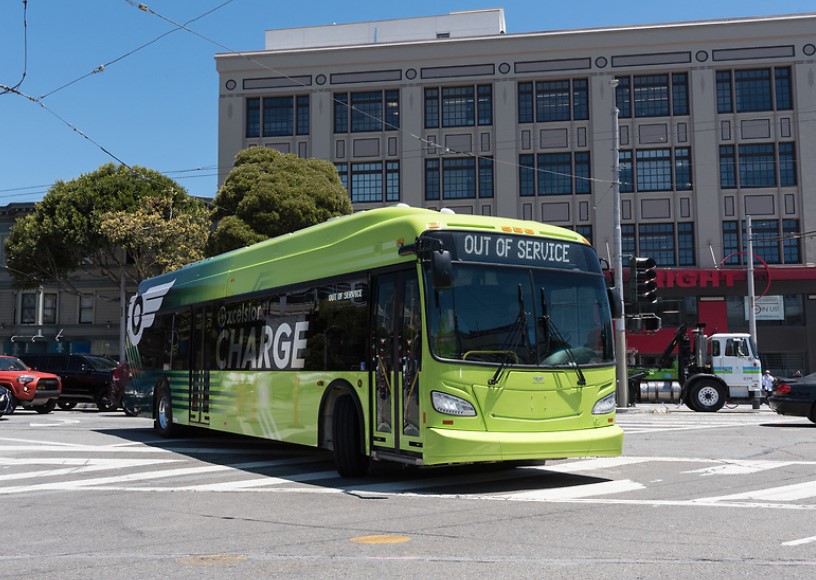
A battery electric bus turns from Mission on to South Van Ness

A battery-electric bus turns from Mission on to South Van Ness

To find out if battery electric bus technology is ready for San Francisco, the SFMTA is implementing an 18-month battery-electric bus pilot program. The SFMTA will procure three 40-foot buses each from three different manufacturers to test their performance in revenue service for 18 months. The first three battery electric buses are expected to arrive in spring 2021 as part of the pilot program.

Questions remain about whether battery electric buses can handle San Francisco’s heavy transit ridership and hilly routes. Before deploying battery-electric buses, they must deliver the same reliability and service as our current hybrid-electric and electric trolley bus fleets.

As of 2018, 45 percent of San Francisco’s greenhouse gas emissions are generated by the transportation sector which is heavily reliant on carbon-intensive fossil fuels. This reliance on harmful fossil fuels is changing the earth’s climate and contributes to extreme weather events, increased fire risk and sea level rise. The SFMTA is a leader in providing safe and sustainable transportation options as it continues to implement its Sustainability and Climate Action Program.

The SFMTA’s energy-efficient Muni fleet contributes less than two percent of the transportation sector’s emissions and moves approximately 700,000 people every day. Today, the SFMTA operates the greenest transit system of any major city in North America.
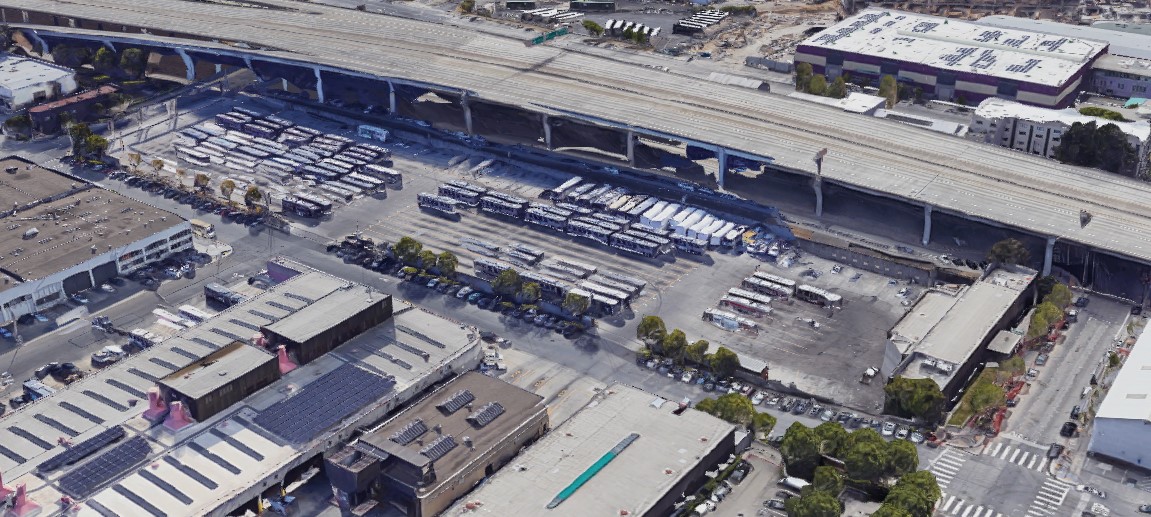
The Woods Bus Yard where the new charging infrastructure will be installed.

The Woods Bus Yard where the new charging infrastructure will be installed.

Electric Bus Pilot Program

The installation of the new chargers will take approximately nine months to complete. In addition to the battery-electric bus chargers, the updated infrastructure includes electrical support equipment, such as switchgear, switchboard, transformers, power cabinets and conduit.

  • Construction hours are Monday through Friday, 9 a.m. to 5 p.m.
  • Bus operation at Woods will operate as usual without interruption.
  • Work will be contained in the bus yard and will not impact traffic or transit service to the public.
  • Measures will be taken to control noise and dust during work hours. 

Installing these chargers is the first step in making the greenest transit fleet in North America even more environmentally sustainable. Battery electric buses will further reduce harmful emissions and air pollution.

For more information on electric mobility, please visit SFMTA Electric Mobility Page


Published September 29, 2020 at 11:14PM
https://ift.tt/3kX90DV

Comments

Popular posts from this blog

150 Years Ago Today – The Cable Car is Born

150 Years Ago Today – The Cable Car is Born By Kelley Trahan August 2, 2023, marks the 150th anniversary of the world’s first successful cable railway, born right here in San Francisco. To celebrate the occasion, we bring you the story of Andrew Hallidie and the very first cable car company, the Clay Street Hill Railroad.  Andrew Hallidie (1834-1900) was a pioneering inventor and entrepreneur who changed urban transportation. In 1852, at the age of 18, Hallidie emigrated with his father from the United Kingdom to San Francisco during the California Gold Rush. His father, an engineer and inventor, had a wire rope patent that played a crucial role in his son's future success.   Portrait of Andrew Smith Hallidie in 1890. Inspired by his father's wire rope business, Hallidie developed a steel cable mineral mine hauling system in 1857. About a decade later, he designed a wire rope aerial tramway for transporting materials over mountainous terrain. Then, after a stint in bridg...

Shared Spaces are Here to Stay. Permit Renewals are Due January 15, 2023.

Shared Spaces are Here to Stay. Permit Renewals are Due January 15, 2023. By Anne Yalon Shared Spaces, amongst many other benefits, allows our residents and families to enjoy safe and social outdoor dining. Seen here are the the owners of Tio Chilo’s Grill and their children in the restaurant’s parklet on 24th Street in the Mission.  San Francisco’s popular Shared Spaces program allows merchants, restaurants and arts and culture organizations to use the curbside, sidewalk and other public spaces to conduct local business activities and stay afloat. What emerged as an economic lifeline during the pandemic is making San Francisco’s streets more energized, engaged and activated. Many of the Shared Spaces parklets have become central gathering places for the local community. “ Our parklet makes me feel like when I go to Mexico, where outdoor seating is everywhere. People end up joining their friends in our parklet. It is a space for our customers and our community," said Liz V...

Tenderloin Streets Transform During COVID-19

Tenderloin Streets Transform During COVID-19 By Kimberly Leung COVID-19 has disproportionately impacted people who live and work in the Tenderloin. As a result, the SFMTA has been working closely with District 6 Supervisor Matt Haney’s office, other city departments, the Tenderloin Traffic Safety Task Force and community members to address the public health issues and unique challenges in the neighborhood through innovative interventions.    The Tenderloin is home to many of our most vulnerable communities including historically marginalized groups such as people with disabilities, residents of SROs and supportive housing and limited-English proficient communities. With every single street in the Tenderloin on the city’s High Injury Network -- the 13 percent of San Francisco streets that account for 75 percent of severe traffic injury collision and fatalities -- thi...