
History In Motion: SFMTA Staffer Sheds Light on Muni Vehicles Past and Present in New Book

History In Motion: SFMTA Staffer Sheds Light on Muni Vehicles Past and Present in New Book
By Jeremy Menzies

In 2019, SFMTA Transit Planner Paul Bignardi completed a book that will provide hours of history exploration for the avid Muni fan. Bignardi’s A Fleet History of the San Francisco Municipal Railway is a great new addition to Muni history literature with a biography of every Muni vehicle extending back to the beginning of the railway in 1912.
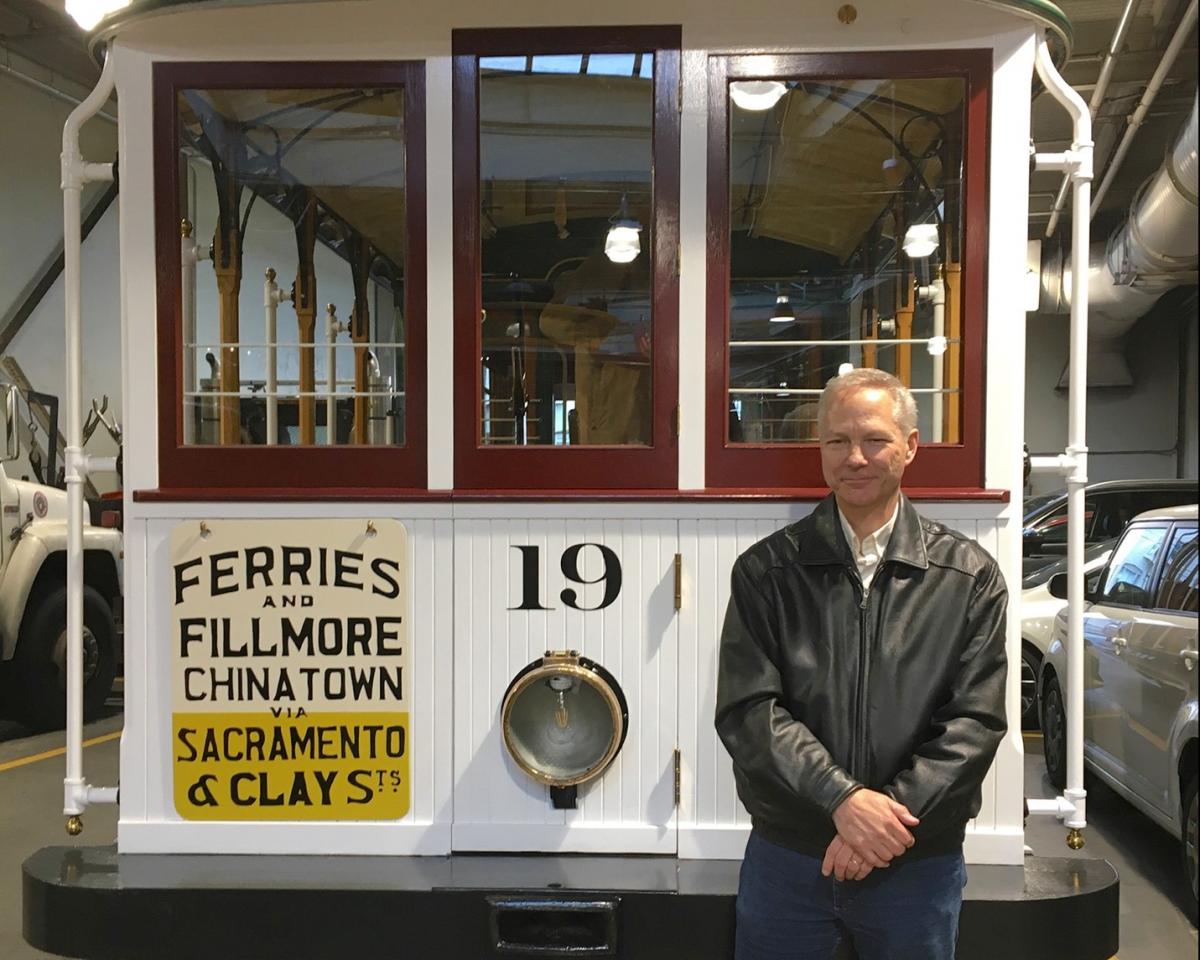
Author Paul Bignardi poses with Sacramento-Clay Cable Car 19 “Big 19” after its restoration in 2019.

Author Paul Bignardi poses with Sacramento-Clay Cable Car 19 “Big 19” after its restoration in 2019.

Bignardi says, “The biggest historic vehicle thrill I’ve had is being allowed to be a part of the return of Cable Car “Big 19” into service as the oldest publicly owned electric-powered transit vehicle in the world in summer 2019.”

The effort, a labor of love, began with the centennial of the SF Municipal Railway in 2012. Muni was celebrating its 100th birthday and a group of self-identified transit nerds banded together to start compiling and researching the most up-to-date information on Muni’s fleet past and present. The centennial had prompted them to realize that much of the data on the fleet had stagnated since the publication of Inside Muni in 1981.

As Bignardi mulled over the problem, he came up with a plan to create a more comprehensive volume on the subject. “I thought I should produce the list for internal use, and then I thought if I was going to do that work, I should go the final step and just produce a book. I thought it would take about six months to complete. I finished nearly three years later.”

Much more than just a list of old buses, the book includes a service history and statistics for every vehicle that has ever been in the Muni fleet, including those inherited from private transit companies merged with the Railway. Every type is included from cable to rail to rubber tire. As Paul himself notes, “the book contains the most detailed and accurate information on the San Francisco cable car fleet in the Muni era.”  On top of vehicle information, the book also includes facts and figures on transit facilities, ridership and fare trends over the last 100+ years, and even info on the various paint schemes and logos used by Muni since 1912.
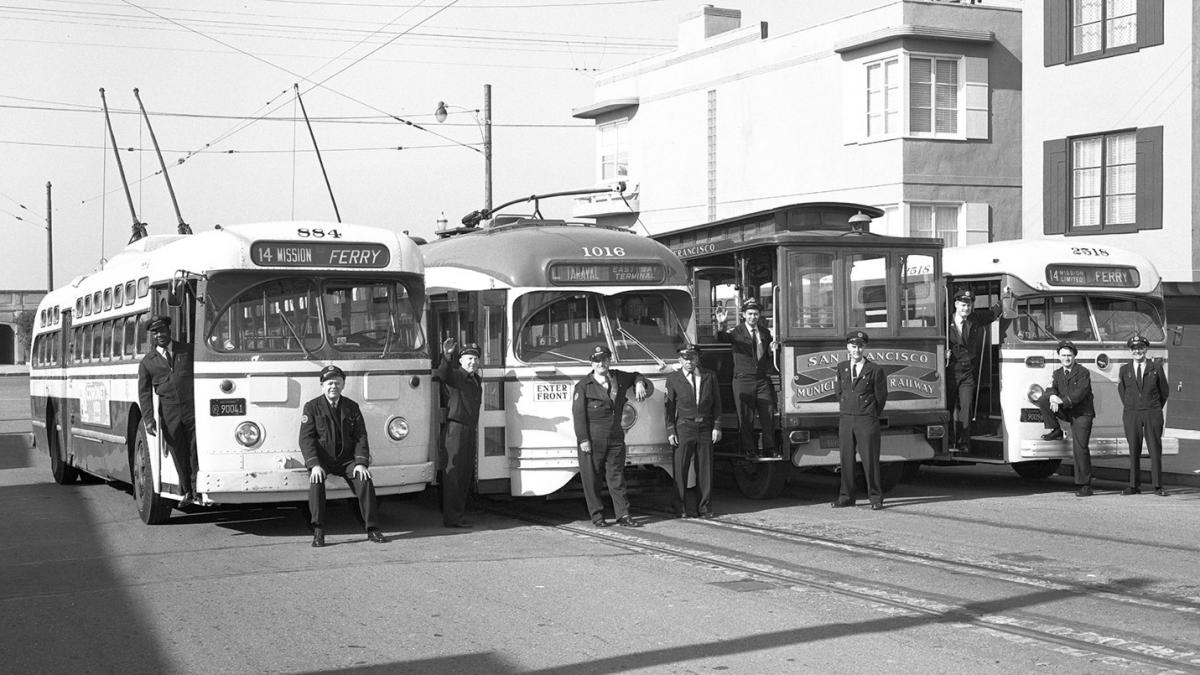
A lineup of Muni vehicles and Muni Operator of the Month awardees in 1963.

A lineup of Muni vehicles and Muni Operator of the Month awardees in 1963.

On top of including plenty of raw information to soak up, the book is full of great photos both historic and modern, including many from the SFMTA Photo Archive.  No doubt, this volume of vehicles will prove invaluable to historians and transit fans alike. If you’re wondering where you might pick up a copy for your own perusal, our preservation partners at the SF Railway Museum have copies over in their online store (LINK). Proceeds will support the preservation of historic vehicles running on the 25-year-old F-Line.

Interested in learning more about San Francisco’s transportation history?  Check out our self-guided walking tour and kids history scavenger hunt at the SF History Days event, that had its virtual launch on September 25th.


Published October 02, 2020 at 10:53PM
https://ift.tt/30u9UA6

Comments

Popular posts from this blog

150 Years Ago Today – The Cable Car is Born

150 Years Ago Today – The Cable Car is Born By Kelley Trahan August 2, 2023, marks the 150th anniversary of the world’s first successful cable railway, born right here in San Francisco. To celebrate the occasion, we bring you the story of Andrew Hallidie and the very first cable car company, the Clay Street Hill Railroad.  Andrew Hallidie (1834-1900) was a pioneering inventor and entrepreneur who changed urban transportation. In 1852, at the age of 18, Hallidie emigrated with his father from the United Kingdom to San Francisco during the California Gold Rush. His father, an engineer and inventor, had a wire rope patent that played a crucial role in his son's future success.   Portrait of Andrew Smith Hallidie in 1890. Inspired by his father's wire rope business, Hallidie developed a steel cable mineral mine hauling system in 1857. About a decade later, he designed a wire rope aerial tramway for transporting materials over mountainous terrain. Then, after a stint in bridg...

Shared Spaces are Here to Stay. Permit Renewals are Due January 15, 2023.

Shared Spaces are Here to Stay. Permit Renewals are Due January 15, 2023. By Anne Yalon Shared Spaces, amongst many other benefits, allows our residents and families to enjoy safe and social outdoor dining. Seen here are the the owners of Tio Chilo’s Grill and their children in the restaurant’s parklet on 24th Street in the Mission.  San Francisco’s popular Shared Spaces program allows merchants, restaurants and arts and culture organizations to use the curbside, sidewalk and other public spaces to conduct local business activities and stay afloat. What emerged as an economic lifeline during the pandemic is making San Francisco’s streets more energized, engaged and activated. Many of the Shared Spaces parklets have become central gathering places for the local community. “ Our parklet makes me feel like when I go to Mexico, where outdoor seating is everywhere. People end up joining their friends in our parklet. It is a space for our customers and our community," said Liz V...

Tenderloin Streets Transform During COVID-19

Tenderloin Streets Transform During COVID-19 By Kimberly Leung COVID-19 has disproportionately impacted people who live and work in the Tenderloin. As a result, the SFMTA has been working closely with District 6 Supervisor Matt Haney’s office, other city departments, the Tenderloin Traffic Safety Task Force and community members to address the public health issues and unique challenges in the neighborhood through innovative interventions.    The Tenderloin is home to many of our most vulnerable communities including historically marginalized groups such as people with disabilities, residents of SROs and supportive housing and limited-English proficient communities. With every single street in the Tenderloin on the city’s High Injury Network -- the 13 percent of San Francisco streets that account for 75 percent of severe traffic injury collision and fatalities -- thi...