By Amy Fowler
Tired of construction in San Francisco? You are not alone. With so many city projects and private developments raising dust across the city, our iconic skyline can more closely resemble a giant Erector set than a world-class city. Without these necessary upgrades, however, roads would crumble, traffic signals would be stymied by aging technology and century-old sewer and water pipes would be vulnerable to earthquakes and climate change.
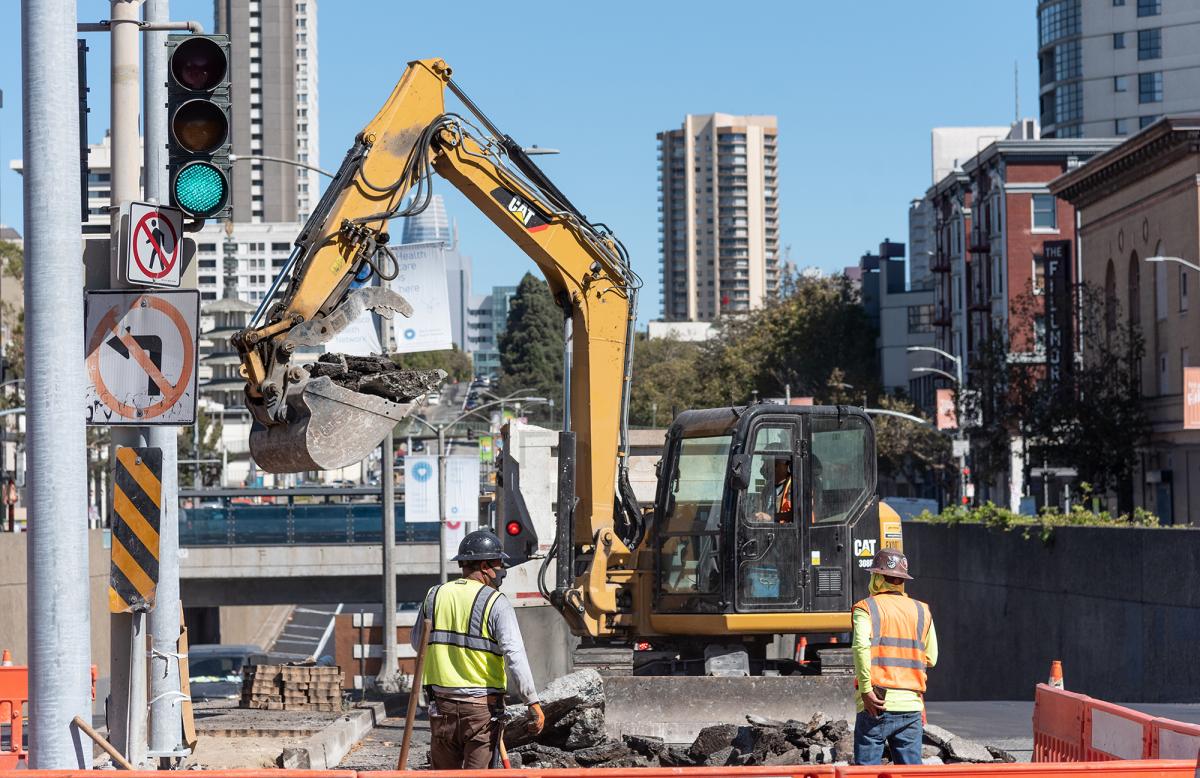
New pedestrian refuge island under construction at Geary Boulevard and Steiner Street as part of the Geary Rapid Project.
But why does construction take so darn long?
There are many factors that can turn a seemingly simple project into an extraordinarily complex undertaking. Chief among them is that many SFMTA projects are done in the public right of way. Unlike private developments that are usually self-contained, our projects happen in areas where people need to walk, drive, bike and take transit.
Considerations like traffic control, maneuvering around existing utilities, providing adequate space for construction crews to work and maintaining access to neighboring businesses and homes all take a considerable amount of coordination. There may also be impacts to transit that require relocating a bus stop or safely rerouting people walking around construction sites. Support from utilities is often required when working around existing electrical wires, or additional SFMTA staff may be needed to isolate the overhead contact system that powers our zero-emissions electric-trolley buses.
There are also trade-offs to work out, like storing construction materials in a location that’s close enough for crews to work efficiently without causing too great a disruption to the neighborhood. And on busy thoroughfares like Van Ness Avenue or Geary Boulevard, all the work must happen within limited hours of the day to maintain traffic flow.
Every element of a project must be sequenced properly so that all the parts can move in sync. It’s like tipping over a stack of dominoes: if one of those dominoes gets moved due to a conflict, schedules or crews may need to be reshuffled to keep the overall work from being delayed.
So what about those trenches that are dug up, filled and then re-dug?
Underground utility work like replacing aging water or sewer mains is time-consuming and often requires trenches to be opened, covered and opened again. First, smaller holes are dug—a process called “potholing”—to determine the location of any existing utilities that may not appear accurately on utility records, including electric or gas lines. Then the work trench is carefully excavated, and any old or abandoned utilities that are in conflict are removed before the new pipes can be installed. In some cases, the project must be redesigned if unforeseen obstacles cannot simply be removed.
Water pipes must be disinfected and tested before reconnecting a property’s water service to a newly installed main; on some blocks there may be dozens of individual switchovers. Trenches must be covered the at the end of each shift for safety reasons and to restore travel lanes to vehicle traffic. Only when these steps are complete can crews restore the work area with a strong concrete base above the trenches and repave the roadway.
Another reason projects can be lengthy lies in the city’s excavation code, which aims to coordinate agencies’ work. The SFMTA works in close collaboration with our city partners in the Planning Department, Public Utilities Commission and Public Works to combine utility, transit, safety and streetscaping improvements into one package—which can sometimes make a project longer but means we don’t have to come back and tear up the road again every few years. Coordinating transit improvement projects with other planned work can therefor reduce overall disruption to communities and save money by reducing the amount of excavation needed.
Projects like Central Subway and the Van Ness, Geary Rapid and L Taraval Improvement are no exception when it comes to complexity. Each project has its own unique challenges based on existing conditions, scope of work and community considerations that can affect how work is sequenced.
The SFMTA works closely with contractors, local businesses and residents to minimize construction impacts to the community. We know how difficult construction can be when it’s right at your doorstep, and we’re grateful for your patience as we work to build a better San Francisco.
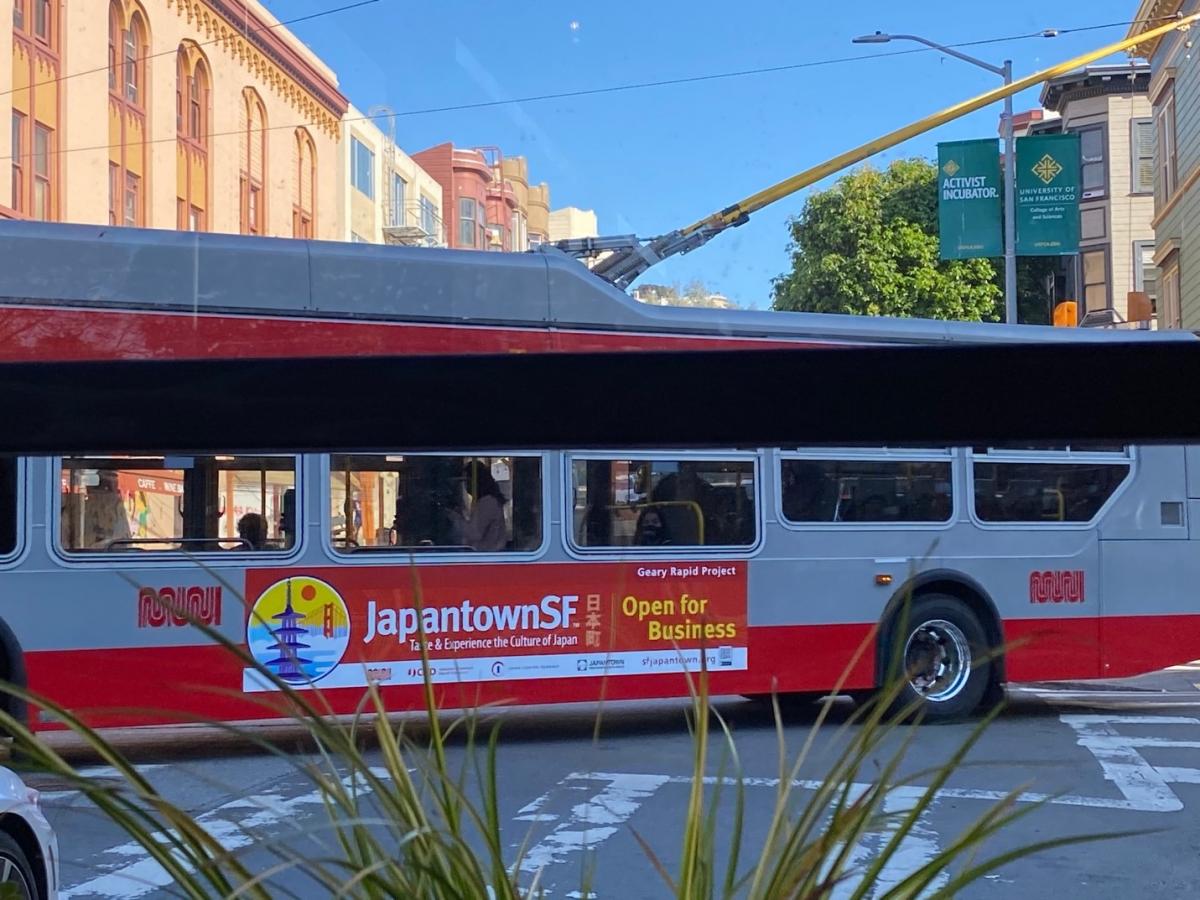
A Muni bus sign encourages visitors to Japantown, part of the Geary Rapid Project’s business support program. SFMTA projects include construction mitigation plans tailored to suit the local neighborhood and offset potential impacts.
Published January 07, 2021 at 01:14AM
https://ift.tt/3rXQ501
Comments
Post a Comment