
What’s New in the Richmond? Transit Lanes to Support the 38 Geary

What’s New in the Richmond? Transit Lanes to Support the 38 Geary
By Jade Moy

Notice something new in the Richmond? We recently installed new transit lanes on segments of Geary Boulevard between Stanyan Street and 33rd Avenue as part of the Temporary Emergency Transit Lanes program. This project extends the existing transit lanes that we installed as part of the Geary Rapid Project between Stanyan and Market streets. Now, more than 75% of Geary Boulevard benefits from transit lanes, increasing overall transit-lane miles by 50%.
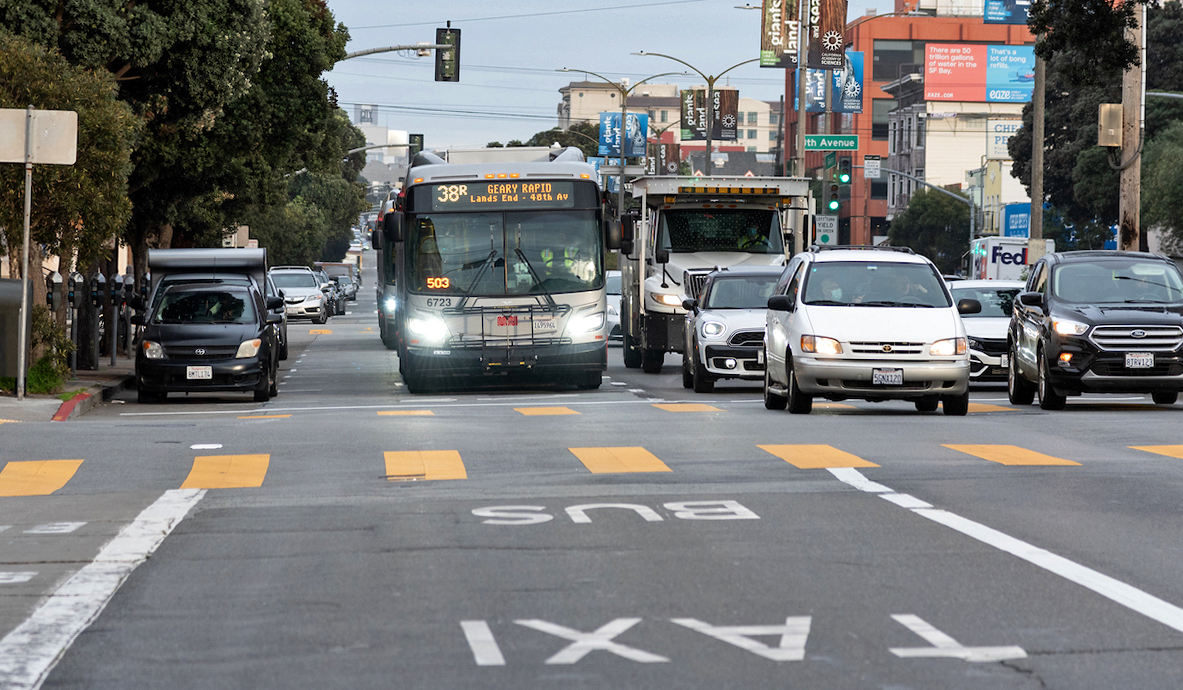
Photo of 38 Geary bus approaching an intersection

The Geary Boulevard corridor provides neighborhoods with vital services such as medical centers, grocery stores and other essential businesses. During the pandemic, the 38 Geary bus route has continued to serve about 18,000 daily riders making essential trips. Our new transit lanes help keep buses moving to reduce crowding and travel times for people who still depend on transit to get around the city.

When buses aren’t competing with traffic, they can stay more evenly spaced apart and complete routes more quickly, providing more frequent service and reduced crowding with the same number of buses. You don’t have to live in the Richmond to reap the rewards—reducing delays on any part of Geary Boulevard means that buses can run more frequently, which benefits passengers along the entire route.
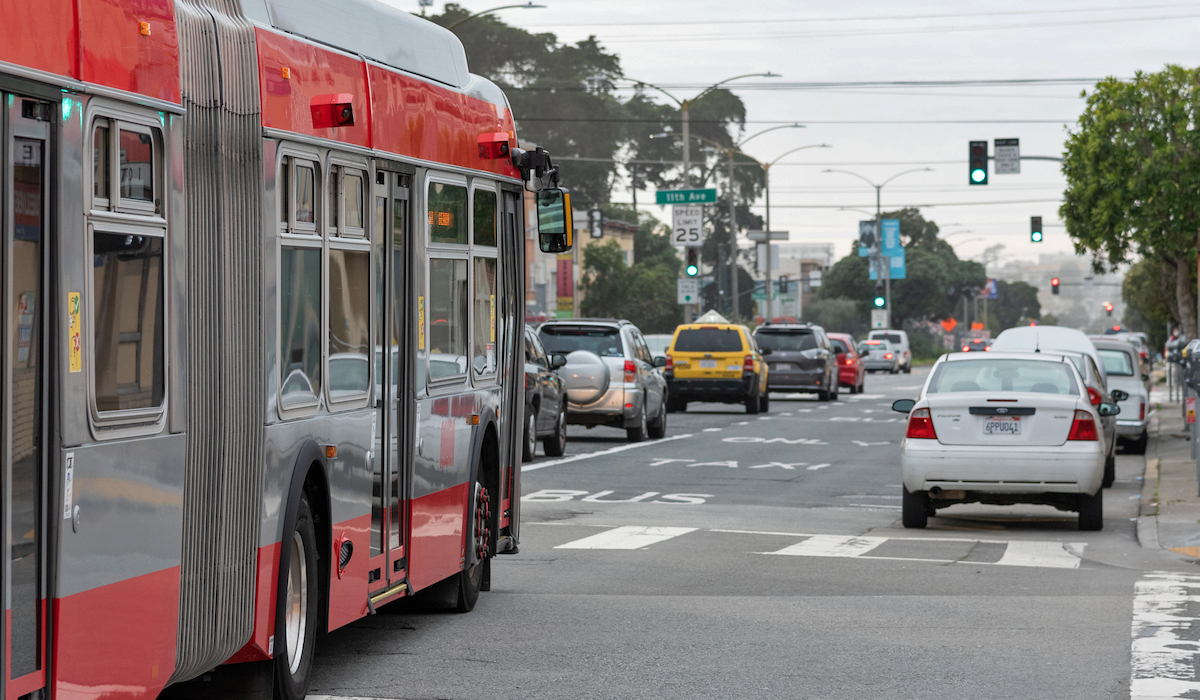
photo of Temporary curbside transit lanes striped with white paint and “Bus/Taxi Only” stenciling and signage.

Temporary curbside transit lanes have been striped with white paint and “Bus/Taxi Only” stenciling and signage.

Transit lanes are especially important at a time when physical distancing requirements mean Muni buses can only carry one-third of the passengers that they could previously. Over the summer, as congestion increased and auto speeds slowed, crowding (by COVID-19 capacity standards) began increasing on the 38 Geary and 38R Geary Rapid . This occurred despite ridership numbers staying relatively flat, as buses became delayed in traffic.

Looking forward, as more of the economy re-opens, the new temporary transit lanes will help us avoid crowding without adding additional buses or operators. This is critical at a time when the SFMTA is facing major revenue shortfalls and has limited resources.
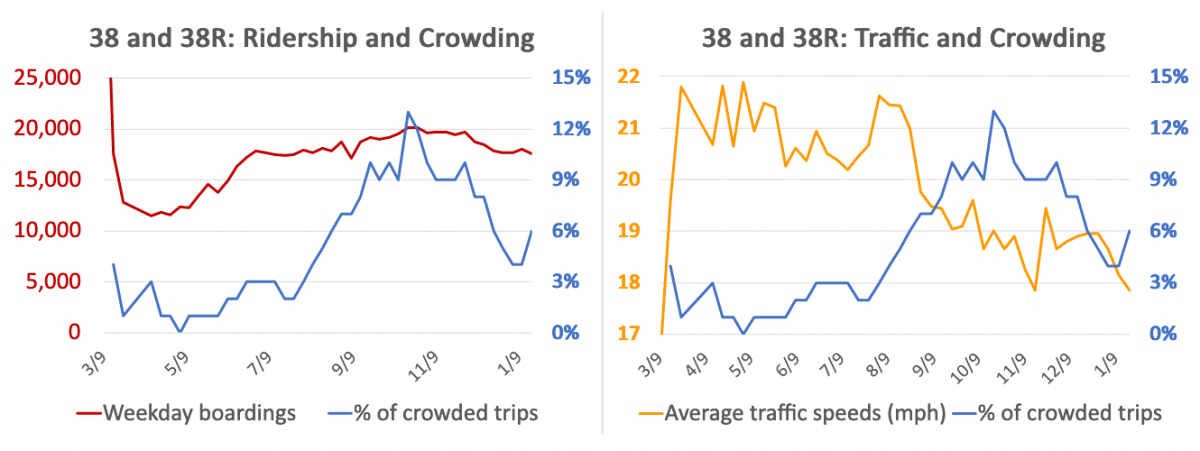
Two charts. While ridership remained stable in late 2020, the number of crowded trips (per COVID standards) increased (left chart). This crowding occurred as traffic speeds have slowed (right chart).

While ridership remained stable in late 2020, the number of crowded trips (per COVID standards) increased (left chart). This crowding occurred as traffic speeds have slowed (right chart).

In addition to transit lanes, the Geary Boulevard project also includes other improvements. We placed temporary wooden sidewalk extensions (known as bus bulbs) at bus stops at 25th, 20th and 6th avenues. These allow buses to stop without pulling in and out of traffic and provide more space for people waiting. To give buses a head start on general traffic, we installed special Muni-priority traffic signals at the intersections of 25th, 20th and 15th avenues.
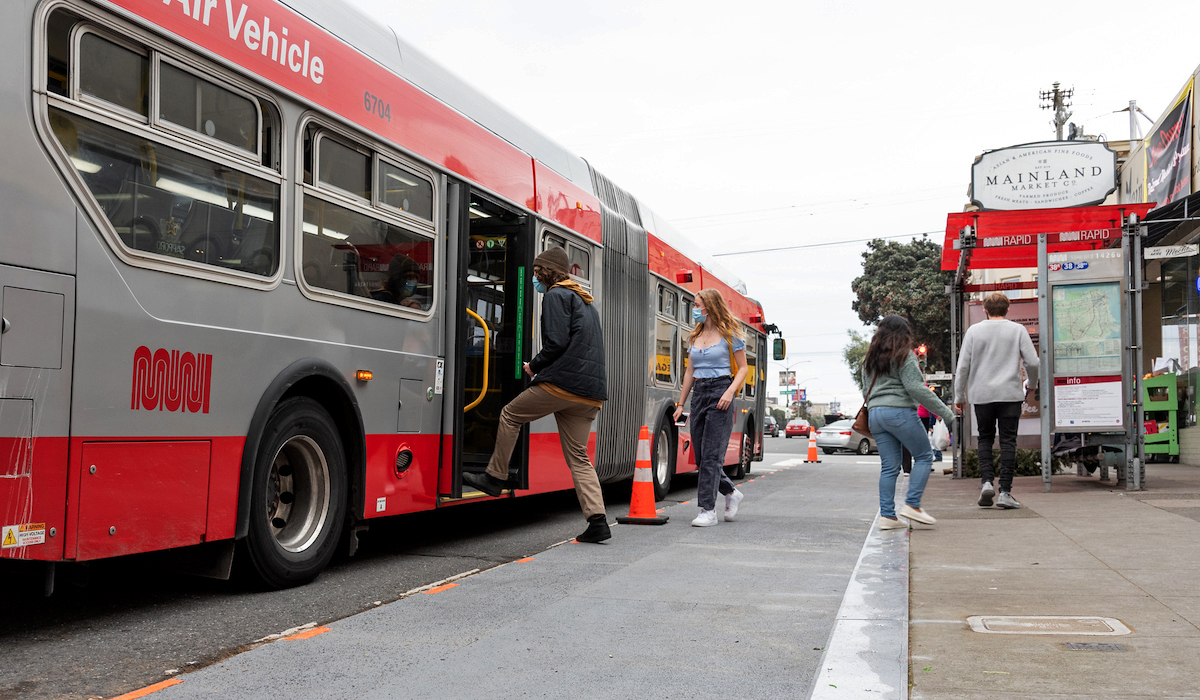
Photo of new temporary bus bulb on Geary Boulevard at 20th Avenue that allows buses to stop without pulling to the curb.

This new temporary bus bulb on Geary Boulevard at 20th Avenue allows buses to stop without pulling to the curb.

Next, we will evaluate the temporary emergency transit lanes—including looking at Muni travel times, crowding and impacts to traffic and parking—to determine how well they’re working and whether to pursue making them permanent, potentially with adjustments or additions.

Let us know what think about the new transit priority treatments on Geary. Whether you ride the bus, drive or walk on Geary Boulevard, we want your feedback. Take our survey at SFMTA.com/38Survey

For details on the project and to register for updates, visit our website
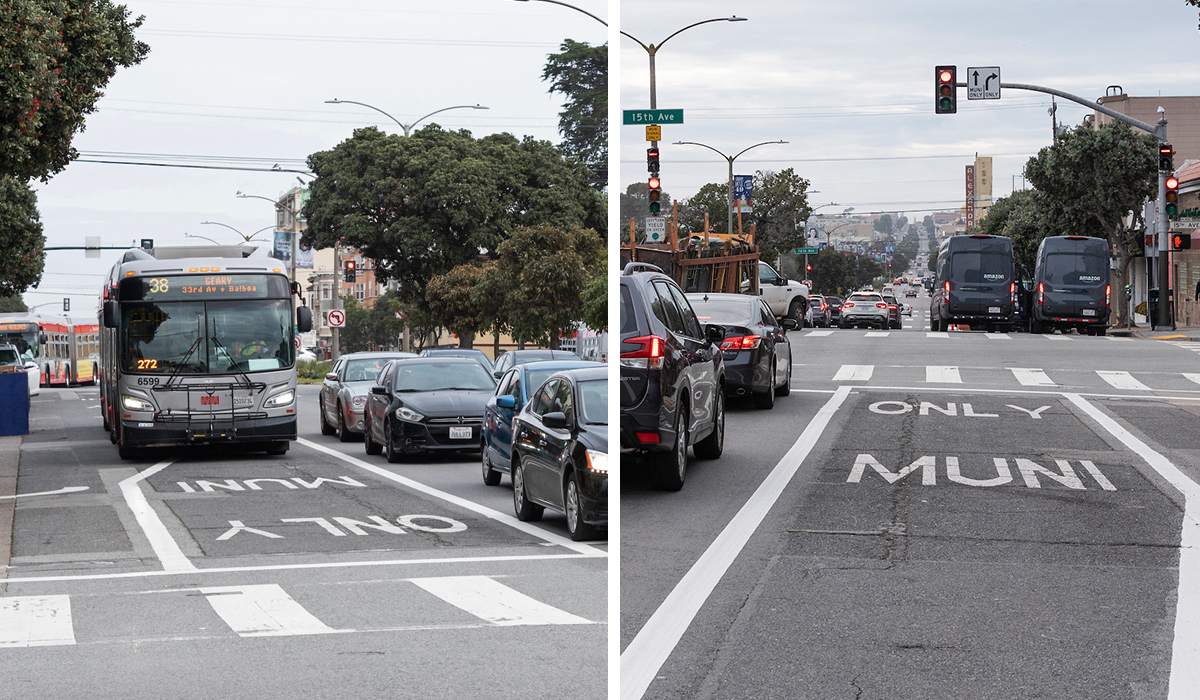
Photo of a special head-start transit signal that gives buses the jump on general traffic at the intersection of Geary Boulevard and 15th Avenue.

A special head-start transit signal gives buses the jump on general traffic at the intersection of Geary Boulevard and 15th Avenue.


Published February 06, 2021 at 01:23AM
https://ift.tt/2N3qHWD

Comments

Popular posts from this blog

150 Years Ago Today – The Cable Car is Born

150 Years Ago Today – The Cable Car is Born By Kelley Trahan August 2, 2023, marks the 150th anniversary of the world’s first successful cable railway, born right here in San Francisco. To celebrate the occasion, we bring you the story of Andrew Hallidie and the very first cable car company, the Clay Street Hill Railroad.  Andrew Hallidie (1834-1900) was a pioneering inventor and entrepreneur who changed urban transportation. In 1852, at the age of 18, Hallidie emigrated with his father from the United Kingdom to San Francisco during the California Gold Rush. His father, an engineer and inventor, had a wire rope patent that played a crucial role in his son's future success.   Portrait of Andrew Smith Hallidie in 1890. Inspired by his father's wire rope business, Hallidie developed a steel cable mineral mine hauling system in 1857. About a decade later, he designed a wire rope aerial tramway for transporting materials over mountainous terrain. Then, after a stint in bridg...

Shared Spaces are Here to Stay. Permit Renewals are Due January 15, 2023.

Shared Spaces are Here to Stay. Permit Renewals are Due January 15, 2023. By Anne Yalon Shared Spaces, amongst many other benefits, allows our residents and families to enjoy safe and social outdoor dining. Seen here are the the owners of Tio Chilo’s Grill and their children in the restaurant’s parklet on 24th Street in the Mission.  San Francisco’s popular Shared Spaces program allows merchants, restaurants and arts and culture organizations to use the curbside, sidewalk and other public spaces to conduct local business activities and stay afloat. What emerged as an economic lifeline during the pandemic is making San Francisco’s streets more energized, engaged and activated. Many of the Shared Spaces parklets have become central gathering places for the local community. “ Our parklet makes me feel like when I go to Mexico, where outdoor seating is everywhere. People end up joining their friends in our parklet. It is a space for our customers and our community," said Liz V...

Tenderloin Streets Transform During COVID-19

Tenderloin Streets Transform During COVID-19 By Kimberly Leung COVID-19 has disproportionately impacted people who live and work in the Tenderloin. As a result, the SFMTA has been working closely with District 6 Supervisor Matt Haney’s office, other city departments, the Tenderloin Traffic Safety Task Force and community members to address the public health issues and unique challenges in the neighborhood through innovative interventions.    The Tenderloin is home to many of our most vulnerable communities including historically marginalized groups such as people with disabilities, residents of SROs and supportive housing and limited-English proficient communities. With every single street in the Tenderloin on the city’s High Injury Network -- the 13 percent of San Francisco streets that account for 75 percent of severe traffic injury collision and fatalities -- thi...