By Erica Kato
The COVID-19 pandemic has brought about unforeseen changes to San Francisco’s transportation network. And the impact of the crisis will continue to be felt city-wide long beyond the end of the public health emergency. On March 13, 2020, when it became clear that San Francisco needed immediate adjustments to the transportation system, Director of Transportation Jeff Tumlin launched SFMTA’s Department Operations Center (DOC) team. Since then, the DOC has served as a centralized hub to ensure that we are minimizing health risks to employees and the public as we keep transportation running, both by coordinating internally within the agency and by collaborating closely with our city, state, and federal partners to deploy resources and information in the most effective way possible.
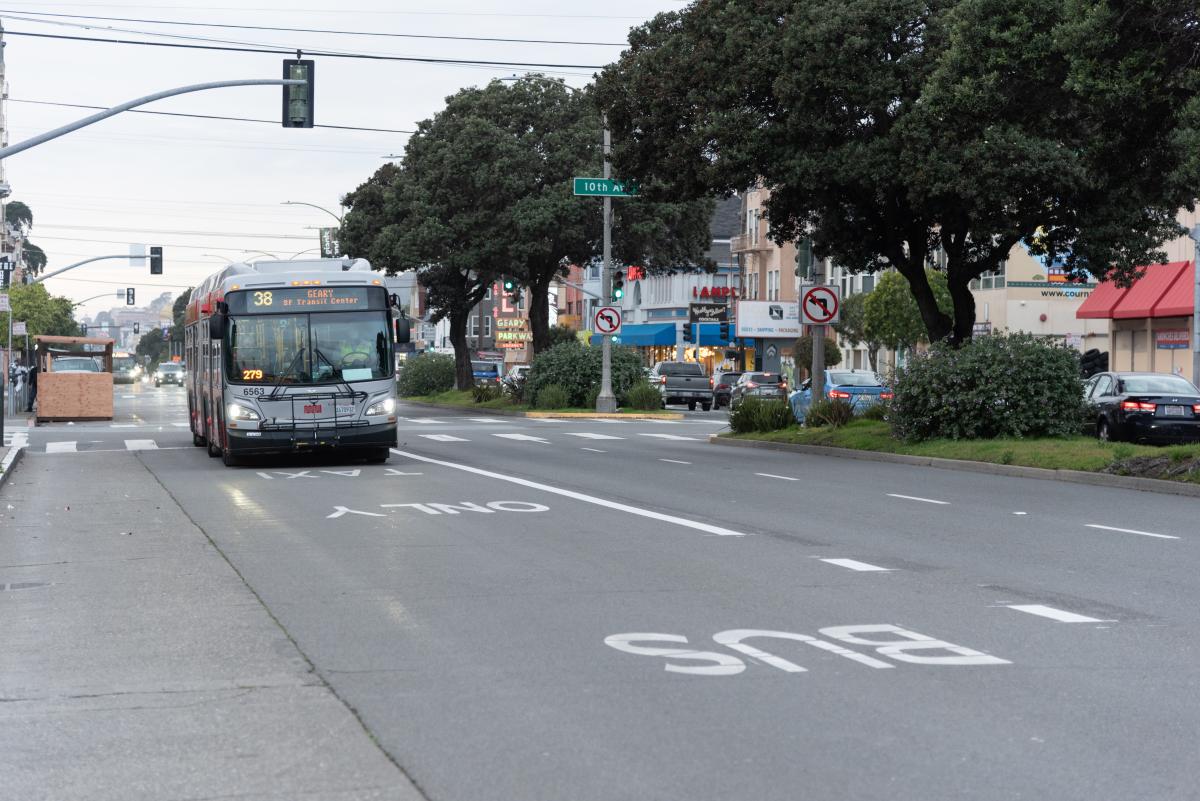
San Francisco's response to the COVID-19 pandemic included implementing temporary emergency transit lanes
Our COVID-19 response has challenged us to break down silos, think creatively, and expedite processes and practices that have traditionally required long lead times. We designed and implemented creative uses of public space that opened new avenues for enjoying San Francisco even in a time of physical distancing. In the midst of a once-in-a-lifetime public health crisis, our staff has risen to the occasion and has delivered projects keen on keeping San Franciscans moving. Now, a walk across any San Francisco neighborhood is characterized by its Slow Streets, outdoor dining configurations, and new opportunities to rediscover the type of outdoor recreation synonymous with San Francisco. Iconic areas like the Great Highway, Golden Gate Park, and the top of Twin Peaks are now more accessible to more people than ever before.
Here's a snapshot of some of SFMTA’s accomplishments over the past year, by the numbers:
- Slow Streets
- Implemented 25 temporary corridors, comprising 44 lane miles.
- Making first three permanent; comprising 8 miles on Page, Sanchez, and Shotwell streets.
- Surveying residents along all 25 Slow Streets corridors; with plans to present results to the SFMTA Board in July 2021
- Temporary Emergency Transit Lanes
- Implemented four key corridors, including 7th and 8th streets, Downtown Mission Street, Geary Boulevard and the 4th St. Bridge
- Vision Zero
- Installed 80 miles of street safety improvements in 2020 (more than 30 of which are on the High Injury Network)
- Implemented
- 6.5 new miles protected bikeways
- 11 miles with slower speed limits
- >300 continental crosswalk upgrades
- >150 signals upgraded additional crossing time for people walking
- >60 signals upgraded with leading pedestrian intervals
- Taxi industry support - distributed:
- 14,504 gloves
- 3,469 masks
- 830 hand sanitizers
- 87 gallons of disinfectant refills
- 259 rolls of paper towels
- 822 plastic shields installed between front and rear seat
- Streetscape Improvements:
- 16,171 COVID-related signs installed by the Sign Shop
- Jammed parking meters reduced to < 2% citywide, before pandemic >30%
- Installed 1,069 bike racks
- Daylighted almost 1,500 corners
- Permits for over 8,000 shared bikes/scooters/mopeds
- 174,000 trips in January
71% of San Francisco residents were within 1/4 mile of a shared mobility option such as a bike (classic and e-bike), power scooter, or e-moped by January of 2021.
Muni:
- Sanitized 800+ transit vehicles twice per day; hired 43 additional car cleaners along with three assistant supervisors and one manager
- Distributed 627,074 masks between July 2020 and March 2021
- To SFMTA employees – 434,349
- To members of the public – 192,725
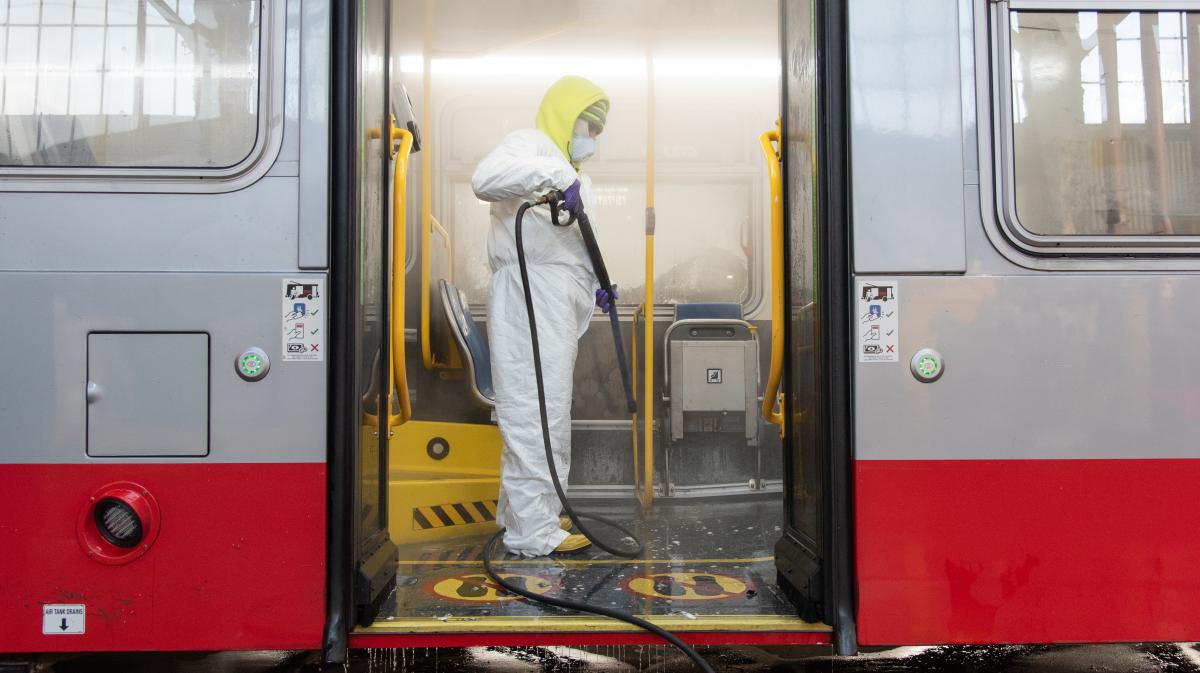
A car cleaner sanitizes a Muni bus before it's returned to service
COVID-19 has led to personal impacts to so many of us. Over the course of this last year, 246 SFMTA employees have tested positive for COVID-19, and sadly we lost two colleagues to the virus. Many more colleagues have been affected by illness or loss of their family members or friends.
Through proactive safety measures, the SFMTA has been able to minimize transmission of COVID in the workplace. With the widescale spread of COVID in society, 4.1% of staff have tested positive for COVID, which is consistent with regional rates and is less than half of statewide infection rate of 8.9%.
With the release of a vaccine, we look forward to supporting the city and its economic recovery. Our Transportation Recovery Plan is our framework for expanding our transportation services and operations as the Public Health Orders are modified and demand for travel increases. Our staff has answered the call to serve, and we will continue to step up and keep San Francisco moving. We look forward to seeing you aboard Muni and taking a bike ride or stroll. Be sure to check out our website and our COVID-19 page for any updates on our service and programs.
Published March 16, 2021 at 10:42PM
https://ift.tt/3rTF8fr
Comments
Post a Comment