By Mariana Maguire
The recent wave of major subway repairs is finally wrapping up and customers can expect smoother, more reliable rides when Muni Metro reopens. New wayfinding signs and art projects are in place at Castro and West Portal stations, and – drumroll, please – Wi-Fi availability, thanks to routers being installed in stations and cellular antennas being installed in the tunnels. Safety certification for the subway repairs was approved on March 11, paving the way to reopen the subway and phase in more rail service in May. Soon, you’ll be able to let your loved ones know you’re on your way even when you’re underground.
Our staff used this rare extended subway shutdown as an opportunity to accelerate other upgrades and necessary maintenance work, by packaging them with subway repairs to maximize results. During normal service, subway maintenance crews can only work within the few hours a day when trains are not running.
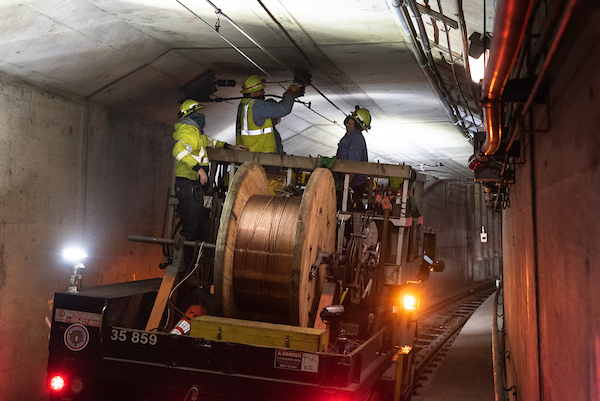
SFMTA crew installing new overhead wire in the subway tunnel
The work we completed during the pandemic provides significant customer improvements, including a quicker ride, the convenience of Wi-Fi and fewer breakdowns in the tunnel. This work represents an important downpayment on a larger set of deferred capital needs including replacement of the train control system, track replacement between Castro and Embarcadero and upgrades to the subway and station support systems, such as station electrical panels and fan systems. We’ve also been able to train additional crew members in tunnel operations and maintenance.
One of the last and key steps in finishing repairs and reopening the subway is safety testing and certification. The SFMTA is testing the track, signal system and overhead wires to ensure they are functioning properly and meet safety standards. We’re also tested our train control system to ensure it is in proper working order. The train control system is a crucial part of subway safety and operation, overseeing all of our trains in the tunnel and directing them to the right places.
Other important repairs and improvements included:
Track grinding: Just as it sounds, our track maintenance crews grind the track to smooth it out. Like a freshly repaved roadway, track grinding provides a smoother, quieter ride with less wear and tear to vehicles. This work had been in the queue for a while but was deferred because it requires service to be shut down and takes many hours. We were able to take advantage of the extended shut down to finally undertake this vital improvement.
Tunnel lighting: Our subway maintenance staff replaced the lights inside the tunnels between Castro and Van Ness stations and are completing installation of new tunnel lighting between Embarcadero and Montgomery stations. These lights are vital for train operators to see potential hazards. They are also necessary for visibility in emergencies. The previous lights were 50 years old and dim, creating safety concerns. While customers might not notice these new tunnel lights, this important safety upgrade will nevertheless make their trips safer.
Signs: We are also installing new wayfinding and directional signs at Castro and Church stations--part of a larger effort to improve wayfinding throughout the Muni Metro system. This includes upgrading the wayfinding signs inside stations that point customers to stairwells, elevators and escalators, and indicate where they lead. New station identification signs will also let you know where you are when your train pulls into one of these stations. All these new signs will be brighter and more visible with LED technology.
With this new signage, we are moving away from the confusing and outdated use of “inbound” and “outbound” wording in the subway. Instead, we will use a combination of route end points and cardinal directions (north, south, east, west), that are easier for customers to navigate and consistent with rail systems and stations in most major cities worldwide. As an example, that means if you are taking the N Judah at Powell Station and your destination is in the Sunset, you will look for signs for trains going to “Ocean Beach/Westbound” because Ocean Beach is the final destination west on the route.
Public art: When entering or exiting Muni Metro at Castro or West Portal, you will also see brand new, beautiful artwork on our accessible bus platforms at street level.
With the reopening of the subway, we will continue to gradually phase back Muni Metro rail by extending the T Third Metro to West Portal and bringing back the N Judah Metro rail between Ocean Beach and 4th and King. We expect these service changes to take place in May and we will share additional details as they become available.
Published April 06, 2021 at 01:56AM
https://ift.tt/3sNtt2p
Comments
Post a Comment