By Shalon Rogers
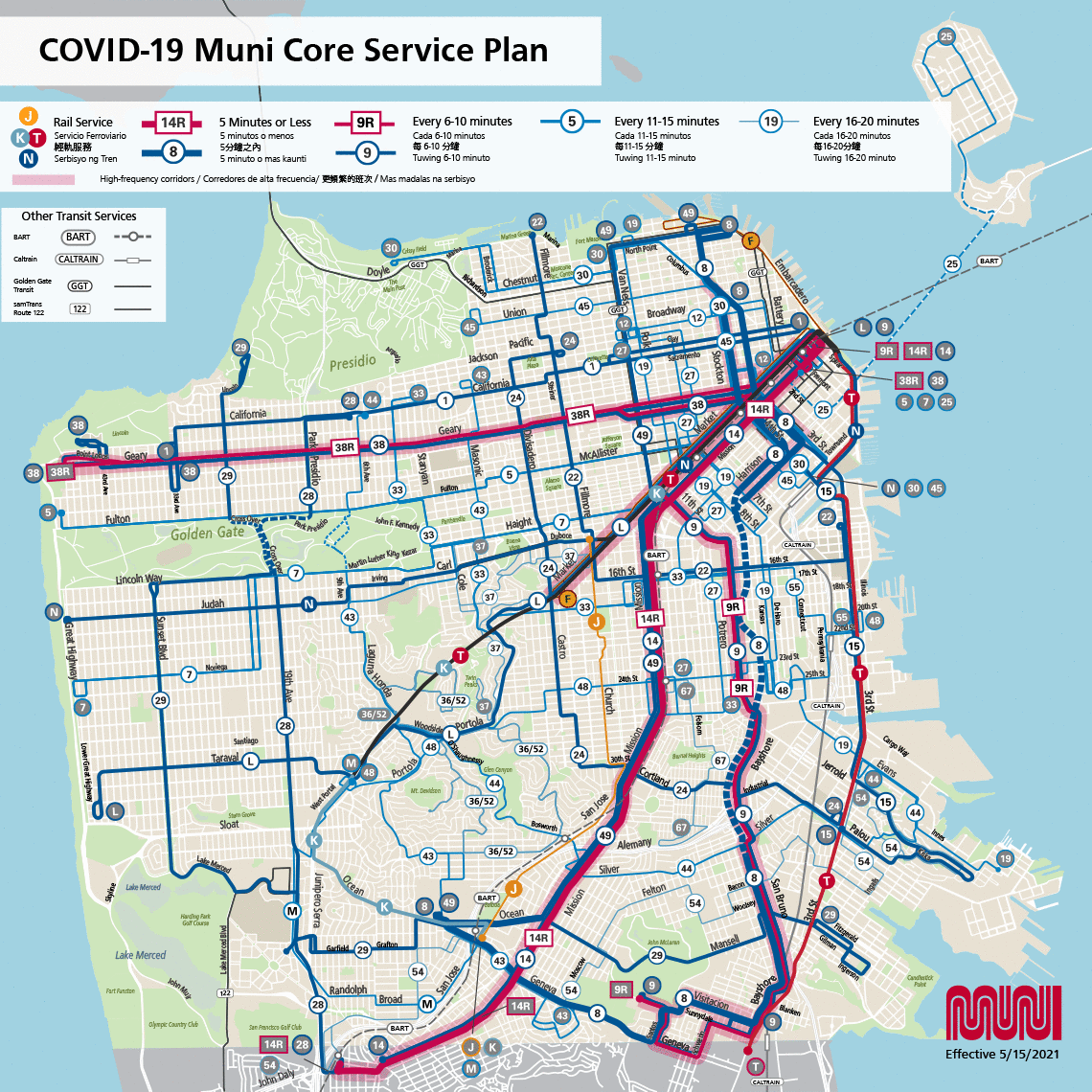
The COVID-19 Muni Core Service plan, effective May 15, showing all Muni service including new and returning Muni lines.
The SFMTA will reopen all of its Muni Metro subway stations on Saturday, May 15, with the return of rail service on the N Judah and KT Ingleside-Third routes. To continue maximizing Muni access citywide, we’re also adding a new bus route: the 36/52 Special, serving the hilltop neighborhoods of Forest Hill, Miraloma and Sunnyside. In addition, we are excited to bring back San Francisco’s historic streetcar route--the F Market & Wharves.
N Judah Metro rail service will resume its full route between Ocean Beach and 4th and King Street (Caltrain), and the T Third will be extended to West Portal and then continue on, running as the K Ingleside to Balboa Park Station. With the return of rail service to these routes, customers will have faster transit times downtown, as well as to other popular destinations including the Castro, City College, Ocean Beach, Golden Gate Park, Oracle Park, Chase Center, UCSF Parnassus, UCSF Mission Bay and Caltrain.
The J Church will remain a surface-only route from Balboa Park to Church and Market streets. For subway service, customers may transfer at Market Street to any train downtown, or the KT outbound, at the Church Street Station. The L Taraval and M Ocean View buses will continue to operate in lieu of rail service.
After working closely with Castro, mid-Market and Fisherman’s Wharf merchants, the full F Market & Wharves route from Fisherman’s Wharf to Market and Castro will return to service on our beloved, historic streetcars to help support the city’s reopening and return of tourism.
In response to customer feedback for improved service to connect hospitals, grocery stores and vaccination sites in hilly areas, we are also introducing a temporary new combined route--the 36/52 Special. This bus route will serve the hilltop neighborhoods of Forest Hill, Miraloma and Sunnyside in a loop between Forest Hill Station and Glen Park Station.
We continue to work closely with district supervisors, community members and other stakeholders to bring back additional service and modify existing service to serve customers’ needs as the city continues to reopen and recover. Since January 23 of this year, 91% of San Franciscans have been within 2-3 blocks of a Muni stop. And, this includes 100% of residents in San Francisco’s neighborhoods identified in the Muni Service Equity Strategy. By mid-August, SFMTA is aiming to add back additional routes to close service gaps so that 98% of San Franciscans will have access to Muni within 2-3 blocks .
Below is the complete list of service changes. Please note that details are subject to change. For the most up to date information with free language assistance and accessibility, please call 311 or (415) 701-4311 or visit the Core Service Plan webpage.
May 15 Muni Service Changes
Service hours for each route are noted below. Owl network service hours are 10 p.m. to 5 a.m. daily. For more information on frequency and hours of service, read more on the COVID-19 Muni Core Service Plan.
F Market & Wharves
- The historic streetcar will return to service between 17th and Castro streets and Jones and Beach Streets. Service hours:
- From Castro: Approximately 11 a.m. to 7 p.m. (first trip departing from Castro Station is 10:50 a.m.)
- From Fisherman’s Wharf: Approximately 12 p.m. to 8 p.m.
- Use the L Bus or L Owl for local service along Market Street during the hours when the F is not running.
KT Ingleside-Third: The K Ingleside and T Third will interline as the KT Ingleside-Third, expanding service between Balboa Park and Sunnydale. This route will use the newly reopened Muni Metro subway, serving all stations between West Portal and Embarcadero.
- Service hours
- Weekdays: 6 a.m. to 9 p.m.
- Weekends: 8 a.m. to 9 p.m.
- Between the hours of Owl service (10 p.m. to 5 a.m.) and rail service, Muni Metro buses will provide service from 9 p.m. to 10 p.m. on weekdays, and 5 a.m. to 8 a.m. and 9 p.m. to 10 p.m. on weekends.
- The K Bus will run between Balboa Park and West Portal Station from 9pm to 10pm daily.
- During the weekend, for the hours between Owl service (10 p.m. to 5 a.m.) and rail service, the K Ingleside bus will run between Balboa Park and Embarcadero-Ferry Plaza from 5 a.m. to 8 a.m. and the T Third bus will run between Embarcadero-Ferry Plaza and Sunnydale.
N Judah
- Rail service will resume for the entire route with two-car trains replacing Metro buses.
- Service hours
- Weekdays: 6 a.m. to 9 p.m.
- Weekends: 8 a.m. to 9 p.m.
- Muni Metro buses will cover the hours between Owl Service and rail service, running 5 a.m. to 6 a.m. and 9 p.m. to 10 p.m. on weekdays and 5 a.m. to 8 a.m. and 9 p.m. to 10 p.m. on weekends.
K Bus, L Bus and L Owl
- These lines will no longer serve Forest Hill Station directly. Please visit K Bus, L Bus and L Owl route pages for more information.
36/52 Special*
- Temporary new combined route between Forest Hill Station and Glen Park Station serving the Glen Park, Sunnyside, Midtown Terrace and Miraloma communities. The route will serve Laguna Honda Hospital.
- The inbound (clockwise) route will include an additional loop on Clarendon.
8 Bayshore
- The current 8AX Bayshore “A” Express service will become the 8 Bayshore short between City College and Kearny at Pacific. Service for this route ends at 7:30 p.m. daily.
- The 8 Bayshore long will continue to travel between City College and Fisherman’s Wharf.
- The 8 Bayshore will return to its pre-pandemic route traveling north on Kearny, instead of Stockton.
Frequency Adjustments
The following routes will have reduced frequency after 7 p.m. to better match resources with observed ridership demand.
|
After 7pm only |
Routes |
|---|---|
|
Daily from 10 or 12 minutes to 15 minutes |
|
|
Daily from 15 minutes to 20 minutes |
|
|
Daily from 20 minutes to 30 minutes |
|
|
Weekday only from 12 minutes to 15 minutes |
|
|
Weekend only from 15 minutes to 20 minutes |
|
36/52 Special*
- Temporary new combined route between Forest Hill Station and Glen Park Station serving the Glen Park, Sunnyside and Miraloma communities. The route will serve Laguna Honda Hospital.
- The inbound (clockwise) route will include an additional loop on Clarendon.
8 Bayshore
The current 8AX Bayshore “A” Express service will become the 8 Bayshore short between City College and Kearny at Pacific. Service for this route ends at 7:30 p.m. daily.
- The 8 Bayshore long will continue to travel between City College and Fisherman’s Wharf.
- The 8 Bayshore will return to its pre-pandemic route traveling north on Kearny, instead of Stockton.
Frequency Adjustments
The following routes will have reduced frequency after 7 p.m. to better match resources with observed ridership demand.
Published May 06, 2021 at 08:43PM
https://ift.tt/3nQpXTk
Comments
Post a Comment