By Jeremy Menzies
With the F Market & Wharves returning to service on May 15th, here’s a brief look back through the past 115 years of streetcar service along Market Street, our most traveled thoroughfare.
May 2, 1906 was the first day that an electric streetcar ran on Market Street. After the earthquake and fires on April 18, 1906, San Francisco was eager to rebuild, and public transit played a crucial role in getting the city back on its feet.
Prior to electric streetcars, transit on Market was dominated by cable cars, which ran from the Ferry Building to the Pacific Ocean, but were considered slow and inefficient compared to the newer electric streetcar technology. With the introduction of electric cars on Market Street, people had a faster way to get to downtown businesses and rebuild from the ashes of the disaster.
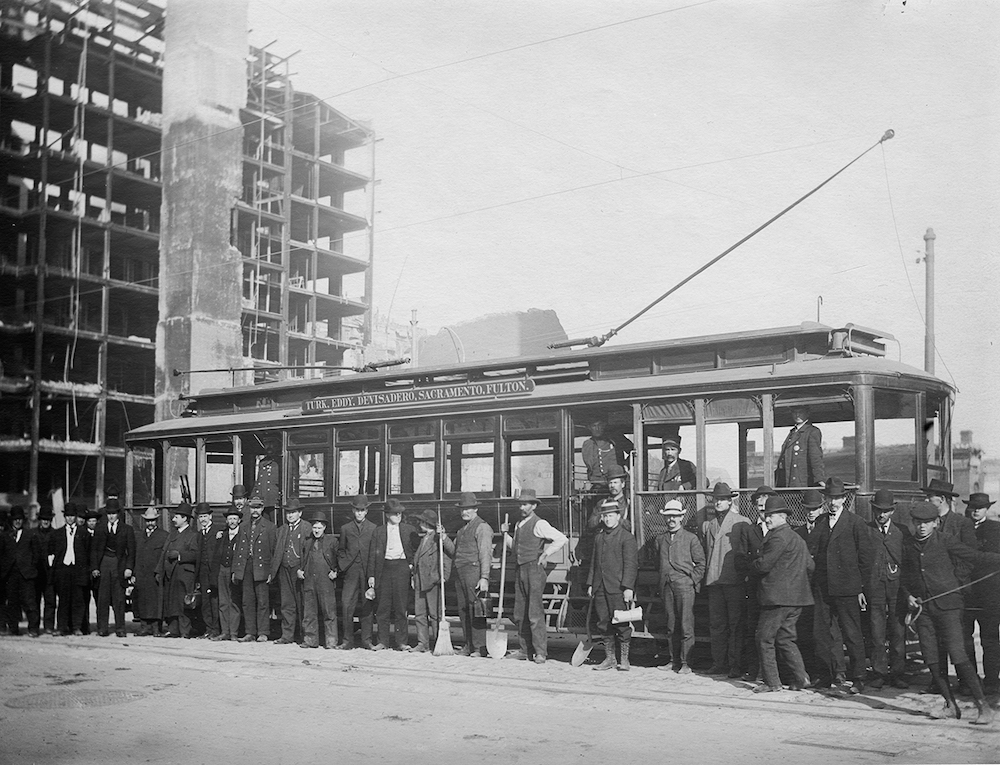
This photo documents the first streetcar to run on Market Street, just two weeks after the devastating April 18, 1906, earthquake.
In the years following the 1906 disaster, nearly all cable lines were converted to electric cars and Market Street became an incredible hub of streetcar traffic. By the 1930s, four different streetcar tracks ran along Market, operated both by the Municipal Railway and by the privately-owned Market Street Railway Co. Dubbed the “Roar of the Four,” due to the noise of hundreds of cars rolling through the urban canyon of Market Street, streetcars were certainly king of the road.
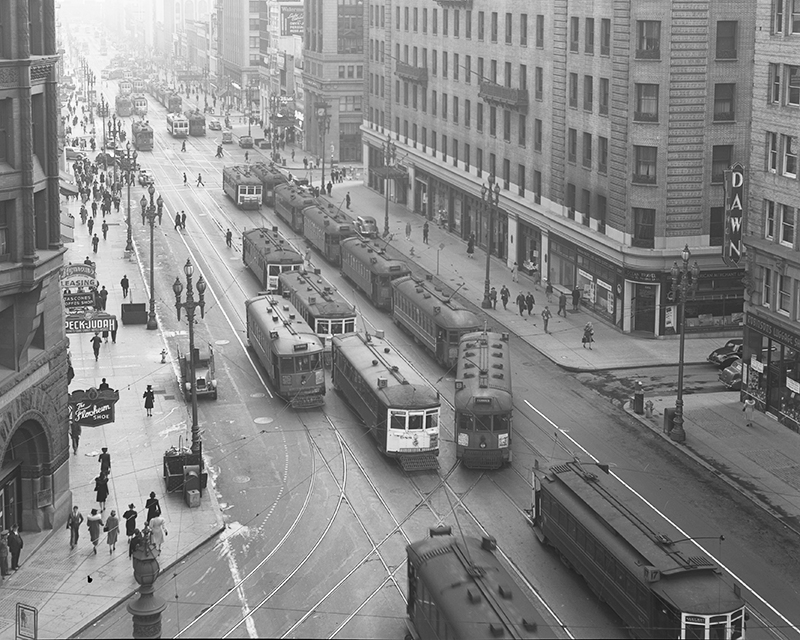
This 1940 photo shows morning streetcar traffic at Market and Geary at 8:41 a.m. Most public transit service in the city was provided by electric streetcars, and almost all lines merged onto Market Street at some point.
After the end of World War II, transit ridership was in steep decline across the nation as people embraced the “one car per family” dream of Postwar America. Streetcar ridership fell significantly during this time and the majority of Muni’s routes were converted to bus operation. Rail service was, however, retained for five lines (J, K, L, M, & N) because the exclusive rights of way in the Twin Peaks and Sunset Tunnels allowed for shorter travel times to the city’s outer neighborhoods.
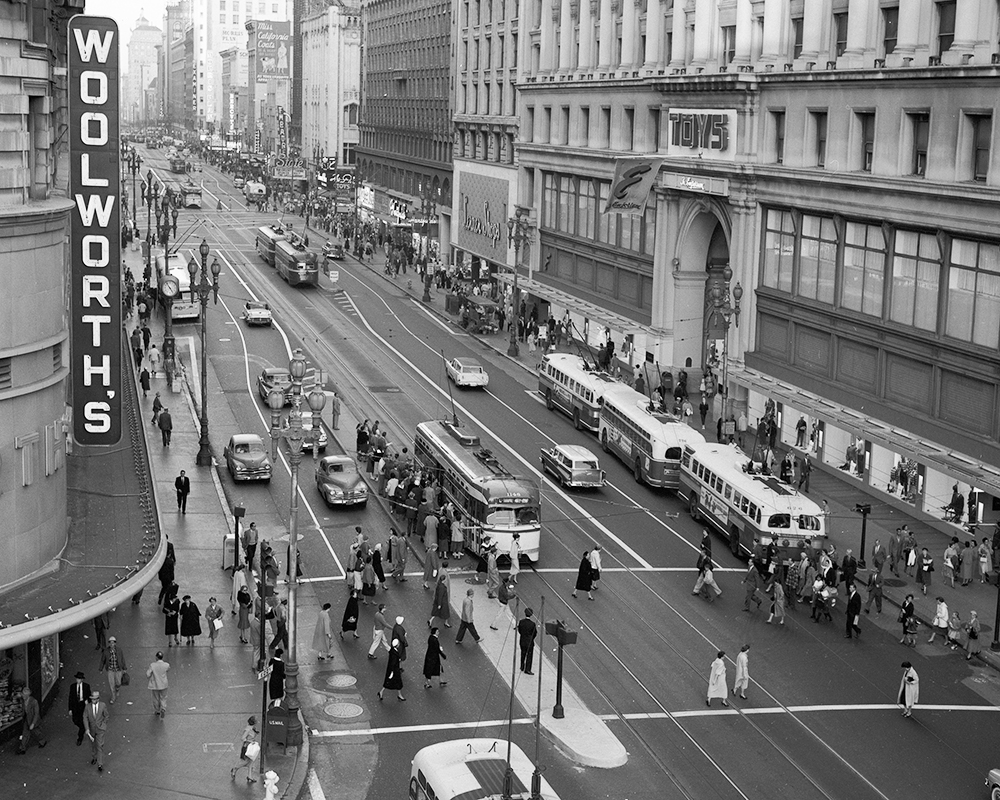
Trolley buses and Muni PCC streetcars ply the roadway at Market and Powell in this 1958 photo. Bus conversion and the scrapping of hundreds of old streetcars in the 1950s meant fewer rail lines running on Market.
With the opening of the Muni Metro & Market Street Subway in the early 1980s, traditional streetcars disappeared from regular transit service on the surface of Market Street for over a decade. Replaced with Light Rail Vehicles running underground, San Francisco’s first subway system was born.
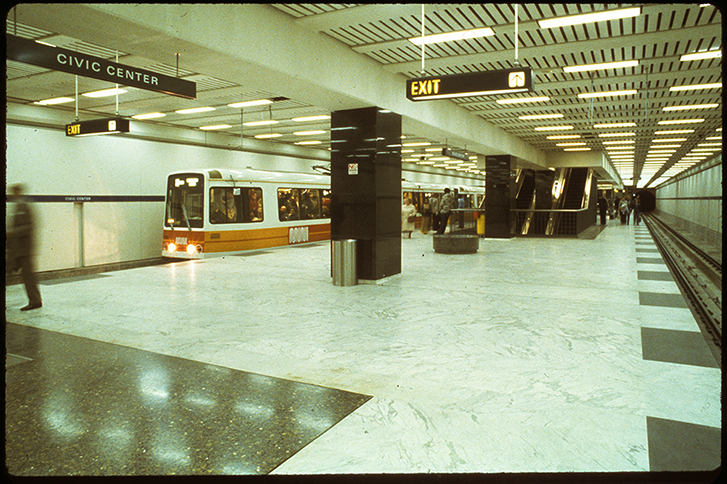
The opening of the Muni Metro system allowed new light rail vehicles to run underground between the Ferry Building and West Portal instead of jockeying with cars, buses, pedestrians and cyclists on the surface.
When the opening of Muni Metro removed surface rail on Market Street, residents and businesses began advocating for the creation of an historic streetcar service from Castro to Fisherman's Wharf. After years of planning and construction, the F line was launched on September 1, 1995. Originally running from Castro to downtown, service was extended to Fisherman's Wharf in March 2000.
This month, we are happy to welcome the F Market & Wharves back to Market Street and Fisherman’s Wharf, along with more service increases that, just like 115 years ago, will help San Francisco recover.
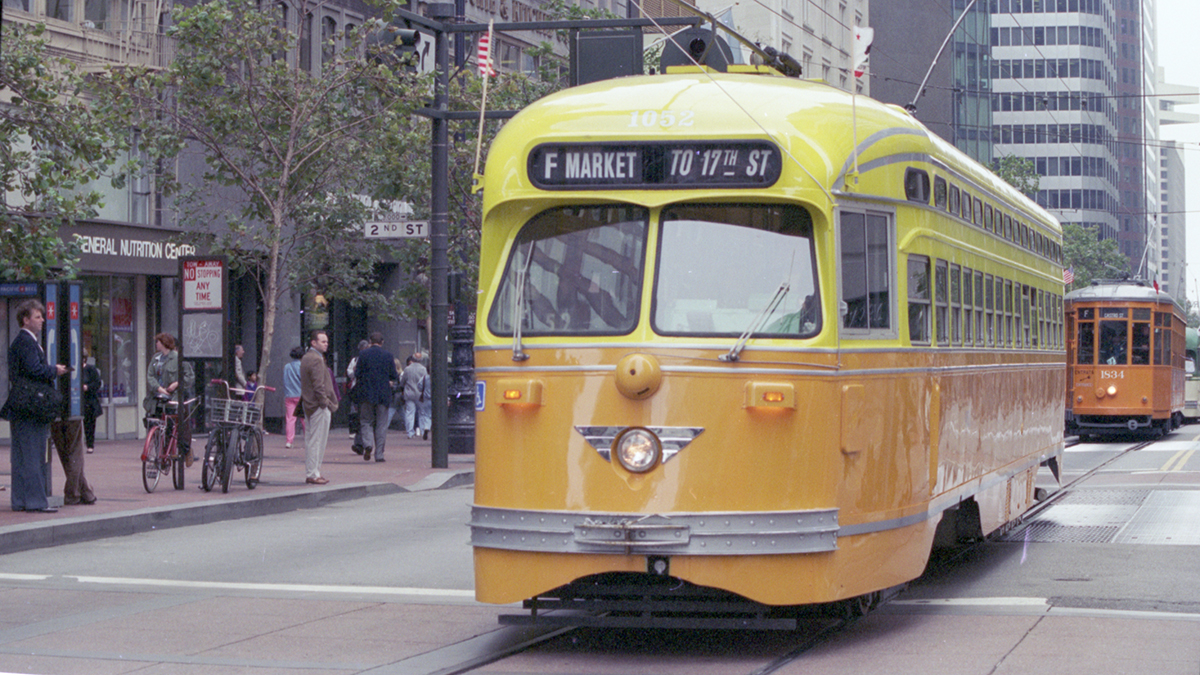
Presidents Conference Committee (PCC) streetcar 1052 parades along Market for the opening of the F Market & Wharves in 1995.
Check out more details in our previous blog about the May 15 return of the F Line.
Published May 06, 2021 at 04:43AM
https://ift.tt/3vHXnpQ
Comments
Post a Comment