Improving Pedestrian Safety and Access for Lake Merced

Improving Pedestrian Safety and Access for Lake Merced
By Adrienne Heim

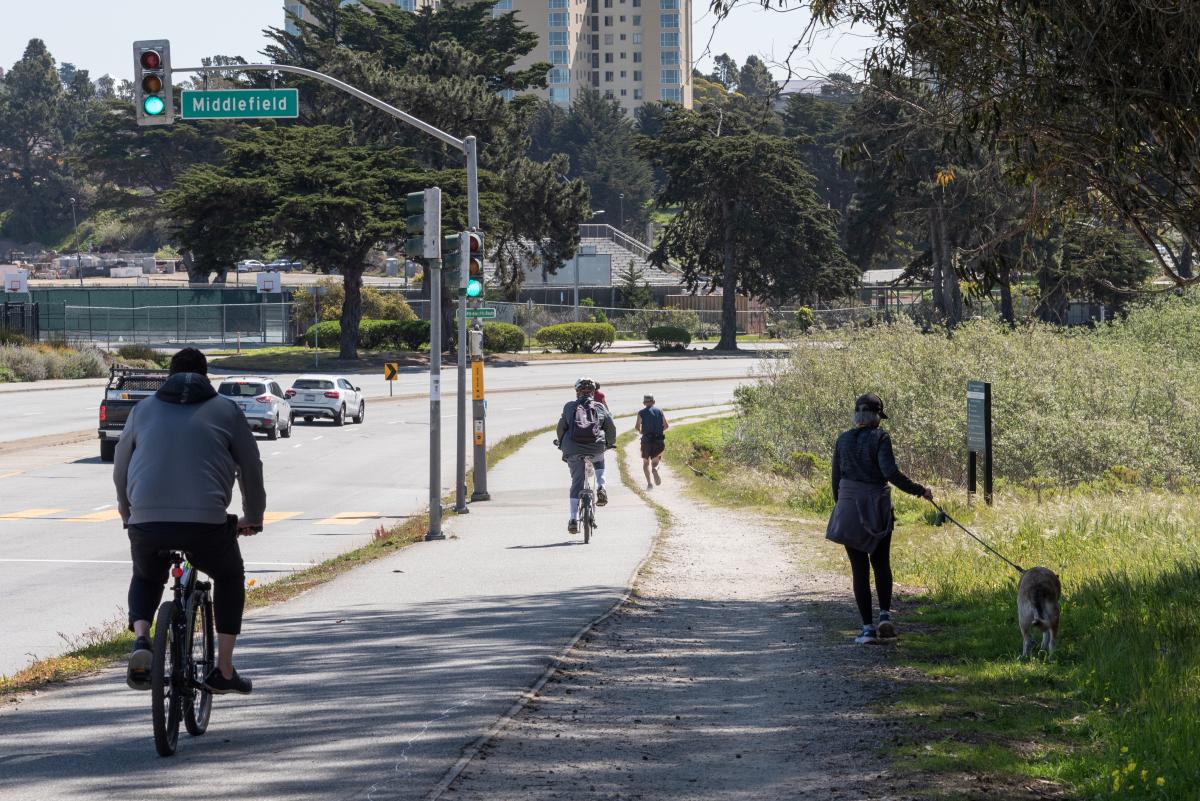
Photo of Lake Merced Boulevard with pedestrians, bicycle riders and cars

Lake Merced is a popular recreational destination

Help Us Prioritize and Identify Needed Safety Improvements

The Lake Merced Pedestrian Safety Project is studying potential improvements for pedestrian safety and access along Lake Merced Boulevard between Sunset Boulevard and John Muir Drive. Situated in San Francisco’s southwestern corner, Lake Merced Boulevard has a history of collisions, including those between vehicles and pedestrians, and between vehicles and bicycles. Lake Merced Boulevard between Font and Sunset boulevards is part of San Francisco's Vision Zero High Injury Network (HIN), where 75% of the city's traffic injuries and fatalities occur on just 13% of its streets.

Surrounded by major recreational, education, and shopping destinations, the boulevard is a major route for Lake Merced Park, San Francisco State University, Lowell High School, Lakeshore Elementary School and Stonestown Galleria. Lake Merced Boulevard is also an official city bicycle route where cyclists can either use the bike path around the lake or share the roadway with drivers on the north side of the street.
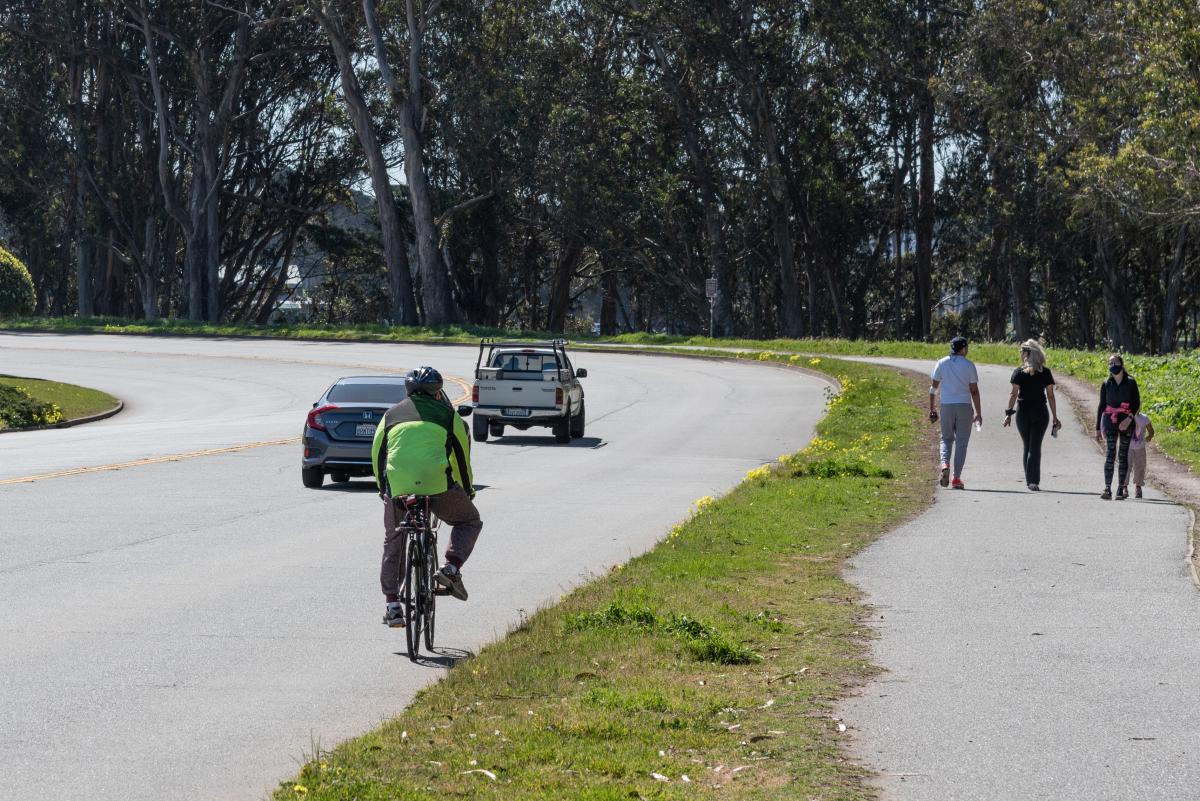
Photo of people walking and biking, with cars passing by on Lake Merced Boulevard

People walking and biking on Lake Merced Boulevard

Over a 5-year period (between 2015 to 2020) a total of 106 collisions were reported on the boulevard between Skyline Boulevard and John Muir Drive. Of those, nine were bicycle-vehicle collisions and four were vehicle-pedestrian collisions.
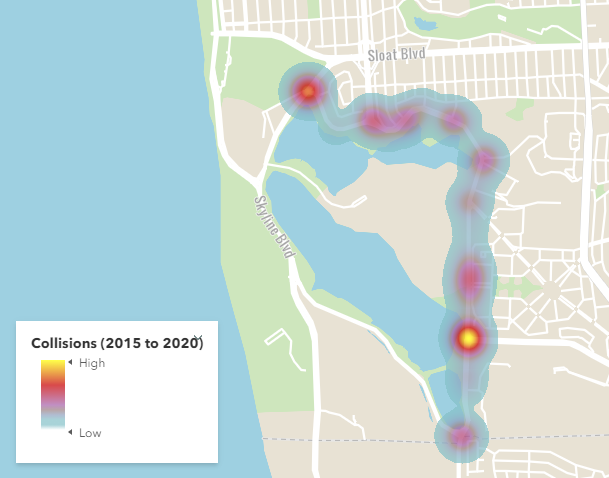
Map of Vehicle, Bicycle and Pedestrian Collisions from 2015 to 2020 on Lake Merced Boulevard from Skyline Boulevard to John Muir Drive

Vehicle, Bicycle and Pedestrian Collisions from 2015 to 2020 on Lake Merced Boulevard from Skyline Boulevard to John Muir Drive

Participate in Our Virtual Open House

From June 8 to June 22, we are inviting feedback from community members who live, work, and/or travel around Lake Merced Boulevard through our interactive virtual open house (available in English, Chinese and Spanish).  You can learn more about the project and provide comments during the event, which can be accessed at any time during the open house period.

In July, we will review the steering committee and community’s feedback and produce a Community-Based Transportation Plan (CBTP) that highlights recommendations for improvements, preliminary conceptual designs, and a feasible implementation plan that reflects community needs and desires.

We also encourage you to take the Lake Merced Pedestrian Safety Survey on the website or by placing your cell phone camera over the QR code.

QR code for open house survey

The survey will be open until June 22. 

The planning process for this project includes a monthly steering committee that consists of neighbors and stakeholders to help staff better understand current walking patterns, barriers, and opportunities to improve pedestrian connections to and from Lake Merced Park and nearby transit stops. Learn more about the project and subscribe to project updates by visiting our Lake Merced Pedestrian Safety Project, Making Access Around Lake Merced Safer and More Pleasant website.


Published June 08, 2021 at 10:17PM
https://ift.tt/3g1nymk

Comments

Popular posts from this blog

150 Years Ago Today – The Cable Car is Born

150 Years Ago Today – The Cable Car is Born By Kelley Trahan August 2, 2023, marks the 150th anniversary of the world’s first successful cable railway, born right here in San Francisco. To celebrate the occasion, we bring you the story of Andrew Hallidie and the very first cable car company, the Clay Street Hill Railroad.  Andrew Hallidie (1834-1900) was a pioneering inventor and entrepreneur who changed urban transportation. In 1852, at the age of 18, Hallidie emigrated with his father from the United Kingdom to San Francisco during the California Gold Rush. His father, an engineer and inventor, had a wire rope patent that played a crucial role in his son's future success.   Portrait of Andrew Smith Hallidie in 1890. Inspired by his father's wire rope business, Hallidie developed a steel cable mineral mine hauling system in 1857. About a decade later, he designed a wire rope aerial tramway for transporting materials over mountainous terrain. Then, after a stint in bridg...

Shared Spaces are Here to Stay. Permit Renewals are Due January 15, 2023.

Shared Spaces are Here to Stay. Permit Renewals are Due January 15, 2023. By Anne Yalon Shared Spaces, amongst many other benefits, allows our residents and families to enjoy safe and social outdoor dining. Seen here are the the owners of Tio Chilo’s Grill and their children in the restaurant’s parklet on 24th Street in the Mission.  San Francisco’s popular Shared Spaces program allows merchants, restaurants and arts and culture organizations to use the curbside, sidewalk and other public spaces to conduct local business activities and stay afloat. What emerged as an economic lifeline during the pandemic is making San Francisco’s streets more energized, engaged and activated. Many of the Shared Spaces parklets have become central gathering places for the local community. “ Our parklet makes me feel like when I go to Mexico, where outdoor seating is everywhere. People end up joining their friends in our parklet. It is a space for our customers and our community," said Liz V...

Tenderloin Streets Transform During COVID-19

Tenderloin Streets Transform During COVID-19 By Kimberly Leung COVID-19 has disproportionately impacted people who live and work in the Tenderloin. As a result, the SFMTA has been working closely with District 6 Supervisor Matt Haney’s office, other city departments, the Tenderloin Traffic Safety Task Force and community members to address the public health issues and unique challenges in the neighborhood through innovative interventions.    The Tenderloin is home to many of our most vulnerable communities including historically marginalized groups such as people with disabilities, residents of SROs and supportive housing and limited-English proficient communities. With every single street in the Tenderloin on the city’s High Injury Network -- the 13 percent of San Francisco streets that account for 75 percent of severe traffic injury collision and fatalities -- thi...