By Pamela Johnson
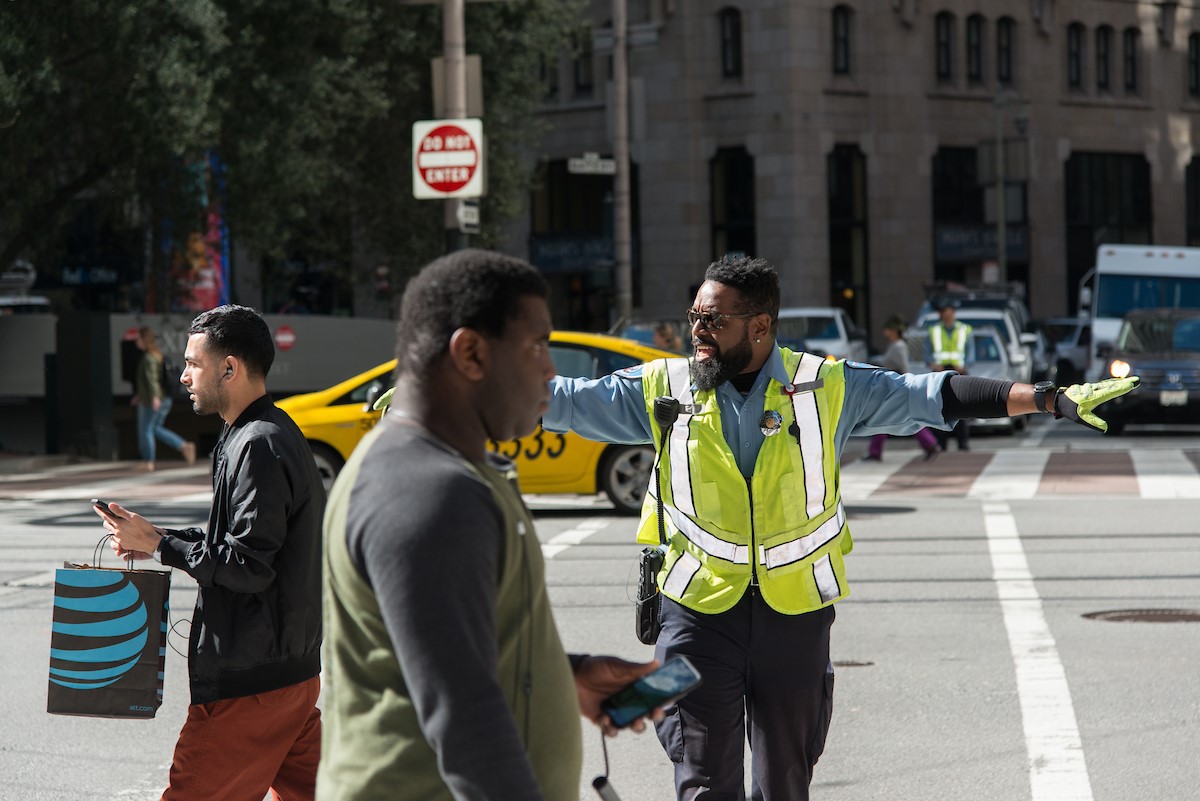
Parking Control Officer Larrell Dean directing traffic in 2019
You may not know always know their names or faces, but dedicated employees of the SFMTA are out on the street every day empowering our mission to keep San Francisco on the move. As part of a Good People, Tough Jobs series, we will be highlighting those key SFMTA staff who are crucial to accomplishing this goal. Today we take a look at the experiences of our parking enforcement group.
It isn't easy being a parking control officer (PCO) in San Francisco. PCOs are often met with anger and antagonism while enforcing parking regulations. Yet the work of PCOs is a critical tool in keeping our city moving, as they ensure that streets and critical pathways are kept clear for transit, vehicles, pedestrians, and other modes of transportation.
Unfortunately, the day-to-day work of a PCO can involve aggressive and, at times, unsafe situations. There are cases of parking officers being attacked on the job as they are issuing a fine. From yelling, spitting to physically assaulting the officer, their safety is sometimes jeopardized.
For instance, between 2015 to July 2019 there were 9 assaults on officers reported and 27 Workers’ Compensation assault claims filed.
When asked about the nature of his job, PCO Larrell Dean replied “The most important thing is to be aware of my surroundings and make sure I’m safe and the people around me are safe, and treat the public with the utmost respect and professionalism."
While none of us likes to get a parking ticket, we know that taking it out on the city worker is wrong. Instead, remember to respond in a way that fosters a safer and more considerate work environment for them. PCOs are good people with demanding jobs. Of course, if you disagree with your citation, you can appeal it online or by mail rather expressing hostility toward the enforcement officer for administering the law.
The Importance of PCOs and What they Do
When enforcing parking regulations, the role of the PCO includes responding to residents' complaints (such as keeping driveways clear), managing residential parking permit time limits and arranging tow away for illegally parked vehicles. PCOs also support San Francisco's commercial corridors and small businesses by keeping spaces open and available to authorized parking and loading. Another critical job of the PCO is to provide street safety by directing vehicular and pedestrian traffic, particularly during special events and emergencies. While on the job, PCOs help monitor and manage hazards, traffic obstructions, accidents, stolen cars and property damage.
We’re asking for your help in spreading the word about being respectful to and creating a safe workspace for SF’s parking control officers—and please share this blog and safety campaign.
To help reduce frustration on all sides, please see the tips and available resources below. And remember, if you disagree with a citation you’ve received, contest it. Attacking a PCO is never the right choice.
How to Park Legally In San Francisco
For more information, including five things you should know to avoid a parking ticket, visit How To Park Legally in San Francisco and the Streets of San Francisco Parking Guide.
How to Appeal Your Citation
If you find that you have received a citation and disagree with it, you can appeal it online or call 311 (within San Francisco) or 415-701-2311.
Community Service In-Lieu of Payment Program
The SFMTA’s Community Service Program provides customers the option to perform community service in San Francisco in lieu of parking ticket and transit citation payment. Visit the agency’s website to learn more about the community service program.
Published July 13, 2021 at 09:07PM
https://ift.tt/2TXRgAH
Comments
Post a Comment