Bikeshare Station Expansion and e-Bike Price Changes

Bikeshare Station Expansion and e-Bike Price Changes
By Adrian Leung

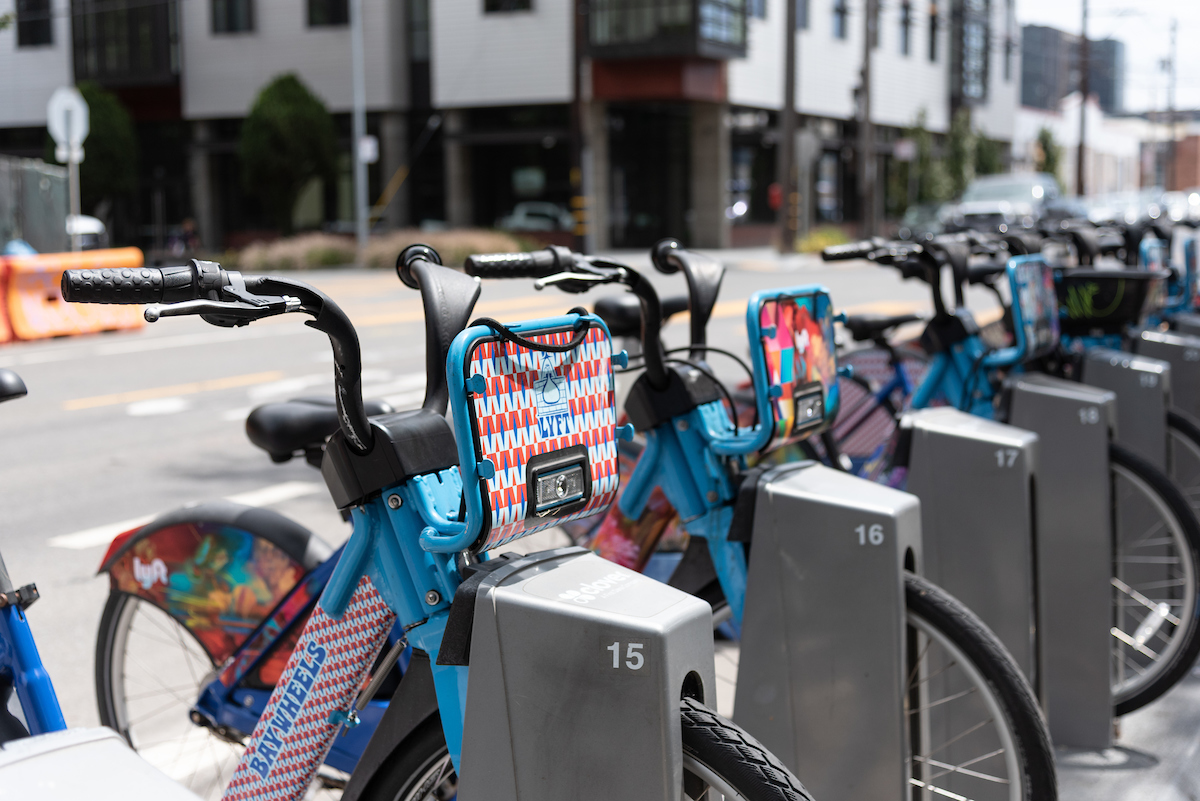
Photo of Baywheels bike station

As San Francisco's Bikeshare program administrator, the SFMTA recently approved a price increase for Bay Wheels stationless e-bike trips that will take effect September 22, 2021.

Bikesharing systems have been an important contribution to the rise in popularity of bicycling in San Francisco over the past decade. Bikeshare programs lower barriers to bicycling by overcoming the challenges of owning, storing and securing one’s own vehicle. Shared bicycles also offer a solution for the "last mile" connections that allow for more effective travel by transit so that one can complete their so-called “last mile” to their destination by bicycle.

The SFMTA regulates bikeshare service in order to provide equitable access to shared bicycles for all San Franciscans, as well as ensuring proper placement of stations or unstationed vehicles.  Before and throughout the pandemic, bicycling has increased, and our bikeshare program is part of that trend.

Per minute e-bike fees will increase from $0.15 to $0.20 per minute for members and from $0.20 to $0.30 per minute for non-members. And overage fees for all users will switch from a per-15-minute fee to a per-minute fee.

The SFMTA’s agreement with Bay Wheels allows for e-bike pricing to be reasonably set to sustain service. This includes raising revenue to support the system during heavy losses from ridership declines during COVID-19, and theft and vandalism.

Bay Wheels Commitments

In exchange for the pricing increase, Bay Wheels has committed to expanding access to both e-bikes and regular bicycles. They have agreed to install 35 additional stations by March 2022 for a total of 290 total stations citywide. In addition, they will provide up to 2,000 free Bike Share for All (low-income) memberships, to be distributed via community partners. Bay Wheels will provide promotional pricing including reduced prices in conjunction with Bike to Work month in May 2022, free e-bike unlocks for up to 5,000 trips for new users, and a 20% discount on annual memberships for over 2,000 new members.

The agreement with Bay Wheels also calls for eliminating any additional price changes for at least ten months and committing to increased social media promotion of the Adaptive Bikeshare program.

There is no price change for regular pedal bikes ridden by members over the 45-minute base period.  ($159 annual, $25/month). Additionally, there is no change to pricing for Bike Share for All, the low-income membership program.

Other stationless pricing discounts remain the same. There is still no parking fee for stationless e-Bikes ending trips at stations, or in specific zones without stations. Trips to and from specific areas will continue to have capped per-minute fees.


Published September 15, 2021 at 10:33PM
https://ift.tt/3nAjC05

Comments

Popular posts from this blog

150 Years Ago Today – The Cable Car is Born

150 Years Ago Today – The Cable Car is Born By Kelley Trahan August 2, 2023, marks the 150th anniversary of the world’s first successful cable railway, born right here in San Francisco. To celebrate the occasion, we bring you the story of Andrew Hallidie and the very first cable car company, the Clay Street Hill Railroad.  Andrew Hallidie (1834-1900) was a pioneering inventor and entrepreneur who changed urban transportation. In 1852, at the age of 18, Hallidie emigrated with his father from the United Kingdom to San Francisco during the California Gold Rush. His father, an engineer and inventor, had a wire rope patent that played a crucial role in his son's future success.   Portrait of Andrew Smith Hallidie in 1890. Inspired by his father's wire rope business, Hallidie developed a steel cable mineral mine hauling system in 1857. About a decade later, he designed a wire rope aerial tramway for transporting materials over mountainous terrain. Then, after a stint in bridg...

Shared Spaces are Here to Stay. Permit Renewals are Due January 15, 2023.

Shared Spaces are Here to Stay. Permit Renewals are Due January 15, 2023. By Anne Yalon Shared Spaces, amongst many other benefits, allows our residents and families to enjoy safe and social outdoor dining. Seen here are the the owners of Tio Chilo’s Grill and their children in the restaurant’s parklet on 24th Street in the Mission.  San Francisco’s popular Shared Spaces program allows merchants, restaurants and arts and culture organizations to use the curbside, sidewalk and other public spaces to conduct local business activities and stay afloat. What emerged as an economic lifeline during the pandemic is making San Francisco’s streets more energized, engaged and activated. Many of the Shared Spaces parklets have become central gathering places for the local community. “ Our parklet makes me feel like when I go to Mexico, where outdoor seating is everywhere. People end up joining their friends in our parklet. It is a space for our customers and our community," said Liz V...

Tenderloin Streets Transform During COVID-19

Tenderloin Streets Transform During COVID-19 By Kimberly Leung COVID-19 has disproportionately impacted people who live and work in the Tenderloin. As a result, the SFMTA has been working closely with District 6 Supervisor Matt Haney’s office, other city departments, the Tenderloin Traffic Safety Task Force and community members to address the public health issues and unique challenges in the neighborhood through innovative interventions.    The Tenderloin is home to many of our most vulnerable communities including historically marginalized groups such as people with disabilities, residents of SROs and supportive housing and limited-English proficient communities. With every single street in the Tenderloin on the city’s High Injury Network -- the 13 percent of San Francisco streets that account for 75 percent of severe traffic injury collision and fatalities -- thi...