
From Elkton to Green, the Evolution of Muni’s Oldest Rail Yard

From Elkton to Green, the Evolution of Muni’s Oldest Rail Yard
By Jeremy Menzies

In part two of our two-part series on one of the city’s oldest transit properties, we bring you the history of Muni’s Green Division. Green Division, also known as Muni Metro Center, has served as the primary maintenance and repair facility for our rail fleet for over 40 years.

Construction began on Green Division in 1975. This new rail facility would replace Elkton Shops, which was built in 1907. The new shops were built in two phases, first the shop building then the rail yard.
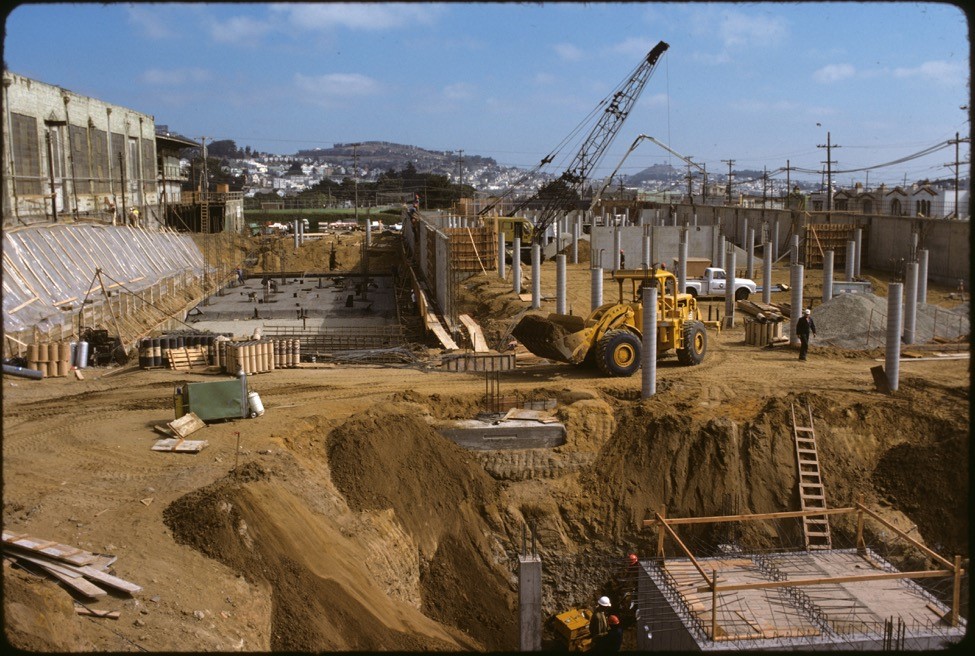
This 1976 photo shows major excavation and concrete work underway for the main shops building of Green Division.  At far left is Elkton Shops built in 1907 by the United Railroads Company.This 1976 photo shows major excavation and concrete work underway for the main shops building of Green Division.  At far left is Elkton Shops built in 1907 by the United Railroads Company.

In phase one of the project, crews demolished the bus yard occupying the eastern half of the property and built a massive new building that would house repair and maintenance shops for a new fleet of Muni rail vehicles. This phase took about two years to complete.
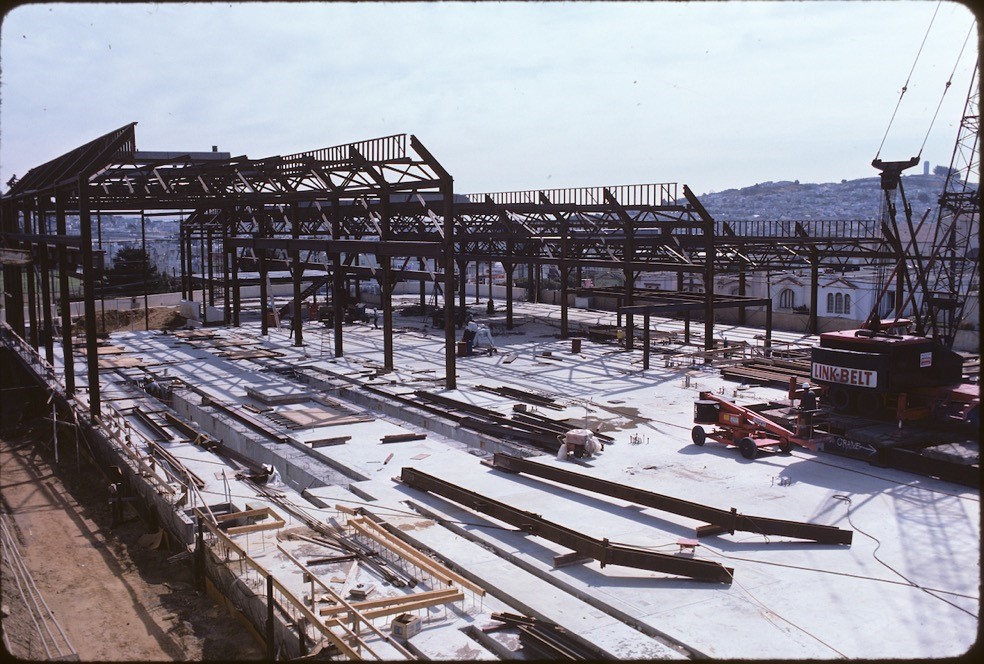
Construction progress on Muni Metro Center in November 1975 shows the main structure of the building taking shape.

Construction progress on Muni Metro Center in November 1975 shows the main structure of the building taking shape.

By May 27, 1977, the new shop building was completed and employees finished their last day of work in the 70-year-old Elkton Shops. Just a few days later, they moved into a brand-new building and demolition began on Elkton to make way for construction of a large rail yard in phase two of the project.
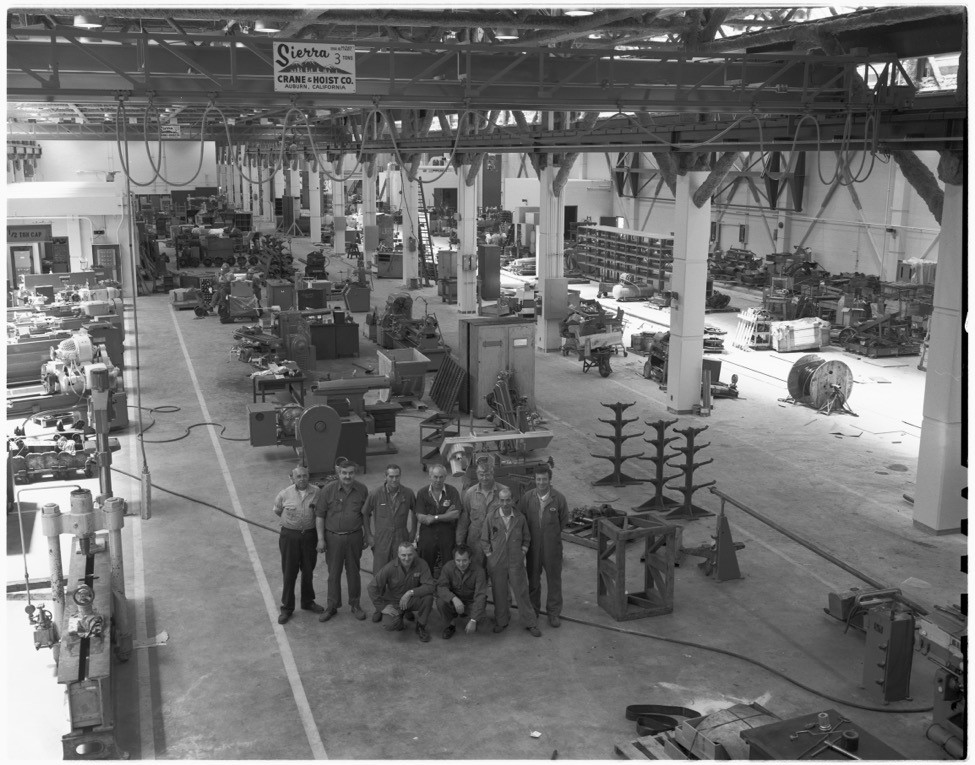
This staff group photo was taken on opening day of Muni Metro Center on June 1, 1977.

This staff group photo was taken on opening day of Muni Metro Center on June 1, 1977.

Work on the rail yard progressed quickly as Muni was anticipating the arrival of the first light rail vehicles or LRVs, a modernized version of the electric streetcars of the past. The new LRVs were designed and built by the Boeing Vertol company in a joint venture between Muni and Boston’s MBTA. The new vehicles would run in the Muni Metro, which combined Muni’s surviving streetcar lines with a subway underneath Market Street to create a more integrated rail system.
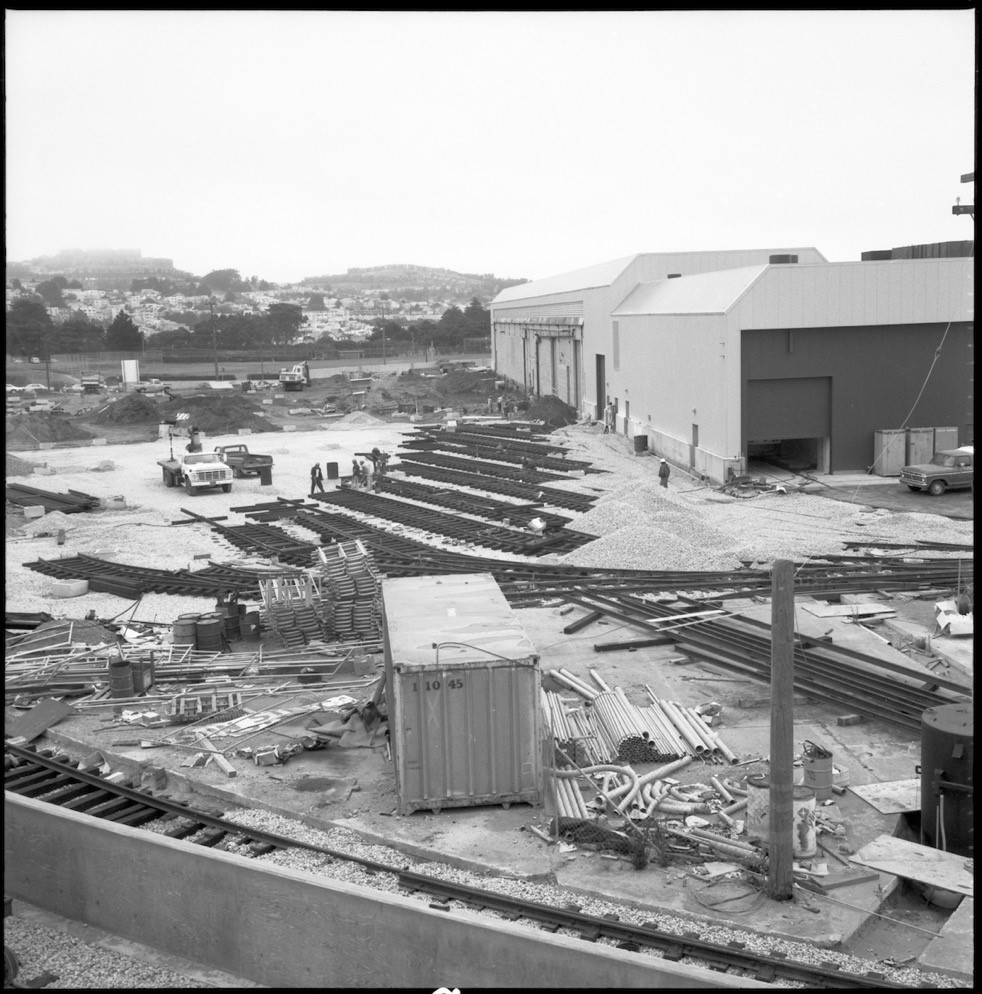
Aerial photo of construction on the rail yard where Elkton Shops once stood from August 1977

Work progresses on the rail yard where Elkton Shops once stood in this August 1977 photo.

The arrival of Boeing LRVs came in October 1977 while the rail yard was still under construction. A small crowd of city officials, staff and press celebrated the arrival of the first two cars outside Green Division. In a short time over 100 LRVs would come to form the backbone of all Muni rail lines.
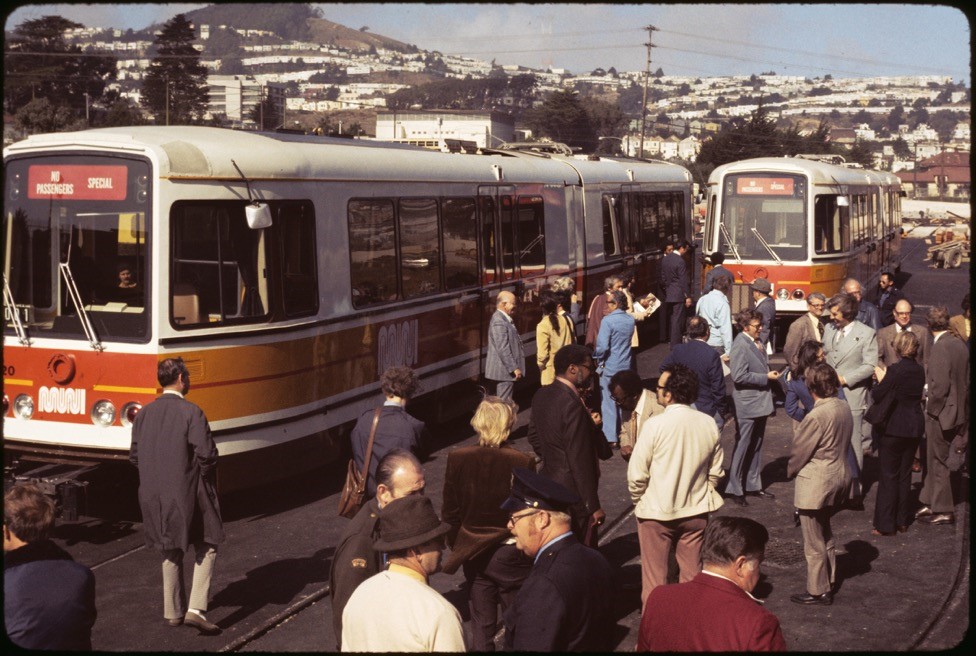
This October 24, 1977 photo shows Muni’s first two LRVs on display after arrival from the factory.

This October 24, 1977 photo shows Muni’s first two LRVs on display after arrival from the factory.

On July 11, 1979, Muni Metro Center was dedicated and a new fleet of LRVs waited in the yard to start serving the city. Just one year later, the Muni Metro system and Market Street Subway would open and the railyard’s key role in maintaining the new fleet would come into full effect.

1979 aerial shot looking southwest near San Jose and Ocean Avenues shows a newly completed Muni Metro Center and surrounding area

This November 1979 aerial shot looking southwest near San Jose and Ocean Avenues shows a newly completed Muni Metro Center and surrounding area.

On May 12, 1987, Muni Metro Center was re-dedicated as the “Curtis E. Green Light Rail Center” in honor of former Muni General Manager Curtis E. Green, who worked his way up from a bus driver to become the first African American appointed head of Muni.
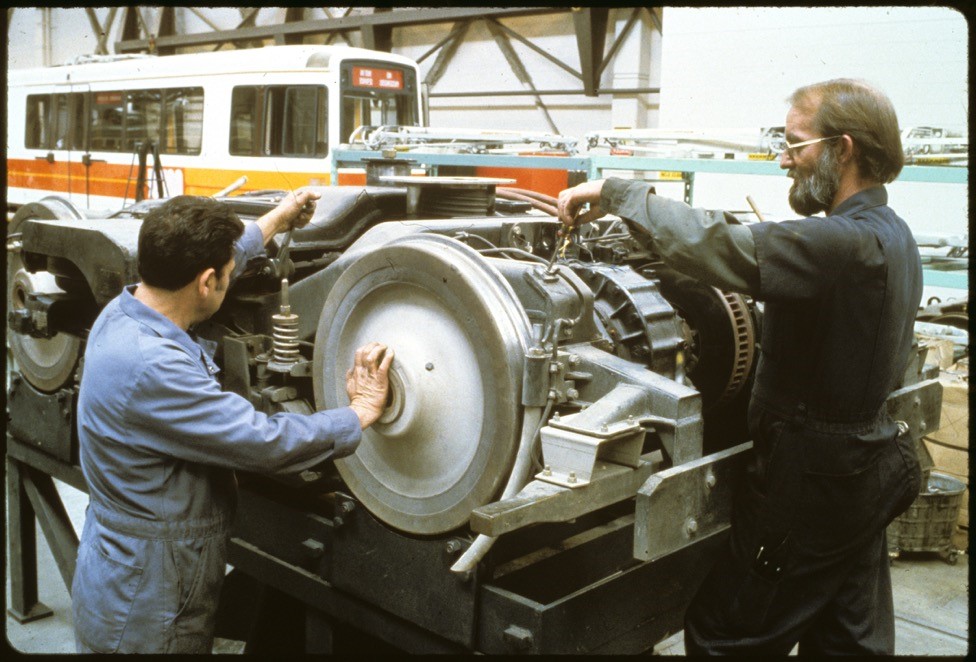
Green Division shop staff work on the truck from a Boeing LRV in this early 1980s photo.

Green Division shop staff work on the truck from a Boeing LRV in this early 1980s photo.

​​​​​​​Today, staff at Green Division carry on an over 100-year-old tradition started in 1907 with the United Railroads’ Elkton Shops. Working daily performing every job from routine maintenance and inspections to overhauling major components, the shops are critical to moving San Francisco.


Published November 24, 2021 at 11:10PM
https://ift.tt/3FJQadR

Comments

Popular posts from this blog

150 Years Ago Today – The Cable Car is Born

150 Years Ago Today – The Cable Car is Born By Kelley Trahan August 2, 2023, marks the 150th anniversary of the world’s first successful cable railway, born right here in San Francisco. To celebrate the occasion, we bring you the story of Andrew Hallidie and the very first cable car company, the Clay Street Hill Railroad.  Andrew Hallidie (1834-1900) was a pioneering inventor and entrepreneur who changed urban transportation. In 1852, at the age of 18, Hallidie emigrated with his father from the United Kingdom to San Francisco during the California Gold Rush. His father, an engineer and inventor, had a wire rope patent that played a crucial role in his son's future success.   Portrait of Andrew Smith Hallidie in 1890. Inspired by his father's wire rope business, Hallidie developed a steel cable mineral mine hauling system in 1857. About a decade later, he designed a wire rope aerial tramway for transporting materials over mountainous terrain. Then, after a stint in bridg...

Shared Spaces are Here to Stay. Permit Renewals are Due January 15, 2023.

Shared Spaces are Here to Stay. Permit Renewals are Due January 15, 2023. By Anne Yalon Shared Spaces, amongst many other benefits, allows our residents and families to enjoy safe and social outdoor dining. Seen here are the the owners of Tio Chilo’s Grill and their children in the restaurant’s parklet on 24th Street in the Mission.  San Francisco’s popular Shared Spaces program allows merchants, restaurants and arts and culture organizations to use the curbside, sidewalk and other public spaces to conduct local business activities and stay afloat. What emerged as an economic lifeline during the pandemic is making San Francisco’s streets more energized, engaged and activated. Many of the Shared Spaces parklets have become central gathering places for the local community. “ Our parklet makes me feel like when I go to Mexico, where outdoor seating is everywhere. People end up joining their friends in our parklet. It is a space for our customers and our community," said Liz V...

Virtual Parade and New Central Subway Art Ring in Lunar New Year

Virtual Parade and New Central Subway Art Ring in Lunar New Year By Sophia Scherr We are entering the year of the Ox, typically symbolizing hard work, positivity, and honesty. This year the SFMTA will continue the tradition of celebration with the virtual San Francisco Chinese New Year Parade   on February 20th at 6 pm on KTVU. Celebrating Lunar New Year and the San Francisco Chinese community has been a long-standing tradition for many of us. In 1849, San Francisco’s population swelled to 50,000 and many of the new residents were Chinese immigrants, coming to work in gold mines or on railroad lines. By the 1860’s, the Chinese were eager to share their culture with others and the annual tradition of parade and pageantry was born. A variety of other cultural groups throughout the city were invited to participate, and they marched down what today are Grant Avenue and Kearny Street with colorful flags, banners, lanterns, and drums and firecrackers to drive away evil spirits. The c...