By Eillie Anzilotti
How We Made San Francisco Streets Safer In 2021
As 2021 comes to an end, we're reflecting on everything SFMTA has done to make San Francisco streets safer for all.
But first, let’s wind back 50 years ago to 1971: the year the first bike lanes went in in San Francisco! The city’s first bike lanes on Lake Street came out of a community effort to calm traffic and make the neighborhood safer.
There’s an often-quoted expression that “change happens slowly, then all at once.” For San Francisco safe streets, 2021 is certainly in the “all at once” phase. Fifty years after the first bike lanes were installed in the city, we’re continuing to push the boundaries of what safe streets can look like in San Francisco. Here’s a look at some key progress from this past year:
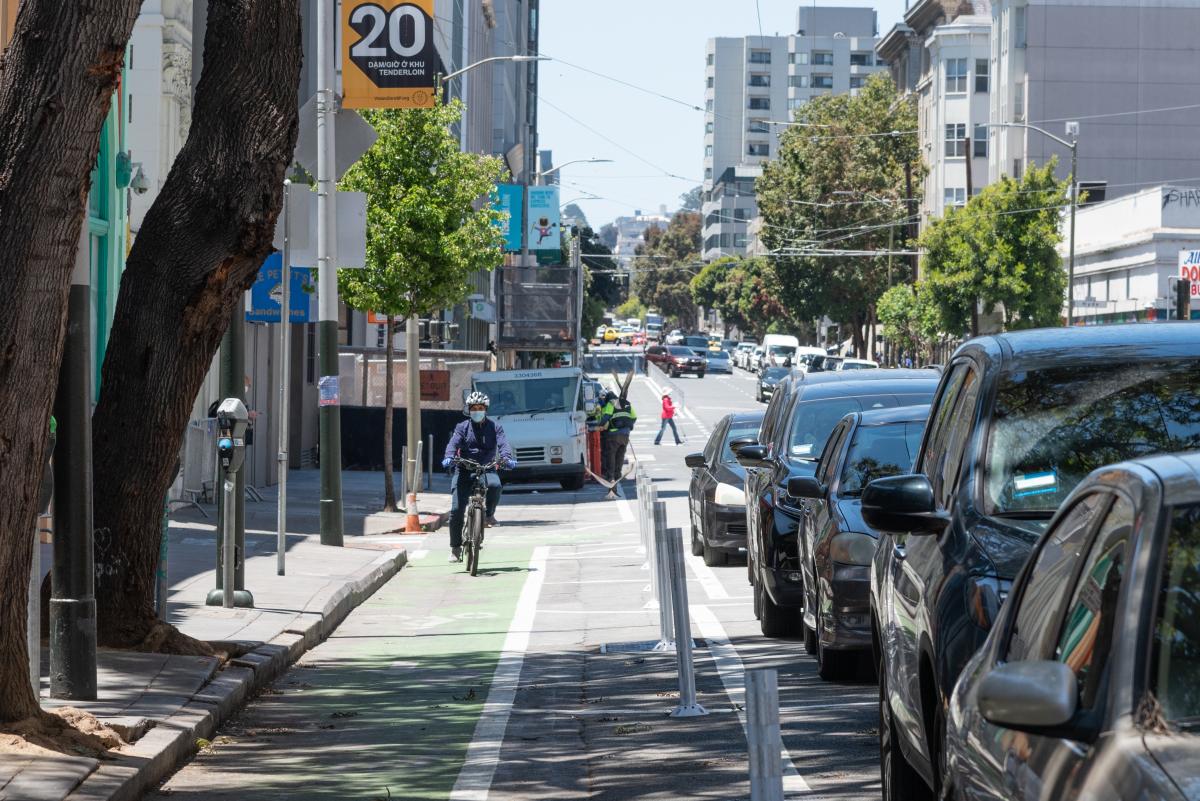
Transforming the Tenderloin: In a neighborhood where every street is on the city’s Vision Zero High-Injury Network, we implemented a suite of projects to make the whole area safer. Some highlights:
- Two Vision Zero Quick-Build projects: On Golden Gate Avenue, a new protected bike lane was added along with improved curb access for businesses, and Leavenworth was reduced from three travel lanes to two to promote safer speeds.
- Pedestrian scrambles—which stop traffic in all directions to make it safer for everyone to cross—were implemented at 10 intersections
- In a San Francisco first, 20 mph speed limits and No Turn on Red restrictions were implemented neighborhood-wide to improve safety.
- Several COVID-19 response projects have evolved into permanent community features. A physical distancing lane on Jones Street, implemented to give people more space to walk during the pandemic, was turned into a permanent travel lane reduction on the street to calm traffic. A weekly block closure on Turk Street to provide place for gathering and recreating is now Turk Street Safe Passage Park, a full-time street closure that welcomes nearly 100 visitors a day and provides a new public space for the community. These street transformations in the Tenderloin were implemented with collaboration and support from local partners, like Code Tenderloin and the Tenderloin Community Benefit District Safe Passage Program.
Adding Quick-Builds in the Bayview: After the Bayview Community-Based Transportation Plan was approved by the SMFTA Board in 2020, the first projects were installed this year. Two quick-build projects to improve safety conditions in the Bayview–one on Williams Avenue and one on Evans/Hunters Point/Innes–were completed, along with spot improvements like continental crosswalks. The Quick-Build on Hunters Point Boulevard features concrete barriers painted with murals by local artists.
Expanding San Francisco’s bike network: Over 12 miles of new bike facilities, including 7 miles of new protected bike lanes, were added across the city. Some highlights include a new two-way bikeway on Alemany Boulevard, and a protected bike lane as part of the Folsom Street Quick-Build in SOMA. Nearly five miles of Anza Street have been updated with bikeway markings, speed cushions, and a travel-lane reduction to encourage safer speeds and create an important east-west bike route through the Richmond. You can read more about (and see!) how much San Francisco’s bike network has grown in the last several years in this blog post.
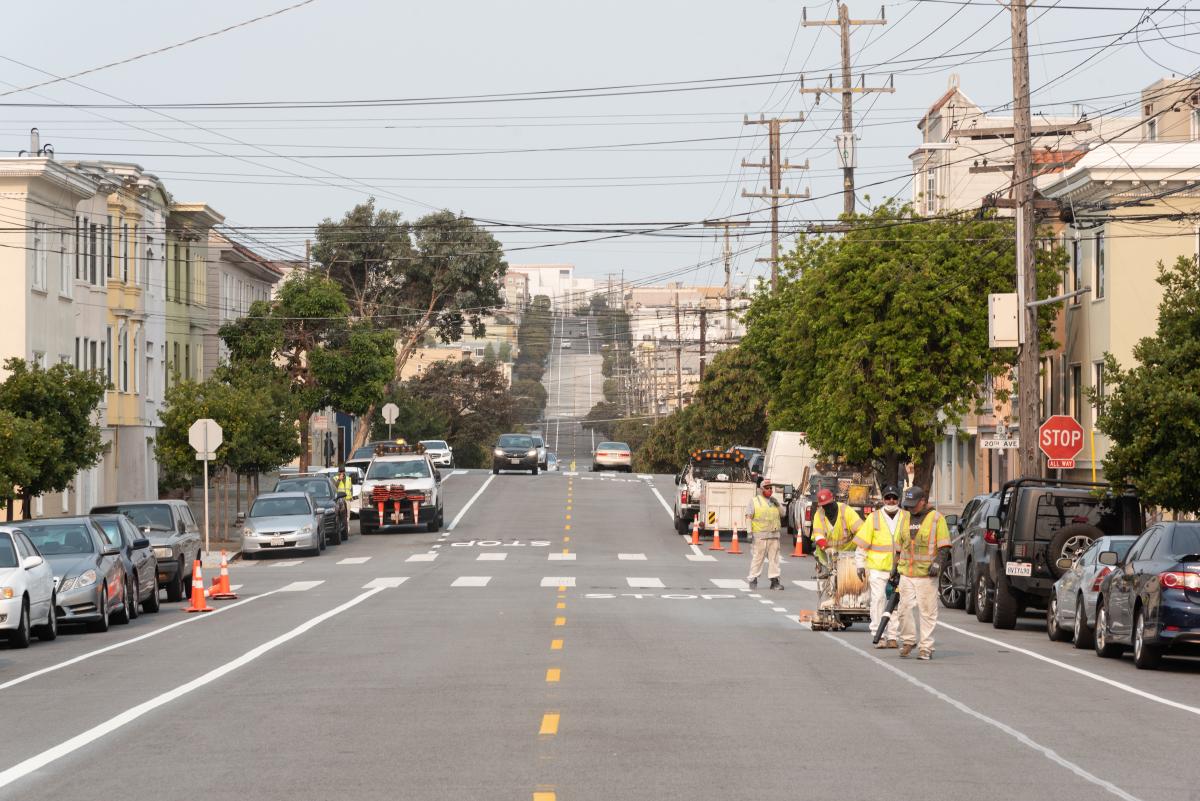
Evolving Slow Streets: Slow Streets have evolved from an emergency response to COVID-19 to one of the SFMTA’s most efficient ways to transform city streets to promote walking, biking, and rolling. In August, the first four post-pandemic Slow Streets–Sanchez, Shotwell, Lake, and Golden Gate–were approved to be extended beyond the pandemic. Sanchez and Shotwell are fully implemented with unique designs informed by extensive community outreach.
Setting records for traffic calming: The traffic-calming program installed over 233 traffic calming devices across the city–the most ever completed in a year. Traffic calming devices like speed humps, speed cushions, and raised crosswalks make any street safer, and the team worked quickly and efficiently to respond to resident requests for safer conditions on their streets.
Thank you to everyone in the community who has advocated for, championed, and made use of these projects across the city. We look forward to continuing to make San Francisco streets safer in 2022!
Published December 20, 2021 at 09:24PM
https://ift.tt/3GZ9NiN
Comments
Post a Comment