By Adrian Leung
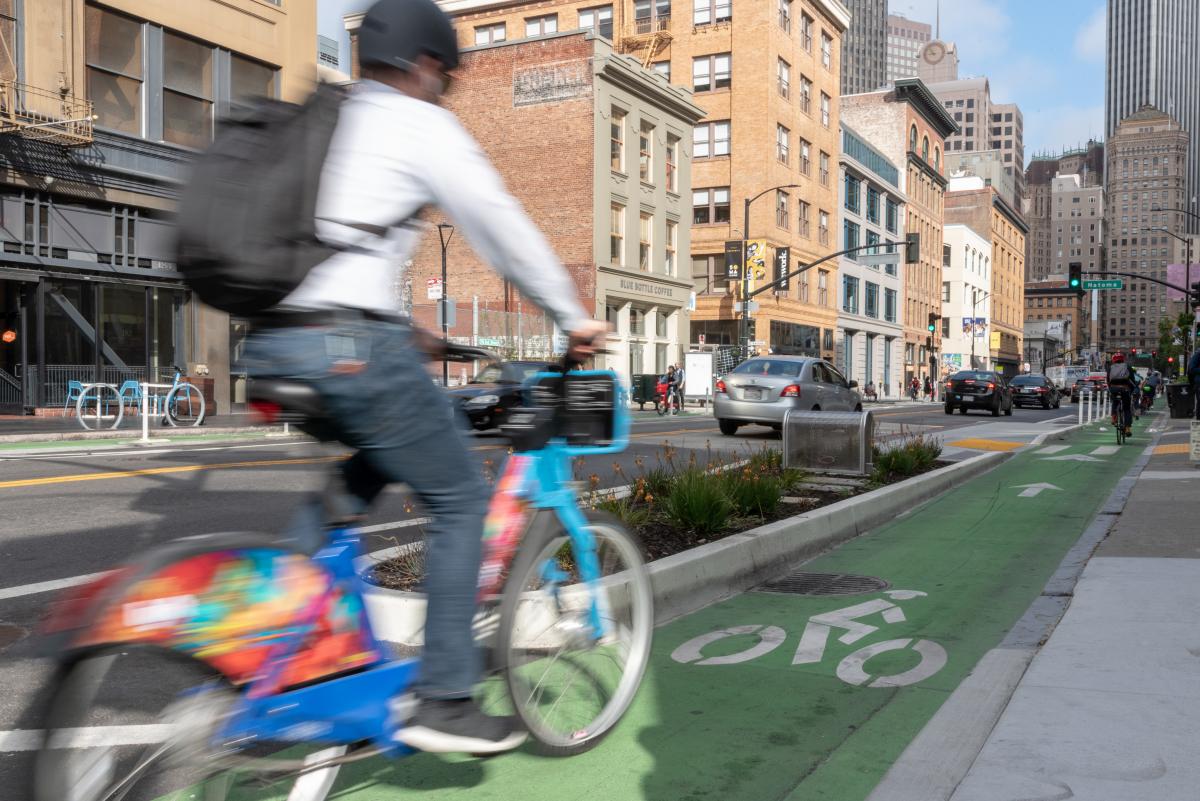
With Spring in the air and a recent expansion of up to 275 stations in SF, more people are riding bikeshare. Our major goal is to make bicycling easy by making bikes available while simultaneously reducing the burden of ownership (e.g. theft, storage, maintenance). We’ll see discount codes for new members in Bike Month May. And Lyft is providing ride credit for anyone riding a regular pedal bike in the last 30-days, who’ve never tried the e-Bikes.
We get a lot of questions about pricing—How does pricing work? Who sets it? Is this Private or Public? We figured a dedicated FAQ could help to cover the basics.
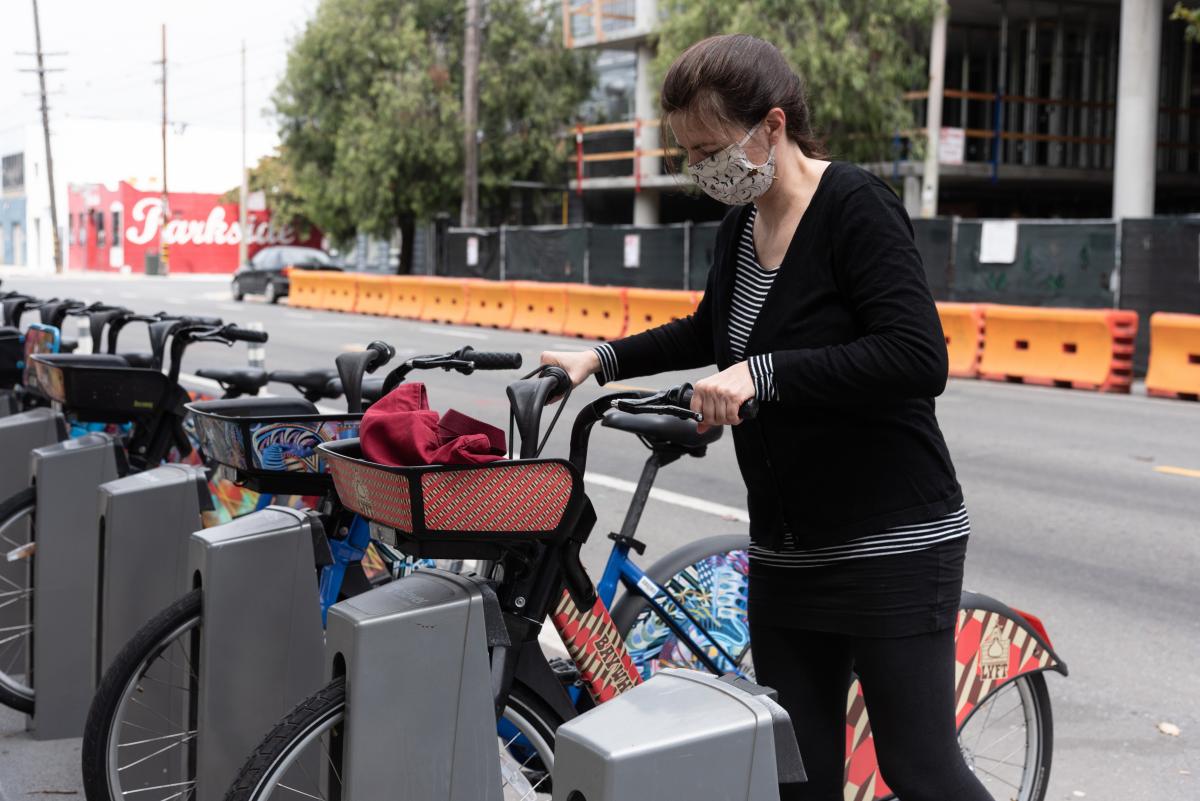
How much does bikeshare cost?
Bikeshare is the most affordable mobility option in San Francisco and the Bay Area. An annual bikeshare membership costs about $14/month, which includes unlimited 45-minute trips on regular pedal bikes with no additional fees anywhere in the five-city service area.
Why do e-bikes cost more?
E-bikes contain batteries that need charging and more expensive parts like motors and sensors that require more maintenance and more work to locate and redistribute. The city and our bikeshare operator, Lyft, try to balance these costs with maintaining and improving service for all San Franciscans, especially ones who can't afford higher prices.
The 2015 bikeshare agreement grants exclusivity to the contractor for station-based bikeshare. In 2019, the SFMTA sought to offer e-bikeshare operator permits to increase competition. An ensuing lawsuit resulted in Bay Wheels exclusivity and SFMTA approval power over pricing while allowing the operator to push towards financially sustainability.
How is pricing decided?
The annual membership pricing was specified by the 2015 regional agreement, managed by Metropolitan Transportation Commission and unanimously approved by SF Supervisors. E-bike per minute pricing is subject to SFMTA approval (keeping increased operating costs and program financial sustainability in mind), and all other pricing, like per-trip unlock fees and overages, is up to Lyft.
How has the city used pricing approval power to expand equity measures for bikeshare?
The city can’t lower e-Bike prices, but it has negotiated public benefits like
-
Per-minute caps on Bike Share For All members, and trips that start or end in outer areas;
-
Free Bike Share For All Memberships, discount programs for new members;
-
Waivers for out-of-station parking fees in neighborhoods without stations;
-
Continued station expansion with city-wide service.
-
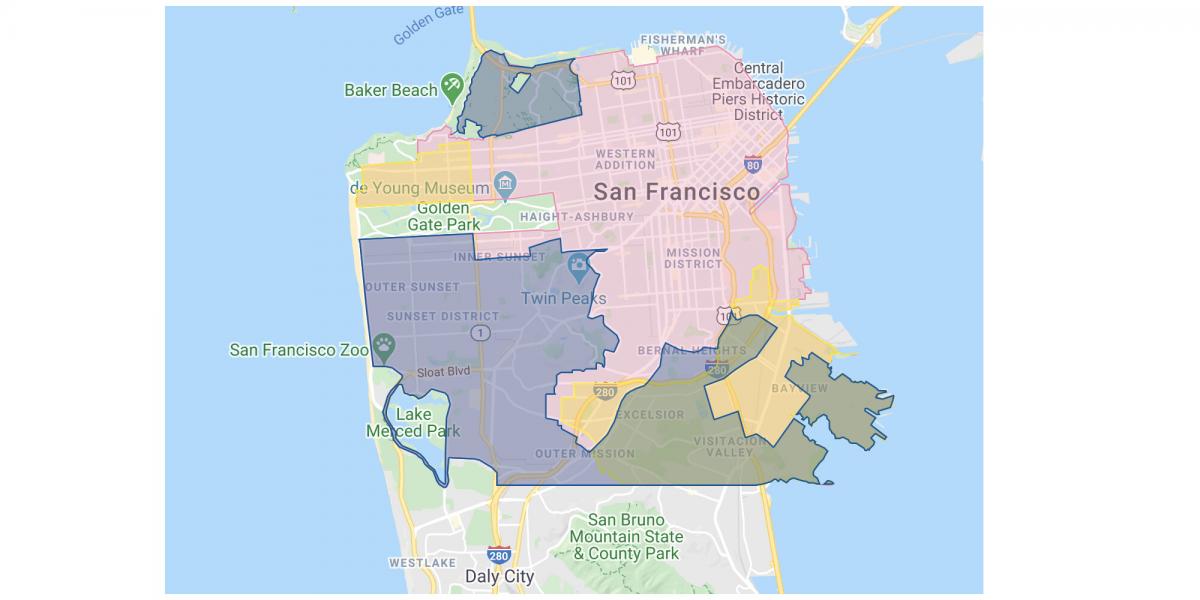
Click here to open a dynamic map of the different ebike pricing service areas in San Francisco.
Why is there a 45-minute time limit?
Bikeshare is designed for shorter duration trips. The system works by circulating—sharing—bikes between users. When a bike is checked out, it reduces the number of total available bikes in the system and increases the possibility there won’t be enough bikes for people who need them and this hurts system dependability. If a rider needs a bike for longer than 45 minutes, they can always check out a new bike mid-trip to complete their ride. For longer trips, the city recommends looking into other non-bikeshare options, like bike rentals.
What are the costs associated with bikeshare, and who pays for them? As a public private partnership, all expenses—including labor and maintenance--are paid by the operator, and San Francisco and its regional partners offer this service at no cost to taxpayers. Bikeshare provides living wage union jobs to station technicians, bicycle mechanics, and system rebalancers, and city planners and engineers support the research, expansion, communications, and customer service needs for the program.
What’s next for pricing?
The current e-bike agreement ends in 2024; the regional regular pedal station-based contract ends in 2027. The city and regional partners are exploring services, pricing, and partnerships that may come next, with the goal of continuing to expand bikeshare as an accessible, sustainable transportation choice for San Francisco.
If you have thoughts on bikeshare pricing, we want to hear from you. Feel free to reach out with ideas to bikeshare@sfmta.com.
And to celebrate National Bike Month, starting May 1, Bay Wheels is providing 20% off annual or monthly Bay Wheels membership. Enter one of the codes below at checkout and enjoy membership benefits for less.
20% off Annual Memberships: BWMAYANNUAL20
20% off Monthly Memberships: BWMAYMONTHLY20
Published April 29, 2022 at 01:20AM
https://ift.tt/t1VB5iP
Comments
Post a Comment