By Kimberly Burrus
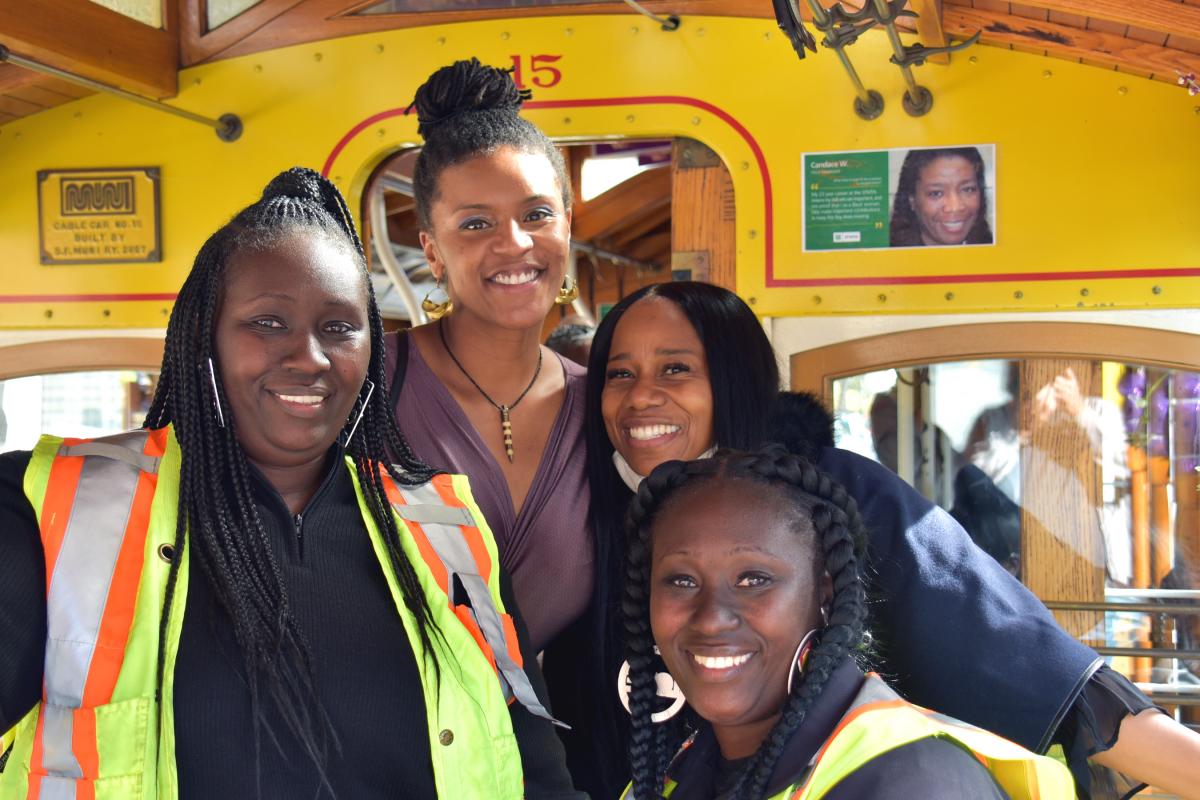
SFMTA staff celebrating women’s history
Safety is an absolute priority for the SFMTA. We’ve heard loud and clear that personal safety is a growing concern for the public and staff and we’ve taken a lot of steps to increase safety across our system. We also know there is much work to do to address some of the most pervasive ways harassment and violence show up in public transportation.
This April as we observe Sexual Harassment Awareness Month, the SFMTA is proud to announce that we are developing a new Safety Equity Initiative. The goal of the initiative is to reduce and eventually eliminate gender-based harassment and violence on Muni.
Gender-based harassment is one of the most widespread and persistent forms of violence. It impacts women, girls and gender-expansive people — people who don’t conform to traditional gender roles — of all ages, abilities, races, ethnicities, and cultural and language groups. Women often feel unsafe on transit, which impacts how often they ride, when they ride and if they ride at all. This is especially true for women and girls of color, and gender-based harassment disproportionately impacts community members who are Black, Indigenous and people of color (BIPOC).
The Safety Equity Initiative will center the experiences of our most transit-reliant community members and build community-focused solutions. Our initial steps will focus on understanding the scope and gravity of the issues through data collection and outreach. We will partner with community-based organizations, our riders and staff to enhance our existing reporting structure and implement data-driven security upgrades.
New Reporting Options
We know gender-based harassment often goes unreported. There is much we need to learn to make meaningful progress and we need your help. That’s why we are expanding reporting options on our Muni Feedback form and the 311 Customer Service phone line.
In the coming days, users and bystanders will be able to report different types of gender-based harassment incidents, their location and other information that will help us understand the scope of the problem better, identify possible improvements and track progress.
These incidents can include inappropriate, unwanted contact, gestures or comments, staring, groping, indecent exposure, abuse and violence of a sexual or nonsexual nature. Some of these incidents may also be criminal acts. All of them are unacceptable, and we have a duty to work to end these behaviors.
Why We Are Focusing on Gender and Racial Equity
Gender-based harassment doesn’t happen in a vacuum. It’s often targeted at BIPOC and low-income women and can be laced with racism. LGBTQIA people are also frequently subjected to gender-based harassment that is laced with homophobia and transphobia. At the same time, people who belong to groups with less power and resources in society tend to be less likely to report it to when they’re harassed.
By elevating equity as a key part of this safety initiative, we want to signal that we’re seeking engagement and partnership from all the diverse groups of people who are impacted by gender-based harassment. This includes trans women and girls, non-binary people, gender non-conforming people, gender queer people, cis girls and cis women and any woman- and girl-identified individuals. We will also work to educate and engage men and boys to help prevent harassment.
Our staff were inspired by BART’s Not One More Girl campaign, which has been a model for building partnerships and community-driven solutions around gender-based safety challenges. Similarly, we want to collaborate with a diversity of stakeholders, community-based organizations and community members to develop community-centered solutions that make our transportation system safer for all – staff, riders and bystanders.
We’re excited to embark on this process and look forward to creating change together.
Read more about our program vision, goals, intended outcomes and commitment to the community on the new project page at Safety Equity Initiative.. Email us about this initiative, and other safety issues, at MuniSafe@SFMTA.com.
Published April 27, 2022 at 02:40AM
https://ift.tt/XVwex8g
Comments
Post a Comment