
The Lasting Legacy of the 1913 Bion Arnold Report

The Lasting Legacy of the 1913 Bion Arnold Report
By Jeremy Menzies

Looking back at San Francisco’s transportation history, one study from 1913 has impacted the city’s transit system for over 100 years. Commissioned by city officials, the “Report on the Improvement and Development of the Transportation Facilities of San Francisco” by engineer Bion J. Arnold, is a comprehensive study of transit in the city. The 450-page report covers everything from rush hour congestion to plans for a Market Street subway. This document is essential to understanding our city’s transportation history and some of its recommendations are still in use today.
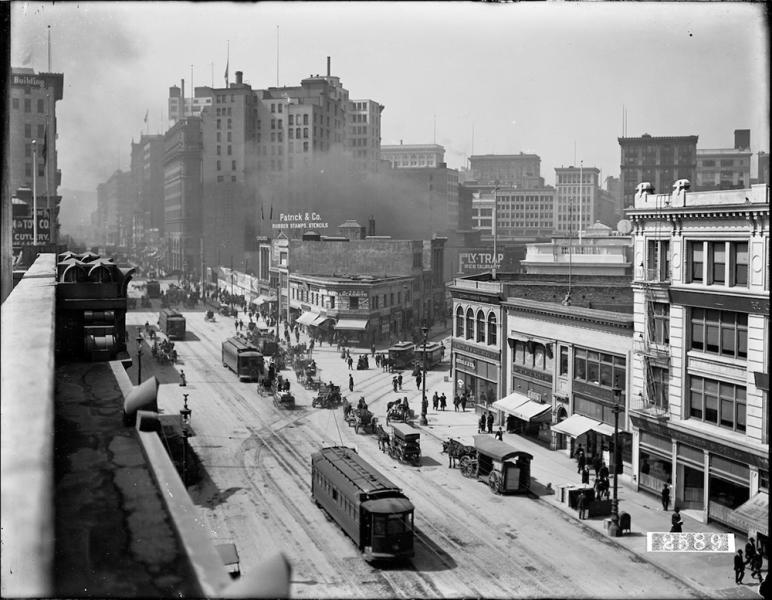
Black and white overhead view of street with horse-drawn and electric streetcars, horse drawn wagons, pedestrians, and buildings. Business signage includes Patrick and Company and Fly Trap.

This 1910 view of Market and Sutter streets shows just some of the complex issues that the Arnold report addressed.


Building Muni

One section of the report is entirely dedicated to specifications for building and improving the city’s cable and street cars. Muni’s very first streetcars, frequently called “Arnold” cars, were specified based on construction cost, passenger comfort, ease of operation, and even the unique climate of San Francisco. Today, historic Streetcar 1 is one of these streetcars that still runs in special service.
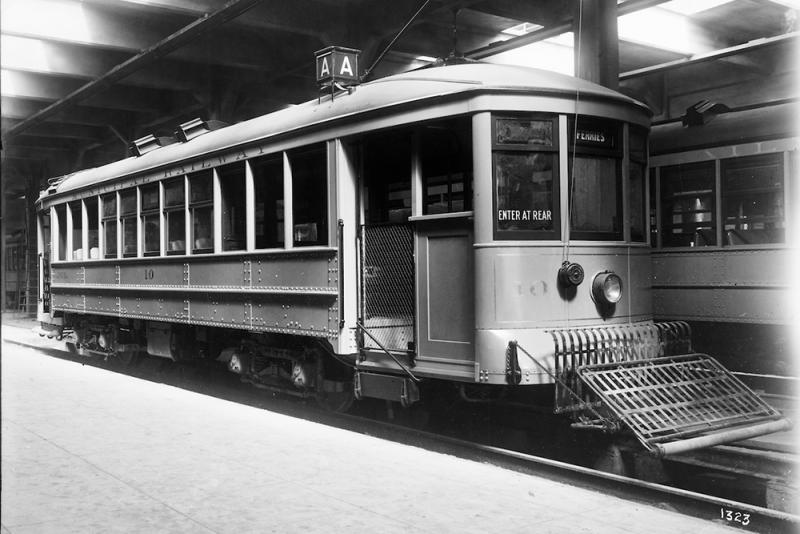
front and side view of old-style streetcar. Route reads "A". Headsign reads "Ferries". Sign reads "Enter at rear". Car is branded "Municipal Railway".

This photo of one of Muni’s first streetcars was used on page 178 of the report and shows the open end sections, boarding platforms, and “automatic” ventilation features specified by Arnold.

In addition to the vehicles, Muni’s earliest lines, and service to the 1915 Panama Pacific Exposition, were all directly influenced by the report. Versions of the A, B, C, E, F and H streetcar lines all appear in the report. It also influenced later lines like the J, K, L, and M.

group of people walking away from streetcar. car is headsigned "Exposition".

Passengers alight from a Muni streetcar at the 1915 world’s fair. Arnold dedicated an entire section of the report to discussing service to the fair, which was provided by Muni and the United Railroads Co.


Tunnels & Streets

The report also detailed several tunnels and street changes throughout the city meant to speed travel across town. Of the more than ten tunneling projects proposed, the Stockton Street, Twin Peaks, and Sunset tunnels were all built by 1930. The Broadway tunnel followed in the early 1950s.
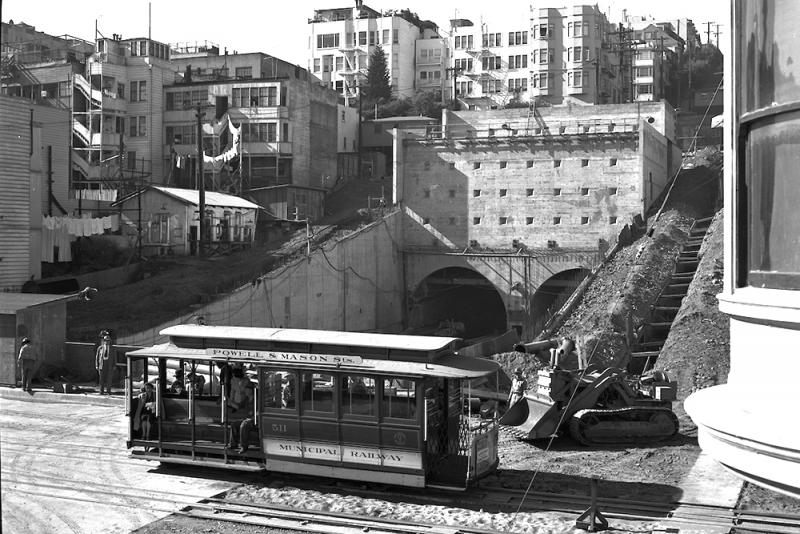
cable car in foreground with excavation, bulldozer, and tunnel entrance in background. car is branded "Municipal Railway" and signed "Powell and Mason streets".

A cable car on Mason Street passes by the Broadway Tunnel, still under construction in this 1951 shot.


Among the street changes proposed, the extension of Market Street over Twin Peaks was perhaps the largest. This extension was built alongside the Twin Peaks Tunnel in 1917-18.

Improving and Expanding Transit

Arnold also called for a consolidated transit system and a subway under Market Street, both of which were achieved by the mid-20th Century.  In 1944, voters approved the purchase of the Market Street Railway Company, the largest transit operator in SF. This merger unified public transit service under Muni. Instead of navigating two competing services, riders finally had a one-fare ride to virtually anywhere in town. Consolidation also allowed improvements to be made across the system.
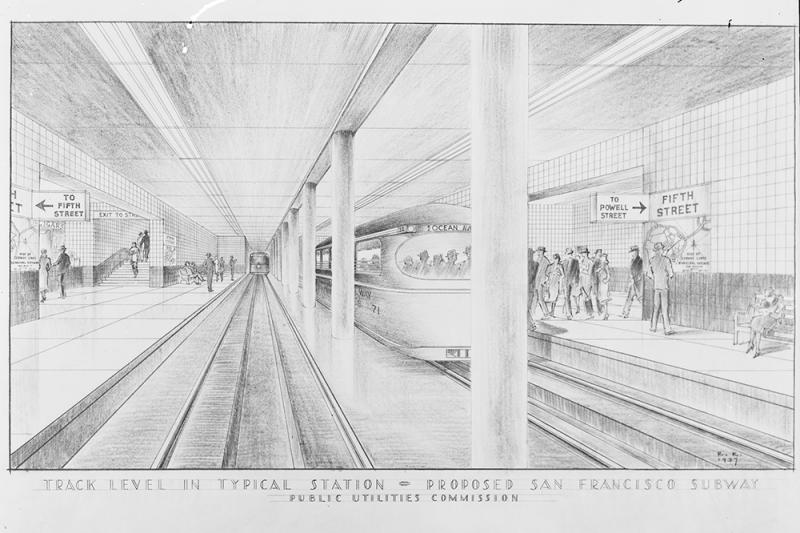
Drawing of subway station showing streetcars, platforms, signage, people and tracks. Drawing is titled "Track level in typical station. Proposed San Francisco subway. Public Utilities Commission." Signs in drawing read "Fifth Street" as station name, directional signs reading "To 5th Street", "Exit to 5th", "To Powell Street". Streetcar headsign reads "Ocean Avenue".

Bion Arnold’s Market Street subway plans were just one of many ideas floated over the years. This drawing from 1937 shows a proposed subway station at Powell and Market streets.


Arnold’s report is one of the earliest documents to include clear plans for a Market Street subway. 50 years later when Bay Area voters approved general obligation bonds to build BART & Muni Metro, elements of Arnold’s subway showed up in the design.

Ongoing Legacy

Even today, suggestions from the report can be found in the SFMTA’s Muni Forward and Vision Zero Quick Build programs. Moving and consolidating stops, increasing boarding area size, building transit boarding islands, and all-door boarding are all mentioned in the 1913 document.
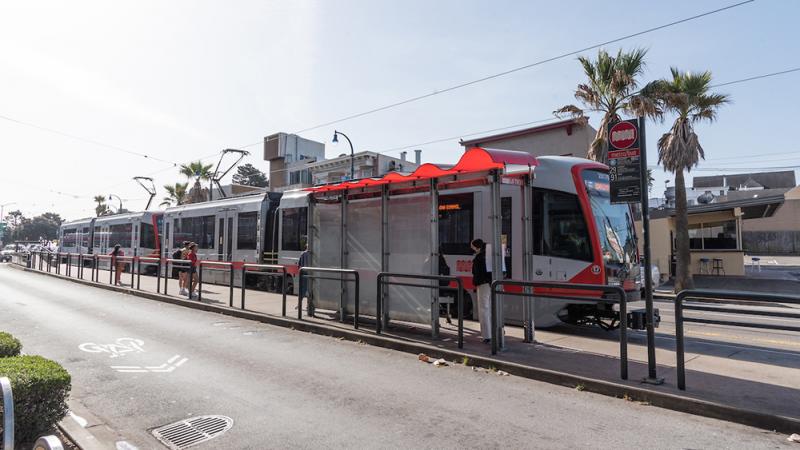
street-level transit platform with train and people waiting

A common sight today, double-length platforms and two-car trains like those pictured here were just two improvements to transit service recommended by the Arnold report.

The Arnold report is one of the most extensive studies of transportation in San Francisco. 109 years later, many of the changes recommended by the report have become normal parts of our streets and transit system.


Published June 30, 2022 at 07:29AM
https://ift.tt/HqCcvhB

Comments

Popular posts from this blog

150 Years Ago Today – The Cable Car is Born

150 Years Ago Today – The Cable Car is Born By Kelley Trahan August 2, 2023, marks the 150th anniversary of the world’s first successful cable railway, born right here in San Francisco. To celebrate the occasion, we bring you the story of Andrew Hallidie and the very first cable car company, the Clay Street Hill Railroad.  Andrew Hallidie (1834-1900) was a pioneering inventor and entrepreneur who changed urban transportation. In 1852, at the age of 18, Hallidie emigrated with his father from the United Kingdom to San Francisco during the California Gold Rush. His father, an engineer and inventor, had a wire rope patent that played a crucial role in his son's future success.   Portrait of Andrew Smith Hallidie in 1890. Inspired by his father's wire rope business, Hallidie developed a steel cable mineral mine hauling system in 1857. About a decade later, he designed a wire rope aerial tramway for transporting materials over mountainous terrain. Then, after a stint in bridg...

Shared Spaces are Here to Stay. Permit Renewals are Due January 15, 2023.

Shared Spaces are Here to Stay. Permit Renewals are Due January 15, 2023. By Anne Yalon Shared Spaces, amongst many other benefits, allows our residents and families to enjoy safe and social outdoor dining. Seen here are the the owners of Tio Chilo’s Grill and their children in the restaurant’s parklet on 24th Street in the Mission.  San Francisco’s popular Shared Spaces program allows merchants, restaurants and arts and culture organizations to use the curbside, sidewalk and other public spaces to conduct local business activities and stay afloat. What emerged as an economic lifeline during the pandemic is making San Francisco’s streets more energized, engaged and activated. Many of the Shared Spaces parklets have become central gathering places for the local community. “ Our parklet makes me feel like when I go to Mexico, where outdoor seating is everywhere. People end up joining their friends in our parklet. It is a space for our customers and our community," said Liz V...

Tenderloin Streets Transform During COVID-19

Tenderloin Streets Transform During COVID-19 By Kimberly Leung COVID-19 has disproportionately impacted people who live and work in the Tenderloin. As a result, the SFMTA has been working closely with District 6 Supervisor Matt Haney’s office, other city departments, the Tenderloin Traffic Safety Task Force and community members to address the public health issues and unique challenges in the neighborhood through innovative interventions.    The Tenderloin is home to many of our most vulnerable communities including historically marginalized groups such as people with disabilities, residents of SROs and supportive housing and limited-English proficient communities. With every single street in the Tenderloin on the city’s High Injury Network -- the 13 percent of San Francisco streets that account for 75 percent of severe traffic injury collision and fatalities -- thi...