By
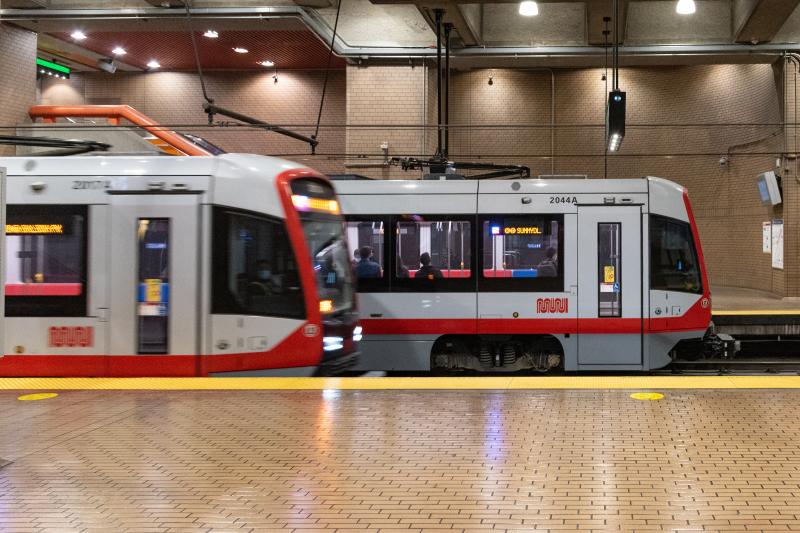
A Snapshot from our most recent round of service changes
Back in June, we published a blog about the loss of Proposition A, the Muni Reliability and Street Safety Bond, and what it would mean for our infrastructure projects going forward.
In the post, we reaffirmed our commitment to find alternative sources for these funds. We know that improving Muni and making streets safer remain priorities for our community—and we’re dedicated to making that a reality. We’ve also committed to being transparent about our financial situation and budget, and we have good news to share on that front.
Last week, the California State Transportation Agency (CalSTA) awarded us $116 million for SFMTA Core Capacity projects as part of the fifth cycle of the Transit and Intercity Rail Capital Program (TIRCP). This historic investment will be used to directly fund projects that will make Muni more reliable and dependable. Speeding up Muni and making it a more desirable option for San Franciscans benefits all of us—including easing congestion
Three key components of our system will benefit from this money. Funding for this project will implement the Muni Forward program on three key corridors (K, N, and the 38R Geary lines) to enhance reliability, efficiency, travel times, and rider comfort. Muni Forward has already been successfully deployed on 70 miles of Transit Priority Projects across San Francisco. The new Muni Forward projects will promote reliability and ridership gains on the K Ingleside and N Judah rail lines, and the 38 Geary bus line.
Two phases of our Train Control Update Project will also receive funding from CalSTA. This project will eventually increase capacity by 20 percent on our vehicles that travel through the Market Street tunnel and will for the first time provide the ability for centralized line management of the entire light rail system.
Lastly, CalSTA is providing funding for a Muni Metro Modernization Planning Study, which will identify the next package of investments to provide additional capacity and reliability improvements for the Muni Metro. Together, these infrastructure improvements will provide Muni rail customers faster, longer trains and a quality of service that can be relied on for time-sensitive trips.
The SFMTA also received news last week that Moody’s Investors Service has assigned an Aa3 on revenue bonds forthe SFMTA's outstanding revenue bonds and the agency’s planned issuance of revenue bonds to help fund critical capital projects. Although this is a downgrade from our previous Aa2 rating, Aa3 is currently the highest rating for US mass transit systems’ revenue bonds secured by general operating revenue. Moody’s also assigned the SFMTA a rating outlook of “stable” based on the expectation that our finances will be balanced with federal aid over the next 18-24 and the SFMTA’s commitment to proactively seek additional revenue sources to a maintain structural balance. You can read more about the announcement at our Press Center.
We will continue to update the public as we get a better sense of our financial outlook and identify alternate funding sources for projects that depended on Proposition A funding. We will continue to have more conversations and engagement with community members and community-based organizations on their priorities to deliver a transportation system that works for all San Franciscans.
Published July 09, 2022 at 01:05AM
https://ift.tt/hdBmnb6
Comments
Post a Comment