How Improving Muni Also Makes Life Better for Drivers

How Improving Muni Also Makes Life Better for Drivers
By Andrea Buffa

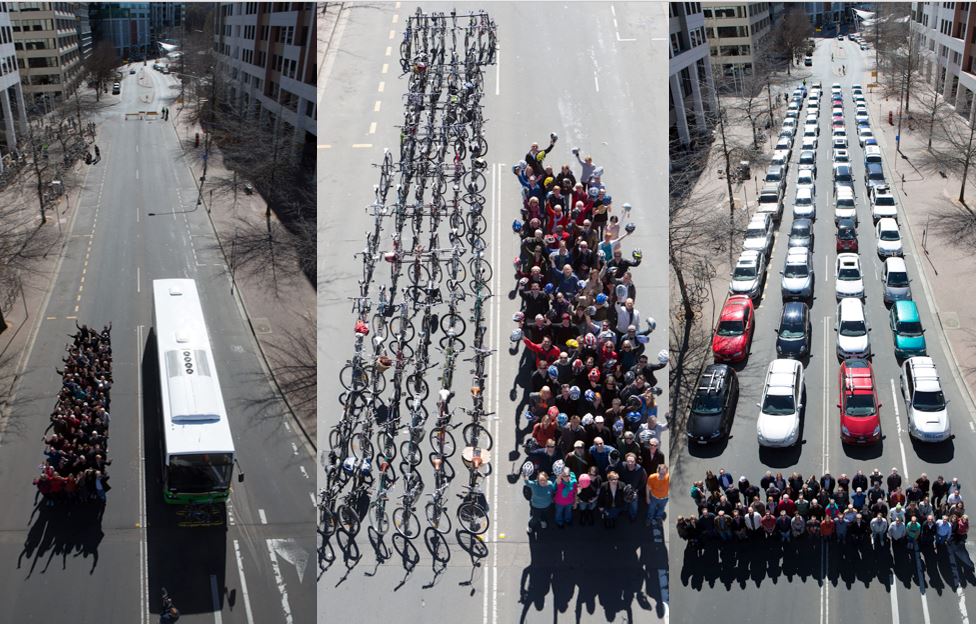
Side-by-side photos of people on a bus, on bikes and in cars; showing a lot more space on road when people use bikes or buses.

Photo credit: We Ride Australia

If you mostly drive to get around San Francisco, you may be wondering, “what has the SFMTA done for me lately?” San Francisco is a “transit first” city, so at the SFMTA we focus our resources on making it easier for San Franciscans to get around by public transit as well as by biking, walking and personal mobility device. While it may seem like adding transit lanes and protected bike lanes doesn’t have anything to do with driving, in fact, it does. 

Since San Francisco doesn’t have room to give more space to roads, we have to change the way we use the limited space on our existing streets. (Not that adding more roads reduces traffic anyway – check out this article.) City Traffic Engineer Ricardo Oleo puts it this way: “When you have a city like San Francisco that was built with density in mind, having everyone drive is not a viable option. There’s not enough room to have that happen. It’s not geometrically possible. You’d have debilitating amounts of congestion without Muni.” 

A well-designed city gives people choices. The many San Franciscans who already do choose to take Muni, walk or bike to get around are taking some pressure off the city's roadways. Imagine if everyone on the 49 Van Ness/Mission that’s zipping down the new Van Ness Bus Rapid Transit corridor were instead driving on Franklin and Gough. That would translate into another 21,000 cars in traffic on a typical day! And think about what congestion would look like on Fell Street if the hundreds of people who use the protected bike lanes there were behind the wheel of a car? 

Every person who takes Muni to get to the Chase Center, their workplace or their doctor’s appointment is one fewer car on the road. So, everything we do to make Muni more appealing—whether it’s transit lanes, new buses or smart traffic signals that give transit priority —is also good for drivers.  

Every person who walks, bikes or hops on an electric scooter to get to Golden Gate Park or pick up something at the local pharmacy is one fewer car that needs a parking space. So, everything we do to make it safer and more appealing to use active forms of transportation is also beneficial for the people who do need to drive to those destinations. 

Bikes take up far less space on the road than cars, and Muni buses and trains can transport a significant number of people in a compact space. 100 people traveling in personal vehicles take up 4,500 square feet. The same 100 people on bikes takes up about 1,200 square feet. And if they were all in a bus? They would take up only 520 square feet. They would also be responsible for far fewer greenhouse gas emissions. 

Reducing greenhouse gas emissions is a priority for the SFMTA and the city of San Francisco. But we realize most people make travel decisions based on their personal lives – not on San Francisco’s climate action plan. As a transportation agency, our job is to make transit, walking and rolling the best travel options for more people. If we’re able to do that, we’ll help fight the climate crisis and simultaneously improve the driving experience for people who still need to drive.  


Published August 12, 2022 at 11:16PM
https://ift.tt/poIKTRY

Comments

Popular posts from this blog

150 Years Ago Today – The Cable Car is Born

150 Years Ago Today – The Cable Car is Born By Kelley Trahan August 2, 2023, marks the 150th anniversary of the world’s first successful cable railway, born right here in San Francisco. To celebrate the occasion, we bring you the story of Andrew Hallidie and the very first cable car company, the Clay Street Hill Railroad.  Andrew Hallidie (1834-1900) was a pioneering inventor and entrepreneur who changed urban transportation. In 1852, at the age of 18, Hallidie emigrated with his father from the United Kingdom to San Francisco during the California Gold Rush. His father, an engineer and inventor, had a wire rope patent that played a crucial role in his son's future success.   Portrait of Andrew Smith Hallidie in 1890. Inspired by his father's wire rope business, Hallidie developed a steel cable mineral mine hauling system in 1857. About a decade later, he designed a wire rope aerial tramway for transporting materials over mountainous terrain. Then, after a stint in bridg...

Shared Spaces are Here to Stay. Permit Renewals are Due January 15, 2023.

Shared Spaces are Here to Stay. Permit Renewals are Due January 15, 2023. By Anne Yalon Shared Spaces, amongst many other benefits, allows our residents and families to enjoy safe and social outdoor dining. Seen here are the the owners of Tio Chilo’s Grill and their children in the restaurant’s parklet on 24th Street in the Mission.  San Francisco’s popular Shared Spaces program allows merchants, restaurants and arts and culture organizations to use the curbside, sidewalk and other public spaces to conduct local business activities and stay afloat. What emerged as an economic lifeline during the pandemic is making San Francisco’s streets more energized, engaged and activated. Many of the Shared Spaces parklets have become central gathering places for the local community. “ Our parklet makes me feel like when I go to Mexico, where outdoor seating is everywhere. People end up joining their friends in our parklet. It is a space for our customers and our community," said Liz V...

Tenderloin Streets Transform During COVID-19

Tenderloin Streets Transform During COVID-19 By Kimberly Leung COVID-19 has disproportionately impacted people who live and work in the Tenderloin. As a result, the SFMTA has been working closely with District 6 Supervisor Matt Haney’s office, other city departments, the Tenderloin Traffic Safety Task Force and community members to address the public health issues and unique challenges in the neighborhood through innovative interventions.    The Tenderloin is home to many of our most vulnerable communities including historically marginalized groups such as people with disabilities, residents of SROs and supportive housing and limited-English proficient communities. With every single street in the Tenderloin on the city’s High Injury Network -- the 13 percent of San Francisco streets that account for 75 percent of severe traffic injury collision and fatalities -- thi...