
A New Connection with Art in Chinatown

A New Connection with Art in Chinatown
By Enrique Aguilar

Artwork at the Chinatown-Rose Pak Central Subway Station brings communities to the forefront by honoring the history and contemporary identity of Chinatown. These art pieces deliver vivid colors and designs to every level of the station. Muni customers can expect a unique experience at this new station. 

The three artists with work at Chinatown-Rose Pak Station received the Visionary Artist Award earlier this year and were honored at the Harmony and Bliss Gala — an event that supports the Chinese Culture Center of San Francisco and its mission to elevate underserved communities and give voice to equality.     

  • Yumei Hou transformed two of her traditional Chinese paper cuts into large laser-cut metal panels painted a vibrant red and installed to stand slightly off the wall to allow for shadow casting. Spanning the station’s mezzanine and ticketing hall walls, Hou’s monumental artworks portray scenes from Yangge (Rice Sprout Song), a popular folk dance from the Northern provinces of China. 

  • Tomie Arai titled her art series Arrival. It illustrates the life and history of the area surrounding the station through large-scale images translated into architectural glass elements. Once installed, transit riders will encounter contemporary imagery of the vibrant Chinatown community on the station’s parapet façade along Stockton and Washington streets. The artwork project continues at the platform level with historical imagery translated into glass panels covering the 25’ high walls at each end of the platform. On the north platform wall, Arai includes images of the early settlement of San Francisco, the gold rush, immigration to the United States through Angel Island and the great earthquake. South platform work celebrates the resilience of the community of Chinatown and greater San Francisco through a collage of images from 1906 to the present. Arai’s artwork is expected to be installed in 2023. 
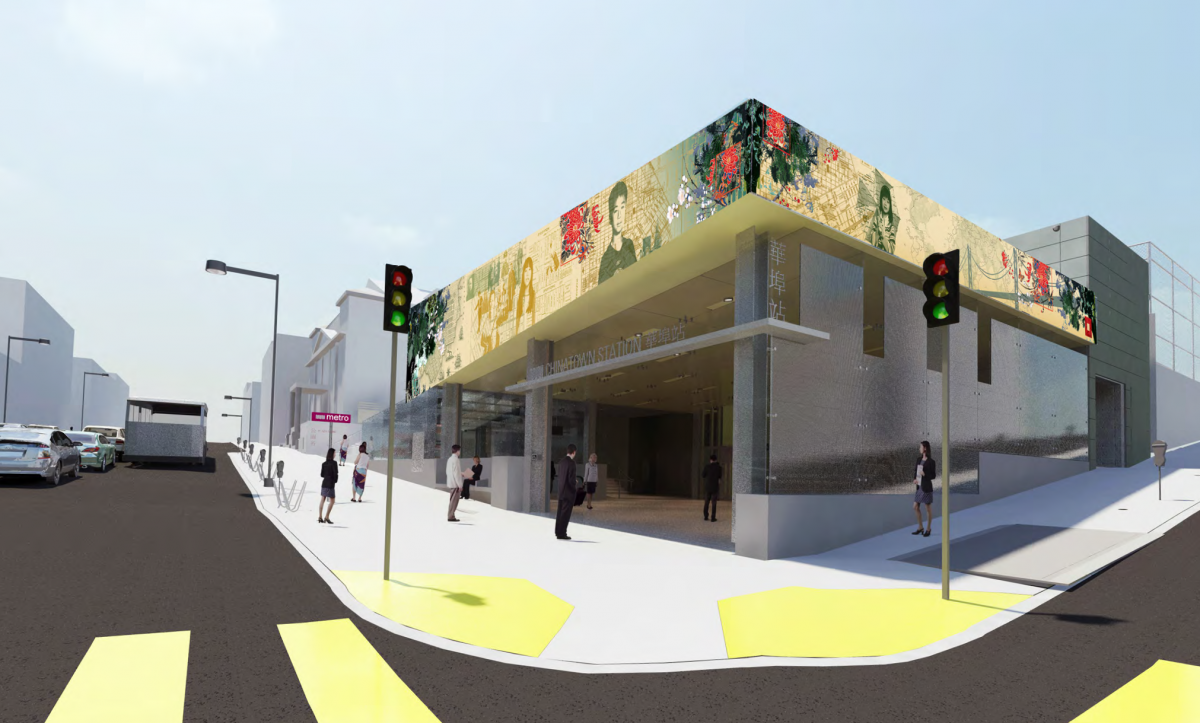
Rendered image of a station at the intersection corner with traffic signals and pedestrians

Rendering of station parapet with glass artwork 
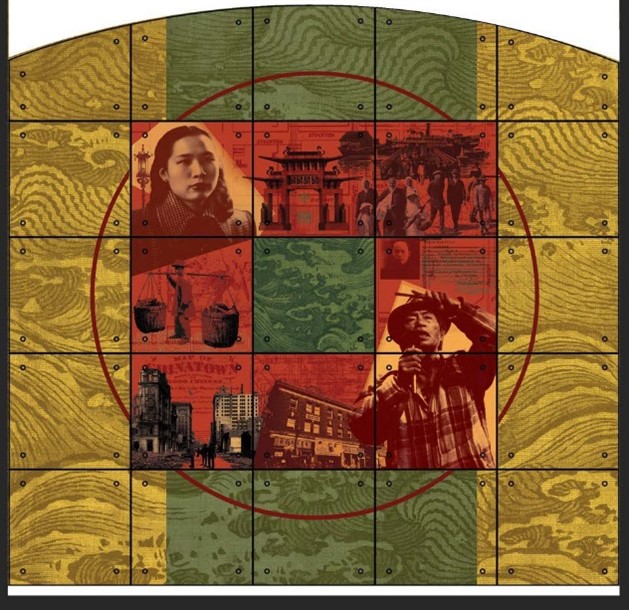
Artwork design consisting of archived images of Asians landmarks and faces

Artwork design for South platform wall
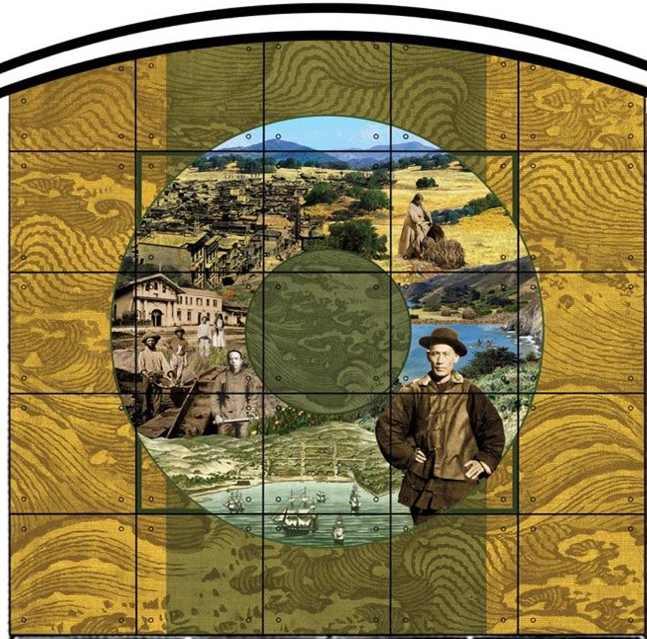
Artwork design consisting of archived images of landmarks and persons

Artwork design for North platform design

  • Clare Rojas created an integrated tile mural titled A Sense of Community for the cross-cut cavern wall at the concourse level. The artwork features a variety of unique Silk Road textiles patterned in the style of a cathedral window quilt. Sourced from art and design institutions, fashion designers, and local fabric stores, the swatches are framed within a small circle closely connected to those around it, resulting in a dynamic pattern that represents the Chinatown community held together by a common history and culture. 

Hear from Yumei and Tomie in an interview video, where they discuss the process and inspiration for their work. A special thank you to the San Francisco Arts Commission for making public art possible at the four new stations. 

Visit Chinatown this weekend during the Lunar New Year Parade. Learn more about the installations or take pictures in front of the art. New T Third Service from Chinatown-Rose Pak to Sunnydale is Monday through Friday, 6 a.m. to midnight and Saturdays and Sundays, 8 a.m. to 12 a.m. 

Yumei Hou:  

http://www.papercutlady.com/index.html

https://www.facebook.com/yumei.hou.50 

Tomie Arai:  

http://tomiearai.com/ 

https://www.facebook.com/tomie.arai

Clare Rojas: 

https://www.instagram.com/clarerojasart/


Published February 03, 2023 at 06:40AM
https://ift.tt/oTiO8dM

Comments

Popular posts from this blog

150 Years Ago Today – The Cable Car is Born

150 Years Ago Today – The Cable Car is Born By Kelley Trahan August 2, 2023, marks the 150th anniversary of the world’s first successful cable railway, born right here in San Francisco. To celebrate the occasion, we bring you the story of Andrew Hallidie and the very first cable car company, the Clay Street Hill Railroad.  Andrew Hallidie (1834-1900) was a pioneering inventor and entrepreneur who changed urban transportation. In 1852, at the age of 18, Hallidie emigrated with his father from the United Kingdom to San Francisco during the California Gold Rush. His father, an engineer and inventor, had a wire rope patent that played a crucial role in his son's future success.   Portrait of Andrew Smith Hallidie in 1890. Inspired by his father's wire rope business, Hallidie developed a steel cable mineral mine hauling system in 1857. About a decade later, he designed a wire rope aerial tramway for transporting materials over mountainous terrain. Then, after a stint in bridg...

Shared Spaces are Here to Stay. Permit Renewals are Due January 15, 2023.

Shared Spaces are Here to Stay. Permit Renewals are Due January 15, 2023. By Anne Yalon Shared Spaces, amongst many other benefits, allows our residents and families to enjoy safe and social outdoor dining. Seen here are the the owners of Tio Chilo’s Grill and their children in the restaurant’s parklet on 24th Street in the Mission.  San Francisco’s popular Shared Spaces program allows merchants, restaurants and arts and culture organizations to use the curbside, sidewalk and other public spaces to conduct local business activities and stay afloat. What emerged as an economic lifeline during the pandemic is making San Francisco’s streets more energized, engaged and activated. Many of the Shared Spaces parklets have become central gathering places for the local community. “ Our parklet makes me feel like when I go to Mexico, where outdoor seating is everywhere. People end up joining their friends in our parklet. It is a space for our customers and our community," said Liz V...

Tenderloin Streets Transform During COVID-19

Tenderloin Streets Transform During COVID-19 By Kimberly Leung COVID-19 has disproportionately impacted people who live and work in the Tenderloin. As a result, the SFMTA has been working closely with District 6 Supervisor Matt Haney’s office, other city departments, the Tenderloin Traffic Safety Task Force and community members to address the public health issues and unique challenges in the neighborhood through innovative interventions.    The Tenderloin is home to many of our most vulnerable communities including historically marginalized groups such as people with disabilities, residents of SROs and supportive housing and limited-English proficient communities. With every single street in the Tenderloin on the city’s High Injury Network -- the 13 percent of San Francisco streets that account for 75 percent of severe traffic injury collision and fatalities -- thi...