
Black History Lost and Found: Dorothy Jaymes and Accessible Transit

Black History Lost and Found: Dorothy Jaymes and Accessible Transit
By Jeremy Menzies

We continue to celebrate Black History Month by sharing the stories of SFMTA staff whose revolutionary work helped pave the way for future generations of Muni riders. Today, we look at the incredible contributions of Dorothy Jaymes, who played a critical role in helping advance accessibility on transit in San Francisco at a time when little was being done.  
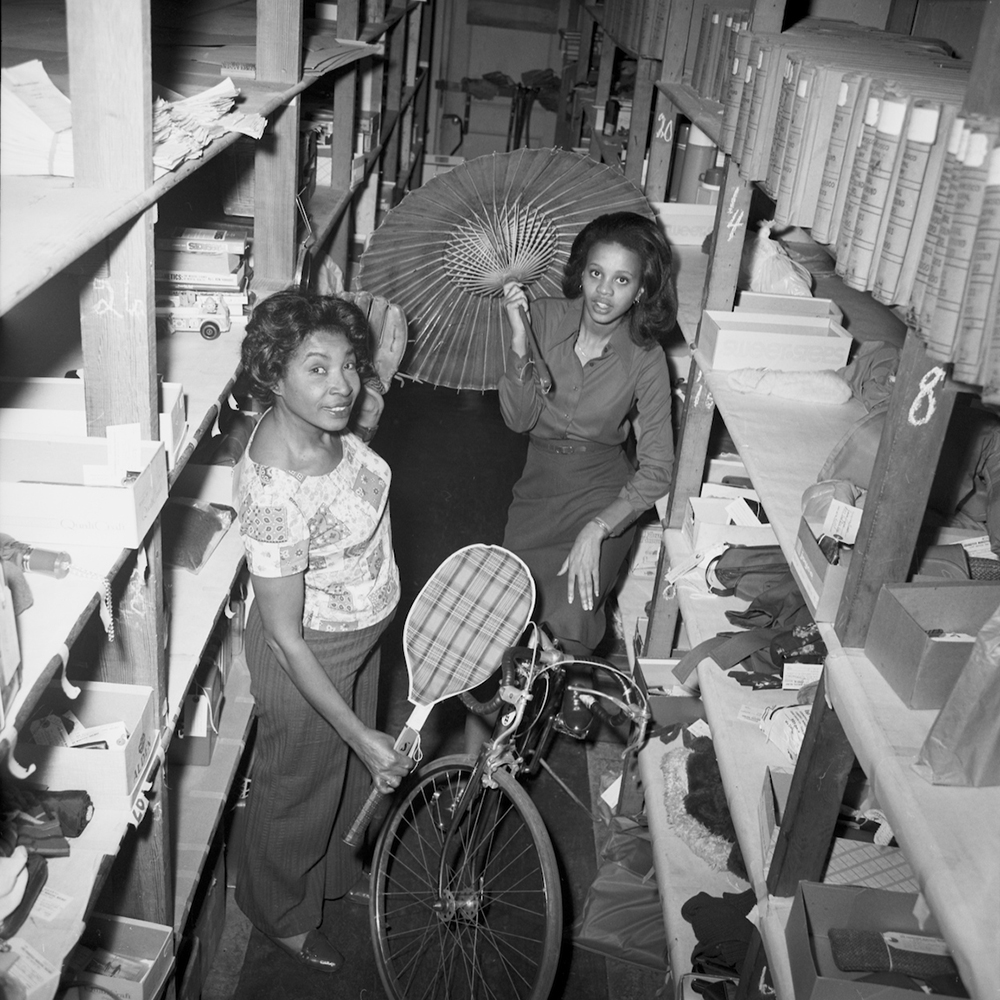
Employees standing in between shelving holding various items such as a umbrella, tennis racket and bicycles. The shelving is filled with additional various items.

Jaymes (left, holding tennis racket) with her assistant, Linda Westry in the Muni Lost & Found Department in 1977. 

Born in Lake Charles, Louisiana, Jaymes started her career in Muni’s Lost & Found Department in the 1970s. According to a 1977  article in the department newsletter, Trolley Topics, she took her job seriously, accounting for every lost item no matter how small or large. 

Around the same time, protests by local disability rights advocates exposed the issues of poor access to public transit to local officials. The city responded in part by seeking contracts for new buses with passenger lifts in 1978 and by establishing the Elderly & Handicapped Program, to which Jaymes was a foundational contributor. 
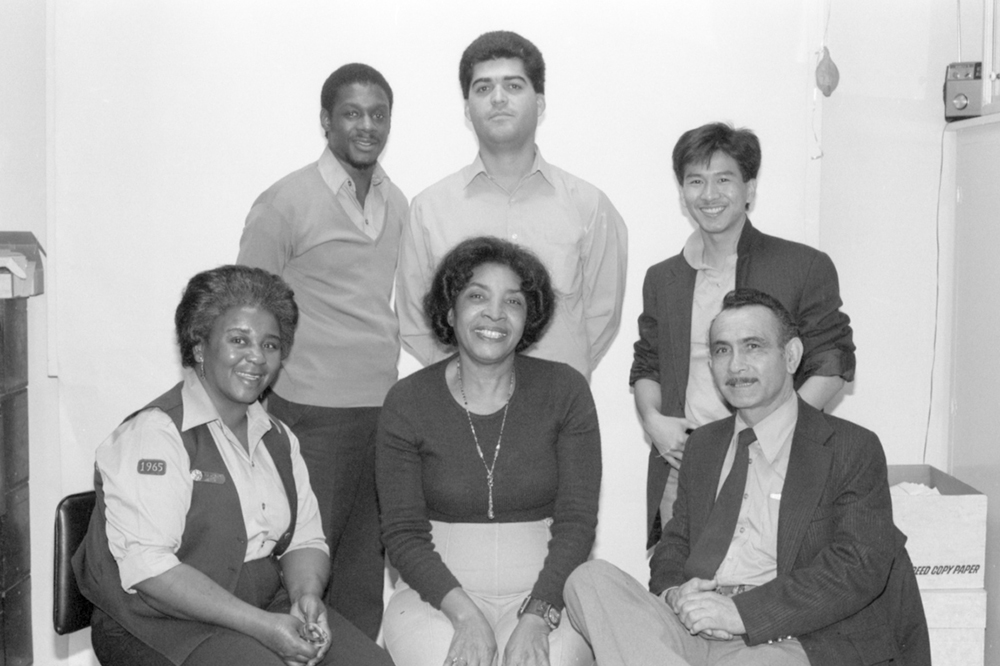
Group photo of employees. The back row of three staff is standing. The front row of three staff is seated. One emplyee is wearing a Muni work vest.

Members of Muni Elderly & Handicapped Office staff in 1985, with Jaymes at center. 

By October 1979, Jaymes headed up the E&H Office and was responsible for processing applications for discounted transit fare cards. An early version of the Free Muni for People with Disabilities Program, this program lowered the cost of transit for people who needed it most. 

Jaymes’ role in the office played a critical part in improving access to transit for all San Franciscans. 
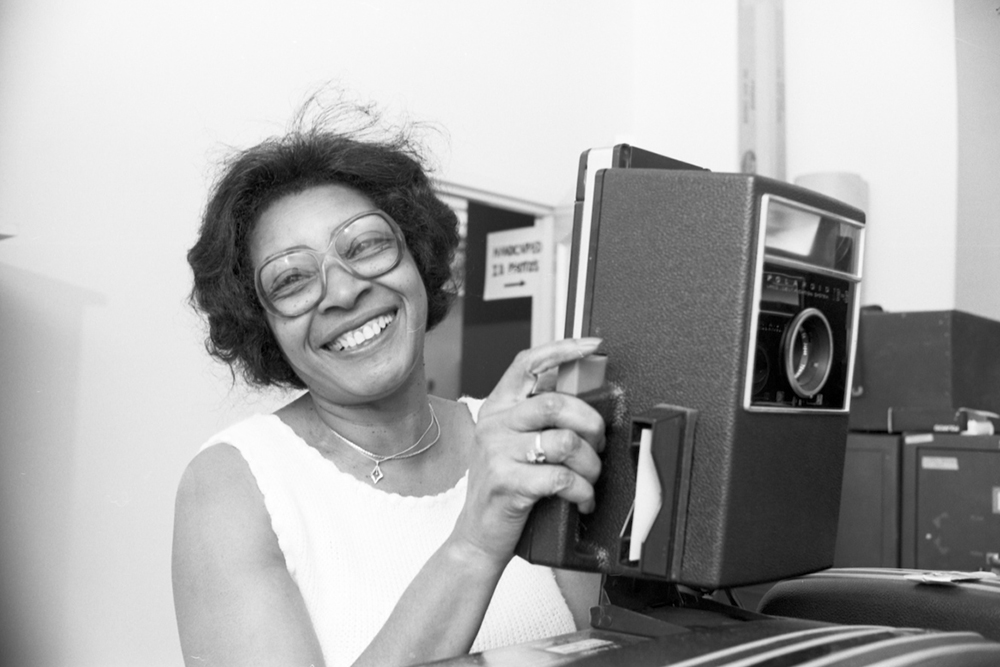
Employee smiling and holding a vintage card camera

Working out of a room in the Muni Photo Department, Jaymes wields an ID card camera in this 1979 photo. 

She left Muni in 1990 and finished out her career with the City of San Francisco at the Planning Department, before retiring in the early 2000s. Jaymes returned to Louisiana in retirement and passed away in 2015 at age 89. One of her former San Francisco co-workers remembered her as “a wonderful woman who was strong and always stood up for the workers.” 

So often, we only hear the stories of major figures and their brave breakthroughs in history. Capturing the full story begins with also celebrating and recognizing the contributions of our “unsung heroes,” whose daily work is still helping Muni riders today.  


Published February 28, 2023 at 11:01PM
https://ift.tt/ACEldbZ

Comments

Popular posts from this blog

150 Years Ago Today – The Cable Car is Born

150 Years Ago Today – The Cable Car is Born By Kelley Trahan August 2, 2023, marks the 150th anniversary of the world’s first successful cable railway, born right here in San Francisco. To celebrate the occasion, we bring you the story of Andrew Hallidie and the very first cable car company, the Clay Street Hill Railroad.  Andrew Hallidie (1834-1900) was a pioneering inventor and entrepreneur who changed urban transportation. In 1852, at the age of 18, Hallidie emigrated with his father from the United Kingdom to San Francisco during the California Gold Rush. His father, an engineer and inventor, had a wire rope patent that played a crucial role in his son's future success.   Portrait of Andrew Smith Hallidie in 1890. Inspired by his father's wire rope business, Hallidie developed a steel cable mineral mine hauling system in 1857. About a decade later, he designed a wire rope aerial tramway for transporting materials over mountainous terrain. Then, after a stint in bridg...

Shared Spaces are Here to Stay. Permit Renewals are Due January 15, 2023.

Shared Spaces are Here to Stay. Permit Renewals are Due January 15, 2023. By Anne Yalon Shared Spaces, amongst many other benefits, allows our residents and families to enjoy safe and social outdoor dining. Seen here are the the owners of Tio Chilo’s Grill and their children in the restaurant’s parklet on 24th Street in the Mission.  San Francisco’s popular Shared Spaces program allows merchants, restaurants and arts and culture organizations to use the curbside, sidewalk and other public spaces to conduct local business activities and stay afloat. What emerged as an economic lifeline during the pandemic is making San Francisco’s streets more energized, engaged and activated. Many of the Shared Spaces parklets have become central gathering places for the local community. “ Our parklet makes me feel like when I go to Mexico, where outdoor seating is everywhere. People end up joining their friends in our parklet. It is a space for our customers and our community," said Liz V...

Tenderloin Streets Transform During COVID-19

Tenderloin Streets Transform During COVID-19 By Kimberly Leung COVID-19 has disproportionately impacted people who live and work in the Tenderloin. As a result, the SFMTA has been working closely with District 6 Supervisor Matt Haney’s office, other city departments, the Tenderloin Traffic Safety Task Force and community members to address the public health issues and unique challenges in the neighborhood through innovative interventions.    The Tenderloin is home to many of our most vulnerable communities including historically marginalized groups such as people with disabilities, residents of SROs and supportive housing and limited-English proficient communities. With every single street in the Tenderloin on the city’s High Injury Network -- the 13 percent of San Francisco streets that account for 75 percent of severe traffic injury collision and fatalities -- thi...