
It’s Electric! Battery Buses Then and Now

It’s Electric! Battery Buses Then and Now
By Jeremy Menzies

Battery-electric buses and cars have been hitting the streets around the nation in recent years, and here in San Francisco, the SFMTA is currently running a pilot program to test battery powered buses across the system. The pilot analyzes not only the buses themselves, but also how the technology works in the real world of stop-and-go traffic and hill-climbing.   

Surprising as it may seem, this pilot program is not the first time battery electric buses appeared on the streets of SF. Here’s a look back at one test that took place over 50 years ago. 
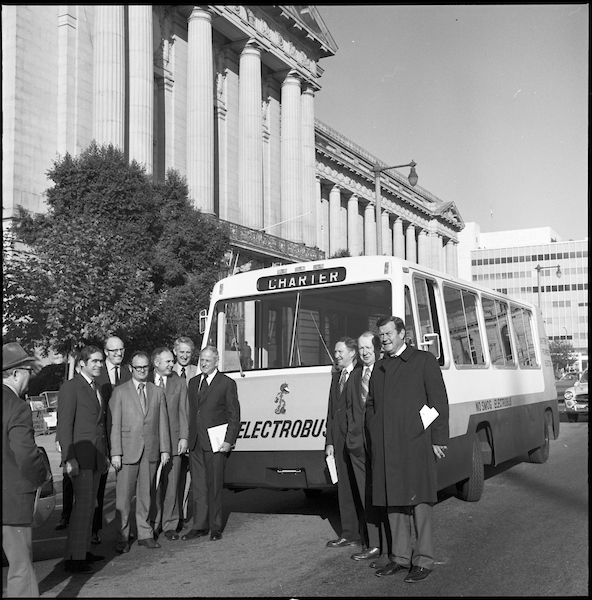
A black and white photo of an early-stage Electrobus with people posing for a photo around it.

While battery electric vehicles date back nearly 200 years to the 1830s, it took over a century for them to see widespread commercial success due to the limitations of the battery technology. 

One of the first times Muni tested a battery-powered bus was in November 1972.  Dubbed the “Electrobus”, this small vehicle was tested on the 39 Coit route up Telegraph Hill. This route has historically been served by shorter than normal buses due to the tight turns and steep grades up the hill. 
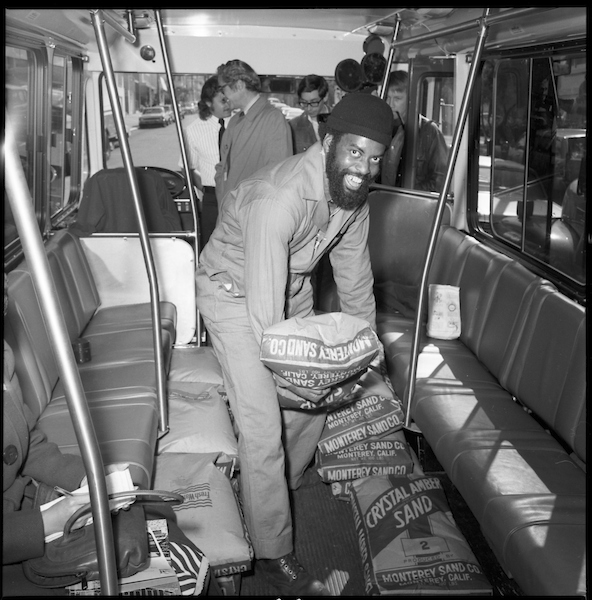
A black and white photo of a person loading sandbags into a bus.

Loaded with sandbags to simulate the weight of passengers, the Electrobus climbed up the hill to the Coit Tower parking lot just like its gas-powered counterparts. While this bus never went into service, it was one of a handful of “alternative” buses Muni explored in the early ‘70s, including a steam bus and a flywheel-powered bus. 
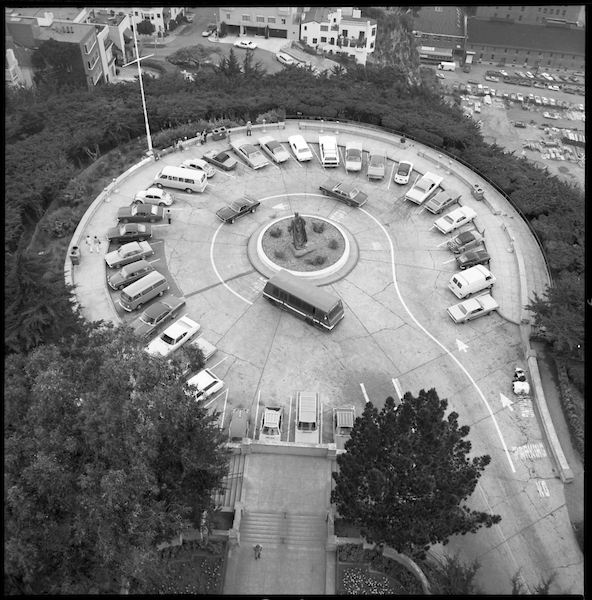
A black and white overhead photo of a circular parking lot full of cars and buses and surrounded by trees.

Today, the SFMTA is testing battery electric buses from four different manufacturers to see what the vehicles can do and to work out possible kinks in adopting the technology on a large scale. 
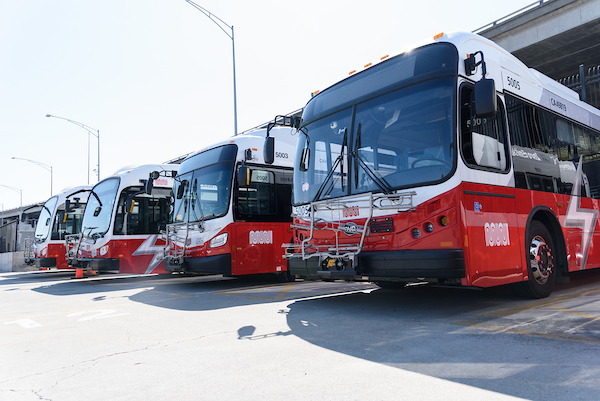
A bus yard with a close up shot of several parked Battery Electric Buses that are red and white.

These buses have been running on some of the city's hardest routes for months, from long stretches along the 9 San Bruno line to the steep hills of the 22 Fillmore, to determine their viability as an alternative to our hybrid-diesel buses.
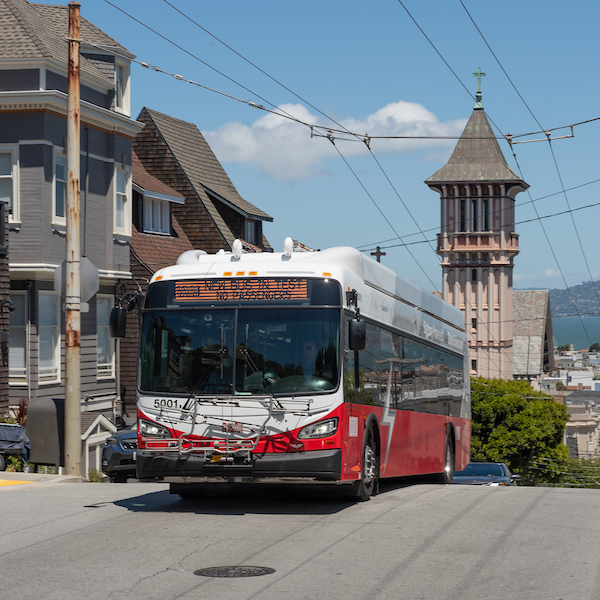
A red and white battery-electric bus climbs a steep street in San Francisco.

Muni already operates the greenest fleet of any city in North America. Pollution from Muni makes up less than 0.001% of citywide emissions, while 30% of the city’s greenhouse gas emissions come from private vehicles. Riding transit is a sustainable way to travel, and we’re committed to our efforts to achieve a 100% zero-emissions transit fleet. Alongside trolley buses and other emerging technologies, battery-electric buses will play a critical role in a cleaner, greener future for Muni and all of San Francisco. 


Published November 30, 2023 at 11:17PM
https://ift.tt/gkUbj4F

Comments

Popular posts from this blog

150 Years Ago Today – The Cable Car is Born

150 Years Ago Today – The Cable Car is Born By Kelley Trahan August 2, 2023, marks the 150th anniversary of the world’s first successful cable railway, born right here in San Francisco. To celebrate the occasion, we bring you the story of Andrew Hallidie and the very first cable car company, the Clay Street Hill Railroad.  Andrew Hallidie (1834-1900) was a pioneering inventor and entrepreneur who changed urban transportation. In 1852, at the age of 18, Hallidie emigrated with his father from the United Kingdom to San Francisco during the California Gold Rush. His father, an engineer and inventor, had a wire rope patent that played a crucial role in his son's future success.   Portrait of Andrew Smith Hallidie in 1890. Inspired by his father's wire rope business, Hallidie developed a steel cable mineral mine hauling system in 1857. About a decade later, he designed a wire rope aerial tramway for transporting materials over mountainous terrain. Then, after a stint in bridg...

Shared Spaces are Here to Stay. Permit Renewals are Due January 15, 2023.

Shared Spaces are Here to Stay. Permit Renewals are Due January 15, 2023. By Anne Yalon Shared Spaces, amongst many other benefits, allows our residents and families to enjoy safe and social outdoor dining. Seen here are the the owners of Tio Chilo’s Grill and their children in the restaurant’s parklet on 24th Street in the Mission.  San Francisco’s popular Shared Spaces program allows merchants, restaurants and arts and culture organizations to use the curbside, sidewalk and other public spaces to conduct local business activities and stay afloat. What emerged as an economic lifeline during the pandemic is making San Francisco’s streets more energized, engaged and activated. Many of the Shared Spaces parklets have become central gathering places for the local community. “ Our parklet makes me feel like when I go to Mexico, where outdoor seating is everywhere. People end up joining their friends in our parklet. It is a space for our customers and our community," said Liz V...

Tenderloin Streets Transform During COVID-19

Tenderloin Streets Transform During COVID-19 By Kimberly Leung COVID-19 has disproportionately impacted people who live and work in the Tenderloin. As a result, the SFMTA has been working closely with District 6 Supervisor Matt Haney’s office, other city departments, the Tenderloin Traffic Safety Task Force and community members to address the public health issues and unique challenges in the neighborhood through innovative interventions.    The Tenderloin is home to many of our most vulnerable communities including historically marginalized groups such as people with disabilities, residents of SROs and supportive housing and limited-English proficient communities. With every single street in the Tenderloin on the city’s High Injury Network -- the 13 percent of San Francisco streets that account for 75 percent of severe traffic injury collision and fatalities -- thi...