By Mariana Maguire
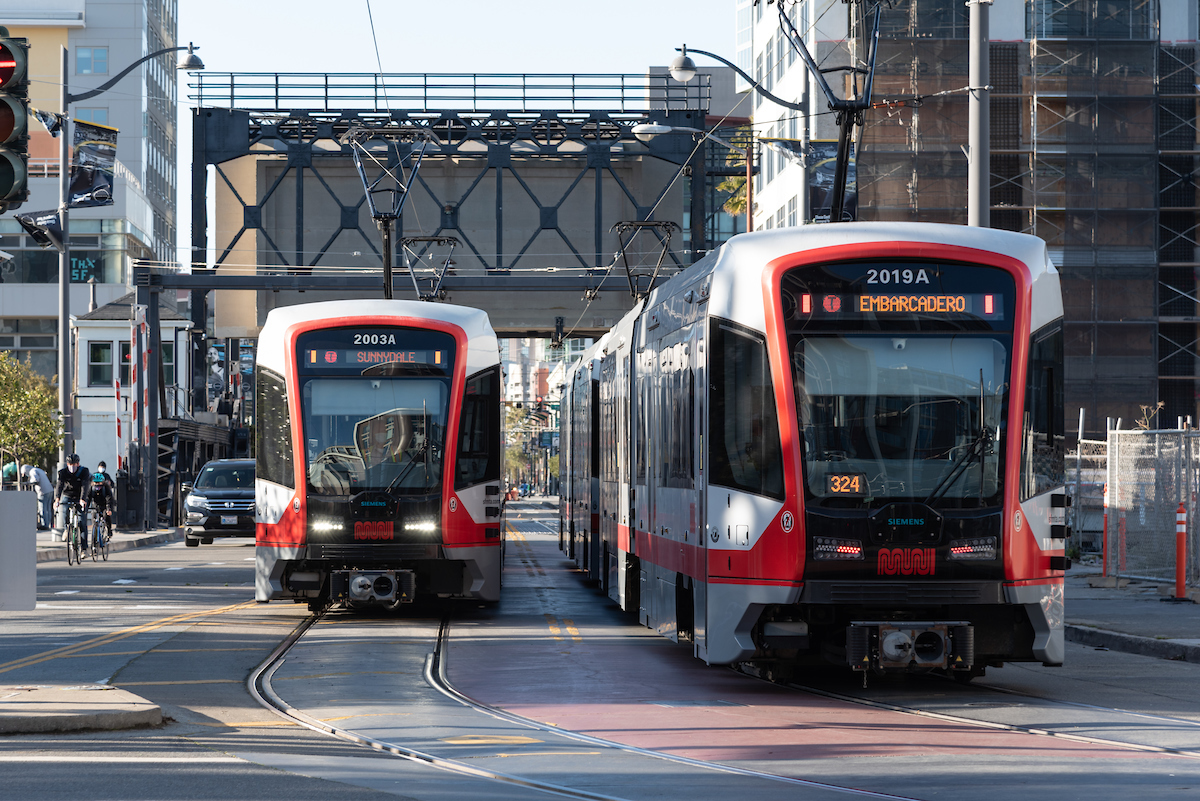
Upgrades will replace the current train control system in the subway and extend the modern system to street-level Metro operation for faster, more reliable service.
Muni Metro, San Francisco’s light rail system, serves hundreds of thousands of people daily throughout the city. Since 2019, we have greatly reduced the delays and subway congestion that had plagued the Metro in the past. This success is due to a combination of advances in how we manage service and conduct ongoing maintenance.
But we need to fundamentally modernize to overcome Metro’s structural and technological limitations. With San Francisco projected to grow significantly in the next decade, there’s no better time to invest in the future of Muni Metro.
Current Automatic Train Control System (ATCS) Limitations
Despite being third busiest light rail system in the U.S., Muni Metro is the last to funnel five lines onto one path --- under Market Street. This structural challenge requires a combination of careful service planning and a highly effective train control system to keep trains moving efficiently and prevent delays.
But our current Automatic Train Control System (ATCS) has many challenges. The ATCS provides much greater Metro safety and reliability than manual operation, but it runs on 1980s technology and can experience equipment failures that cause Metro delays impacting riders’ commutes to work, school, appointments and other destinations.
As some customers experienced in October 2023, the computers that run the system crashed, automatically halting all service in the Muni Metro subway. Our staff immediately responded by rebooting the system and safely guiding train operators through the subway in manual mode. Within about an hour, the computers were back online, vehicles returned to automatic train control and subway service returned to normal. Meanwhile, bus shuttles were sent to provide service between West Portal and Embarcadero stations, Church Street and Duboce Avenue during the closure.
Our staff are experienced at working with this decades-old technology to prevent or quickly respond to incidents like this. But their best efforts can’t solve the underlying problem of decades of deferred Muni Metro capital improvements. The impacts are frustrating for both riders and staff, and unacceptable for a modern Metro system.
We must invest in modern train control and bring the Market Street subway tunnel into a state of good repair to make Muni Metro fast, frequent, and reliable for people throughout the Bay Area who count on this service.
Modernizing Muni Metro: Train Control Upgrade Project (TCUP)
The need is critical to modernize our train control system to a state-of-the-art Communication-Based Train Control (CBTC) system. CBTC uses the latest technology to:
-
Maintain constant communication with all trains in the rail network from the moment they go into service, both in the subway and on the street.
-
Communicate with and help prioritize signals - the CBTC system will tell signals a train is coming well in advance.
-
Automatically push software updates to keep the system current – no more floppy disks!
-
Keep trains evenly spaced to prevent bunching and gaps for more consistent wait times and travel times that match the advertised frequency and make trip planning more reliable, among many other benefits.
CBTC is expected to reduce Metro delays by 20-25% on top of the reductions we’ve already achieved. In turn, this will allow us to run more trains through the whole Metro network, making travel faster and more efficient. Customers will no longer be “stuck” on trains between stations due to subway congestion or slow-moving trains with a communication failure.
We are already on track to start building out the pilot phase of the new system by 2025. Learn more about this exciting Muni Metro modernization project on the Train Control Upgrade Project page.
Fix It! Weeks help maximize the Muni Metro of Today
As we pursue long-term innovations like the Train Control Upgrade Project, we are also taking important steps to maximize the Muni Metro improvements we can make today to help the system function better. And we’ve seen great success.
Fix It Week is one example of our success reducing long Muni Metro delays by about 70% compared to 2019. Prior to launching Fix It Week, maintenance windows were short, and it was difficult for crews to complete work efficiently, leading to ongoing maintenance challenges. This is because Metro maintenance can only take place when service is not running.
By closing the Muni Metro early for a few days every few months during the quarterly Fix It Week, our Maintenance of Way (MOW) teams can optimize work time for critical maintenance, preventing potential breakdowns. During Fix It Week, maintenance crews have an extended window to perform underground infrastructure improvement work that cannot be completed during the usual overnight windows.
The goal of Fix It Week is to make Muni Metro subway operations more reliable, ensure safety and improve the customer experience. Nine MOW teams (Track, Cable Car, Motive Power, Maintenance Engineering, Mechanical Systems, Overhead Lines, Underground, Paint Shop and Signal) are involved in the maintenance work, including custodial staff cleaning metro stations.
Buses provide substitute service for Muni Metro during Fix It! Week and connect all stops on Market Street. Muni ambassadors help riders navigate to their destination at the busy transfer stops.
Learn more about our subway maintenance work.
We’re proud of the strides we’ve made to improve Muni Metro service. Today, a trip on the N Judah from the Outer Sunset to Embarcadero is faster and more reliable than it was in 2019. We are committed to making Muni Metro a hallmark of our transit system.
Published January 04, 2024 at 10:33PM
https://ift.tt/H1nEIMU
Comments
Post a Comment