By Jeremy Menzies
This February for Black History Month we're highlighting one of San Francisco's most important figures in transportation, H. Welton Flynn. Flynn is best known for his key leadership at the SF Public Utilities Commission and as the inaugural chairman of the SFMTA Board of Directors. Mr. Flynn was the first African American appointed to a city commission and served the longest term of any commissioner in San Francisco’s history. He served under six different mayors, being elected to the office of President or Chairman more than a dozen times.
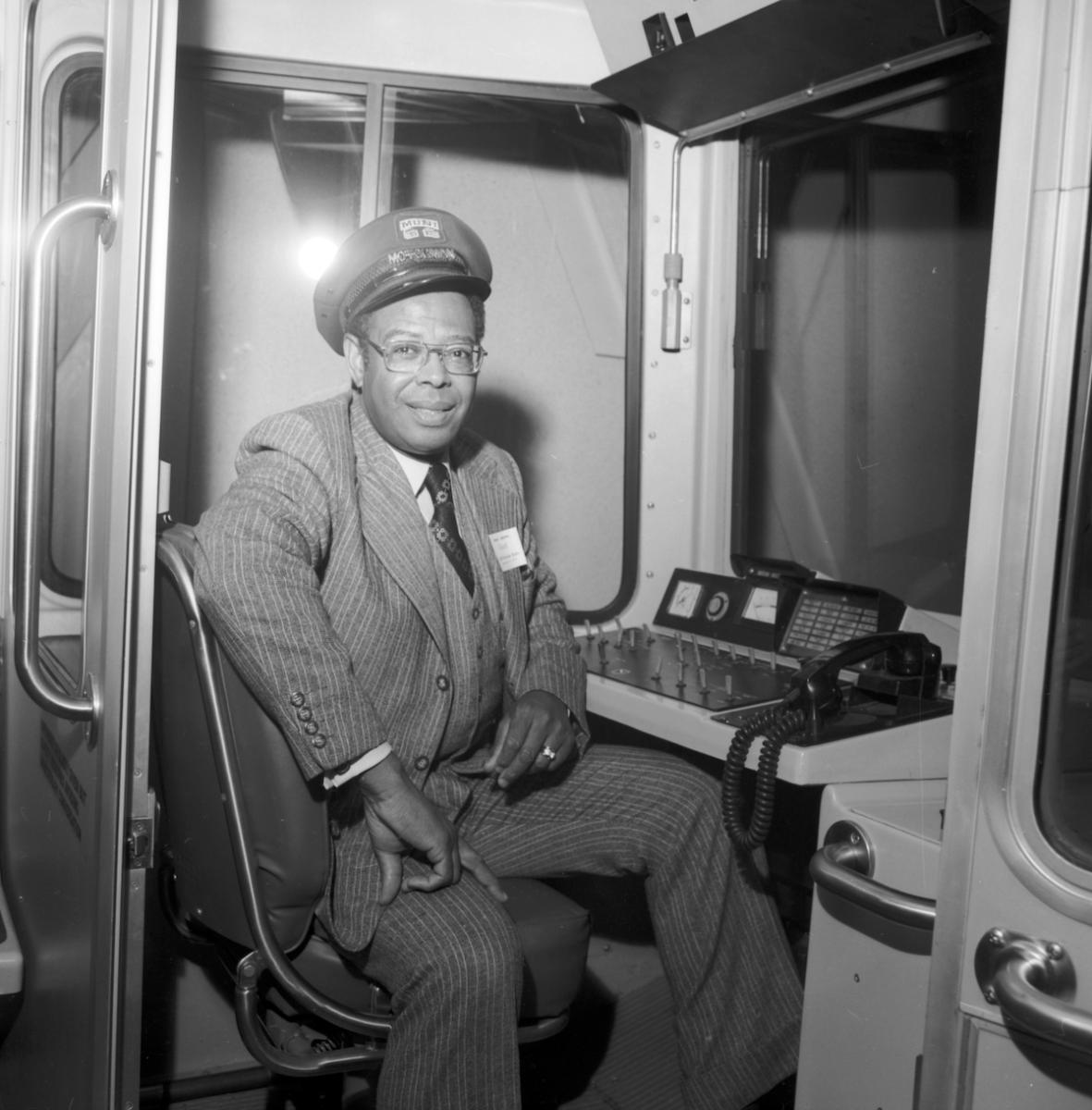
Welton Flynn in 1978 during the inaugural run of Muni light rail in the Market Street Subway. Flynn’s leadership on the Public Utilities Commission was crucial during this era of change and adoption of new technology in San Francisco transit.
Flynn's long tenure in transit began with his appointment to the Public Utilities Commission, which oversaw Muni operations, in 1970. Flynn led the introduction of Muni's monthly "Fast Pass", the launch of Muni Metro subway service and the City's first accessible transit services program, and the implementation of both the Cable Car System Rehabilitation Program and the Third Street Light Rail Project. Beyond transit improvement programs, he created the Minority and Disadvantaged Business Enterprise Program, which opened up contracting opportunities to minority and women-owned businesses and as the first program of its kind in the nation, paving the way for implementation in cities around the country. It became the model for contracting used by UMPTA. Flynn was also the driving force behind hiring the first African American head of any transit system in the nation, Curtis E. Green, who moved up the ranks at Muni from operator to general manager.
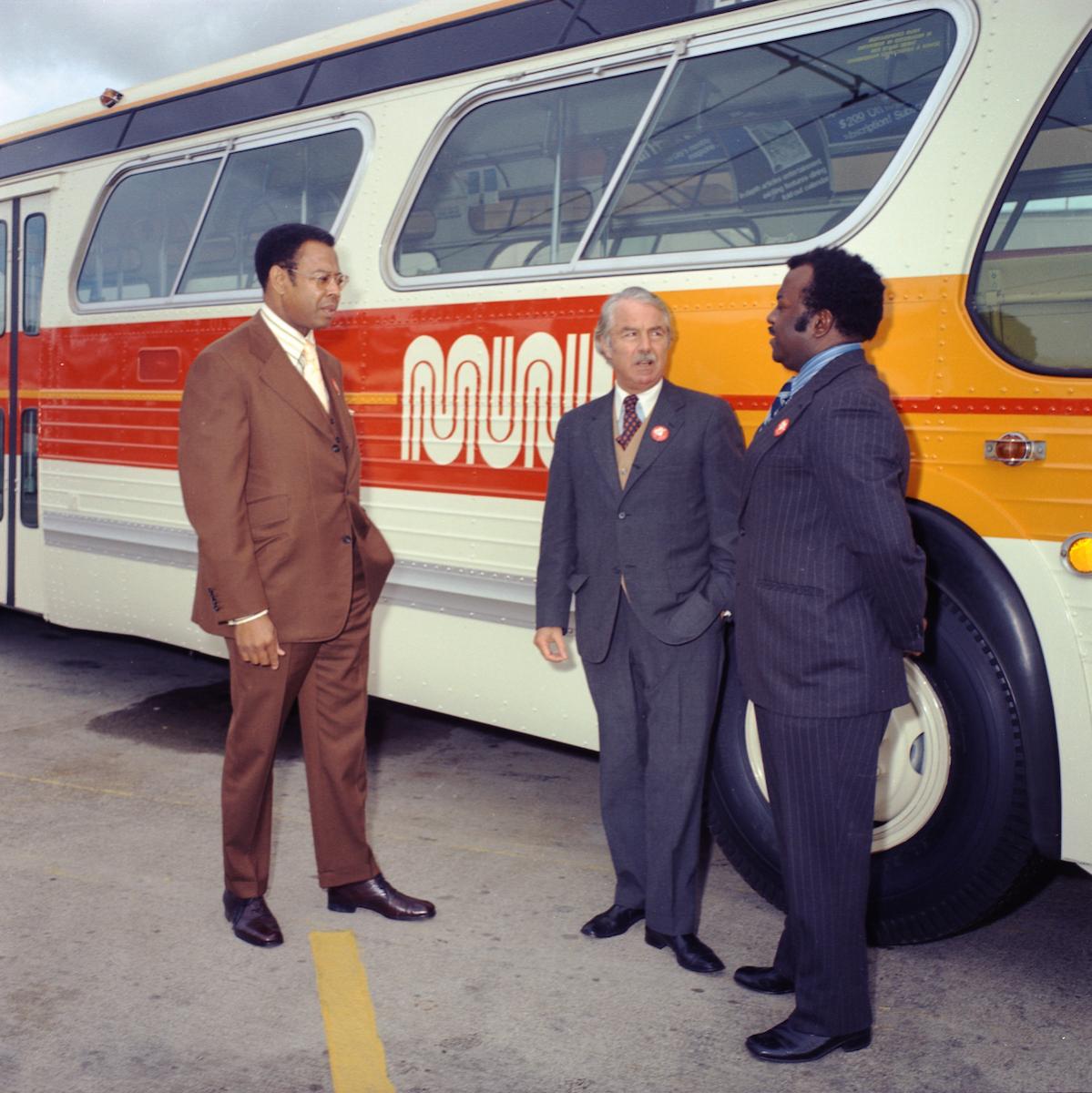
Implementation of the iconic Muni “worm” logo and orange Muni vehicle color scheme occurred during the era of management by PUC Commissioner Flynn and Muni General Manager Curtis Green. Here, at the press conference to debut the new style in 1975, Flynn (left) and Green (right) talk with the creator of the look, graphic designer Walter Landor.
On July 21, 1989, Welton Flynn's contributions to our transit system and city were immortalized with the naming of Muni's newest bus maintenance facility in his honor. The H. Welton Flynn Motor Coach Division, a former steel warehouse, was completed in 1983 to house and repair Muni’s fleet of larger 60-foot articulated buses. Flynn Division today is a key part of our transit operations, running high-ridership lines like the 38R, 14R, and 9R.
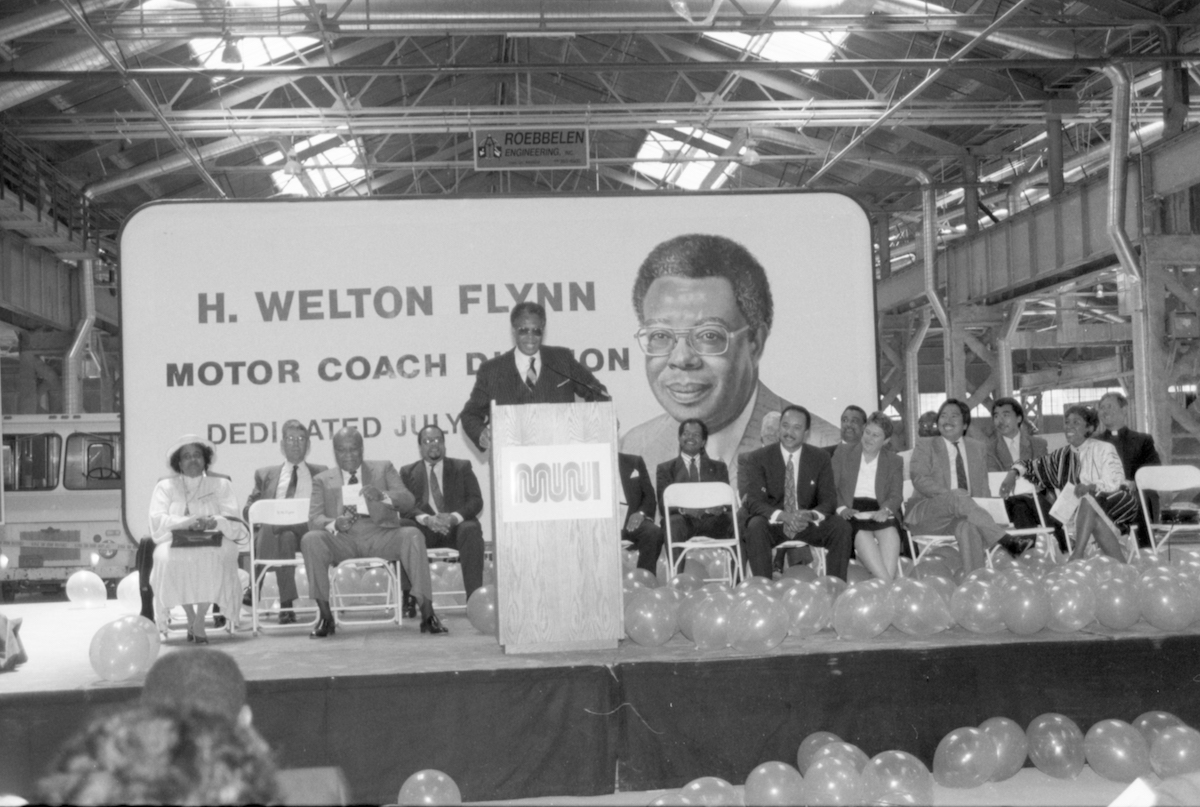
H. Welton Flynn speaks at the dedication of the Muni Flynn Division bus facility on July 21, 1989.
Four years after retiring from the PUC in 1992, Flynn was called upon by Mayor Willie L. Brown, Jr., to steer the Public Transportation Commission. Shortly thereafter in 2000 he became the first chairman of the SFMTA Board of Directors. Flynn retired from this post in 2004, drawing to a close his decades-long career of service to the people of San Francisco.
His illustrious career culminated in 2006 when Flynn was inducted into the APTA Hall of Fame with glowing recommendations from Senator Dianne Feinstein, former Mayor Brown, and local transit leaders.
In 2016, Flynn passed away at the age of 94 and at his memorial, former Mayor Brown said of Flynn:
“… he had integrity and the sensibilities necessary to do the work … he loved the people of San Francisco.”
Check out more photos of Welton Flynn at the SFMTA Photo Archive and follow us on Instagram for more nuggets of history this month.
Published February 14, 2020 at 03:03AM
https://ift.tt/2uIQNFK
Comments
Post a Comment