Essential Trip Card: Helping Older Adults and People with Disabilities Navigate Reduced Muni Service
By Bradley Dunn
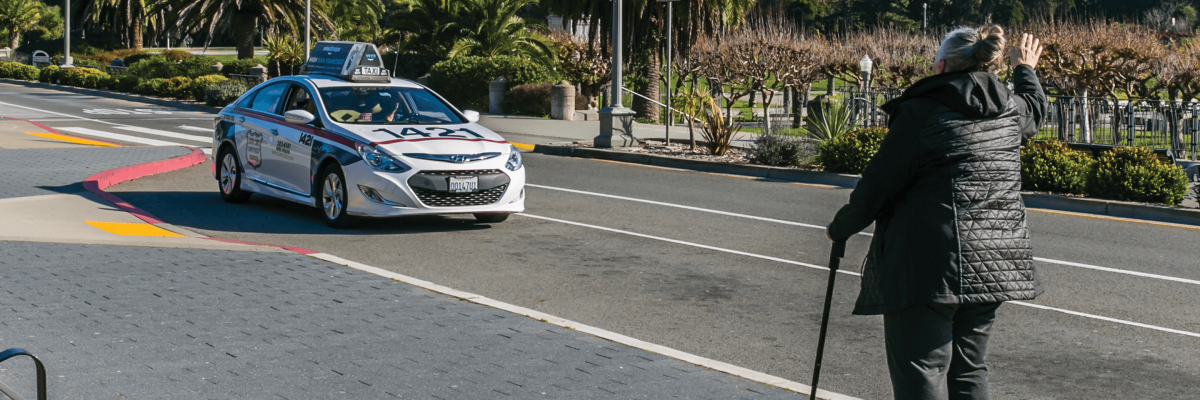
With a shortage of operators, car cleaners and other key personnel, Muni has implemented significant reductions to Muni service. We know that for many older adults and people with disabilities, walking farther to an alternate bus or paying for other transportation simply isn’t possible. To address this need, the SFMTA is announcing the Essential Trip Card (ETC) to help older adults and people with disabilities pay for essential trips in taxis. We are thankful that taxis have stepped up to serve this critical need.
The ETC will provide two to three round trips per month at only 20 percent of the cost of a regular cab fare. All taxis in San Francisco will accept the card to pay for essential trips like going to the grocery store or the doctor during the shelter-in-place period. Customers who pay $6 will receive $30 value or $12 for $60 value for taxi trips on a debit card. Cards can be re-filled once a month for each month of this special temporary program until the SFMTA announces its end.
If you are an older adult (65 and older) or a person with a disability, you can apply for the ETC program by calling 311 and mentioning the program. Staff will be available on weekdays between 9:00 a.m. and 4:45 p.m. to answer the question and get people signed up. For those who prefer to use a language other than English, language assistance is provided. While we encourage using the phone to minimize contact, as a last resort, qualifying customers may enroll in person at the SF Paratransit Broker’s Office (68 12th Street) if needed. The office remains open during regular weekday business hours (as of April 13, 2020).
If you are eligible, you will be automatically enrolled in the program and your debit card will be mailed right away. Once you receive your card in the mail, you may activate your card by following the instructions provided. To add funds to your ETC, you can provide payment information over the phone, online, or arrange to pay by cash or check.
Once you have the card, you can hail taxis, including ramp taxis, on the street, by phone, or by Flywheel app to make a trip. To limit risk to both riders and drivers, a CDC-approved sanitizer to clean frequently touched surfaces between trips is being provided to taxis. We ask riders to do their part by washing their hands and/or using hand sanitizer thoroughly before and after taxi trips, wearing a mask or cloth face covering if possible, coughing or sneezing into a tissue or elbow and not touching their faces. We also encourage riders to clean their debit card, child seat, or any items that the driver or anyone else may help to carry or load with a sanitizing cleaner, before and after each trip.
The taxi industry is an essential part of our transportation system. Taxis have been instrumental in our city’s efforts to effectively serve people with disabilities and older adults before and during this crisis. Taxis have been an integral part of Paratransit since the early 1980s and San Francisco has had wheelchair-accessible ramp taxi service since the early 1990s. The SFMTA is thankful that taxis continue to deliver these critical services to our most vulnerable citizens during these challenging times.
Help spread the word about this new program to those in need by reaching out to a family member, friend or neighbor to let them know about the program.
For other needs, the City’s Disability and Aging Service helpline at (415) 355-6700 now operates 7 days per week from 8:00 a.m. to 5:00 p.m. DAS helpline operators are available to connect people to the City’s existing service providers and expanded services as they become available.
Published April 17, 2020 at 12:08AM
https://ift.tt/2VfBfUv
Comments
Post a Comment