By Benjamin Barnett
As people walking, on bikes, scooters, and in motor vehicles all compete for space on the Embarcadero, travel along the waterfront can be challenging and create conflicts, especially at peak times. To address this, the SFMTA initiated The Embarcadero Quick-Build Project in 2020 as the first part of a larger plan to improve safety and livability on that corridor.
Safety and mobility improvements have so far been completed at Pier 35, the Ferry Terminal, and in the Rincon Restaurant Zone. These projects improve the safety and enjoyment of all modes of travel and mark a pivotal starting point in creating an improved waterfront for everyone to use.
Just the Start
The next step in connecting and extending these quick-build improvements is the implementation of an even more ambitious plan, The Embarcadero Enhancement Project (EEP). On Tuesday, January 12, the SFMTA presented the phasing plan of the EEP, including details of Phase 1, to the Port Commission. The plan prioritizes the next phases of infrastructure development that will occur along the corridor.
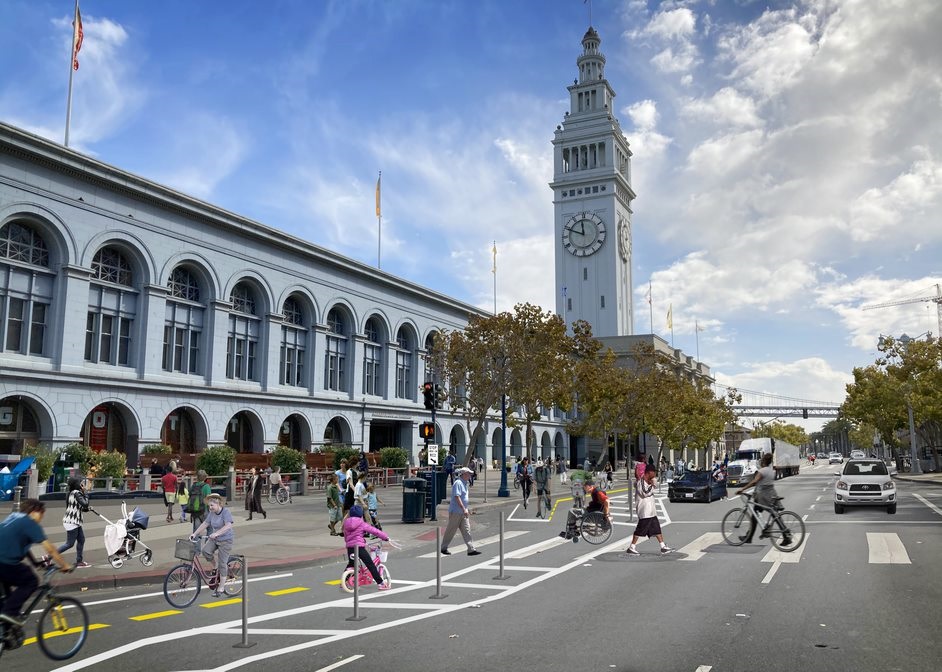
Rendering of Phase 1 of safety improvements on the Embarcadero at Ferry Building Plaza
Safety and Mobility
The Embarcadero corridor between Townsend and Lombard streets is part of San Francisco’s Vision Zero High Injury Network (HIN), the 13 percent of streets accounting for 75 percent of severe and fatal traffic injuries. Sadly, 174 severe injury collisions and two fatalities have taken place along this corridor in the last five years. To achieve our Vision Zero safety goals of eliminating all traffic fatalities, the SFMTA will deliver the greater Embarcadero Enhancement Project through our on-going partnership with the Port of San Francisco and the input of community stakeholders. The Embarcadero Enhancement Project seeks to:
- Build a safer Embarcadero for all users
- Improve connections between the Embarcadero and nearby neighborhoods
- Elevate the Embarcadero’s role as a valued destination and workplace for locals, visitors, businesses, maritime and industrial uses
- Invest in critical infrastructure to support the renewal and recovery of our City while protecting public health
Upcoming Phases
The first phase will take place along the Central Segment between Mission Street and Broadway. The second phase will focus along the Southern Segment between Folsom and Townsend streets.
Phase 1 - Central Segment (Mission to Broadway)
The first phase (Central Segment) will be constructed in two parts, with less-intensive construction to occur in 2021, using “quick-build” techniques and city crews, followed by more substantial capital investment and construction.
This sequenced approach allows for timely implementation of key safety measures and expanded mobility options during the pandemic-related temporary shutdown of historic streetcar service. It also allows the project team time to observe and evaluate these changes prior to committing to more permanent and expensive streetscape features.
Phase 2 - Southern Segment (Mission to Townsend)
The second phase (Southern Segment) proposes to extend the quick-build and Central Segment improvements south toward the ballpark, Caltrain, and growing Mission Rock neighborhood. This phase requires more significant capital investment and changes to the existing promenade and center medians to accommodate a fully protected two-way bikeway. As such, Phase 2 has a longer and less certain timeframe. SFMTA staff are undertaking preliminary engineering and will be coordinating with the Port’s development plans for Piers 30-32 and 38-40.
Northern Segment (Broadway to North Point)
The Embarcadero Enhancement Project's preliminary engineering phase identified several design and funding challenges to implementing the project as envisioned along The Embarcadero north of Broadway. This segment will not move forward as part of the EEP, but the SFMTA together with the Fisherman’s Wharf/Pier 39 circulation study will perform additional public outreach and analysis later this year to determine what safety improvements might be feasible in that area.
Stay Informed as We Create a Safer Embarcadero
The Embarcadero is a special place for many in San Francisco and beyond. We look forward to engaging with the community in the months ahead to help this important project take shape. Outreach for Phase 1 is currently underway through the spring of 2021. Please visit our project website at SFMTA.com/Embarcadero to stay up to date on the latest information and sign up for updates, or contact the project team directly by emailing Embarcadero@SFMTA.com.
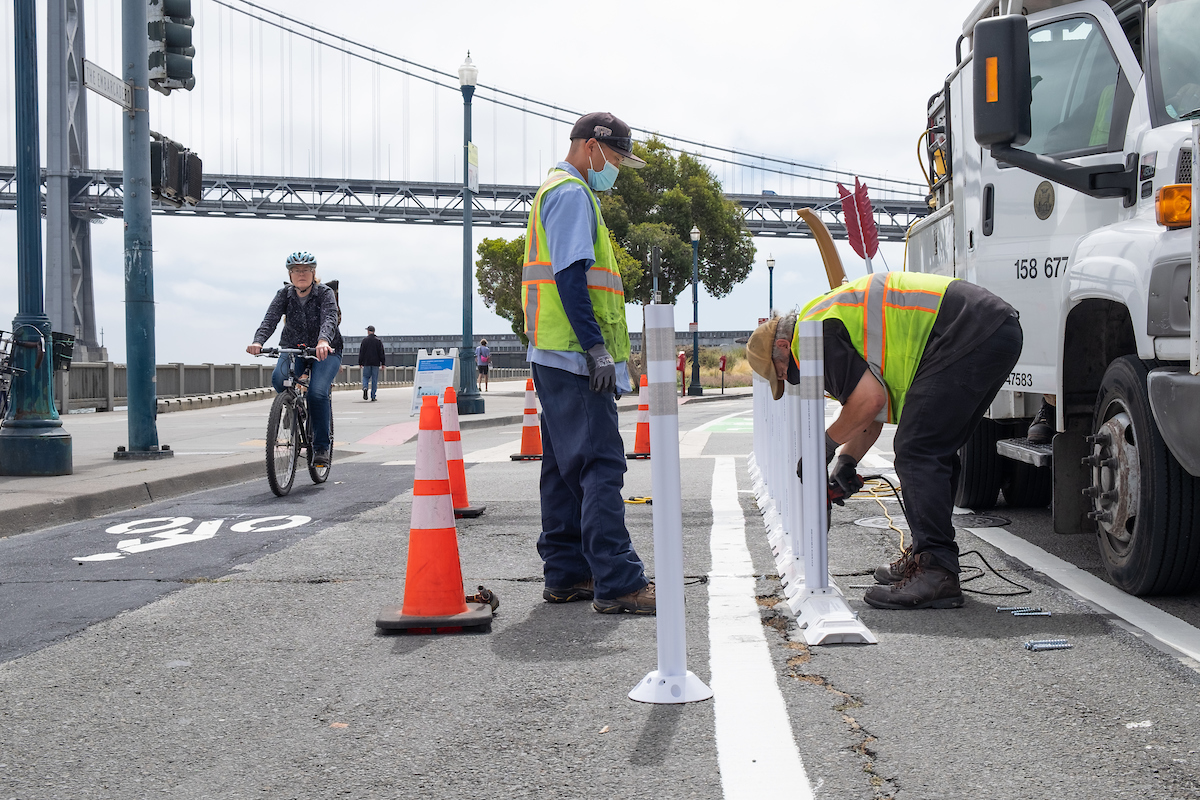
SFMTA Sign Shop crew installing safety posts along the Embarcadero bicycle lane in August 2020.
Published January 15, 2021 at 09:29PM
https://ift.tt/2XKO5KE
Comments
Post a Comment