By Sophia Scherr
Local small businesses are what give San Francisco its eclectic and unique charm. Running a small business in San Francisco isn’t an easy feat either, especially over the past year. Therefore, it’s imperative that SFMTA’s projects not only provide resources to businesses that are impacted by construction but are also responsive to COVID-19 concerns as well.
Through our partnership with the Office of Economic and Workforce Development (OEWD), we have been able to provide an additional layer of support to businesses along project corridors including the Geary Rapid Project, Van Ness Improvement Project and L Taraval Improvement Project. The SFMTA project teams have made it a standard practice to include dedicated support as part of every major capital project. OEWD staff undertake door-to-door outreach and provide information and assistance with grant applications and other city resources that are available to impacted business owners. This partnership with OEWD is just one of many tools in SFMTA’s toolbox to ensure that our small businesses can thrive.
Projects like the Geary Rapid Project span diverse neighborhoods, each with differing needs. Project staff therefore customized outreach and engagement with small business owners and merchant groups for each of the unique business corridors along the corridor: Union Square, the Tenderloin, Japantown and the Fillmore.
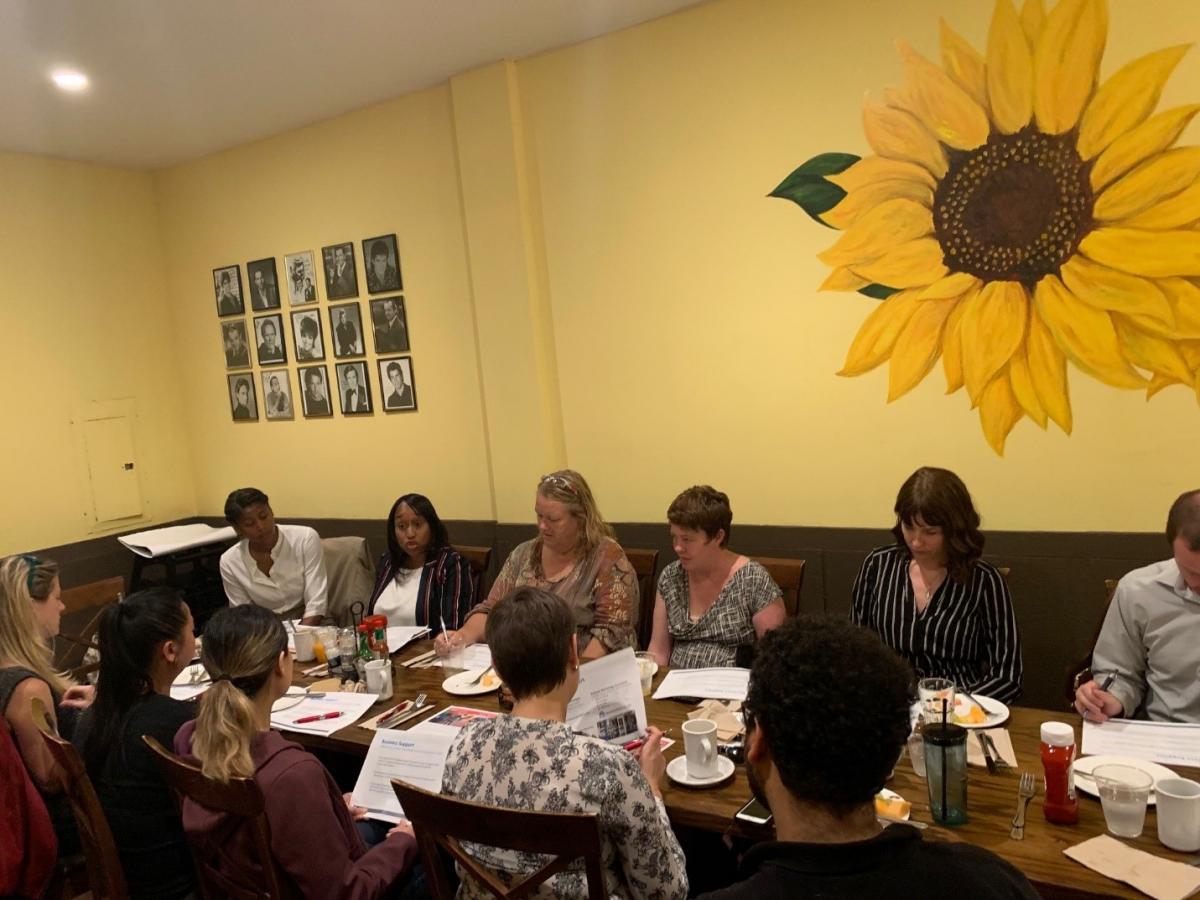
Geary Rapid Project and OEWD staff meet prior to COVID-19 with Fillmore Merchants to discuss upcoming construction
Prior to construction starting in a neighborhood, SFMTA and OEWD staff held frequent meetings with merchant groups and business owners to describe the anticipated impacts of construction and determine which support-resources best fit their needs. Once construction began, each merchant corridor was provided business wayfinding signage in line with their branding, as well as to fit the look and feel of the neighborhood. This wayfinding signage helps to raise the visibility of businesses, so that patrons can still find and access their favorite stores throughout construction.
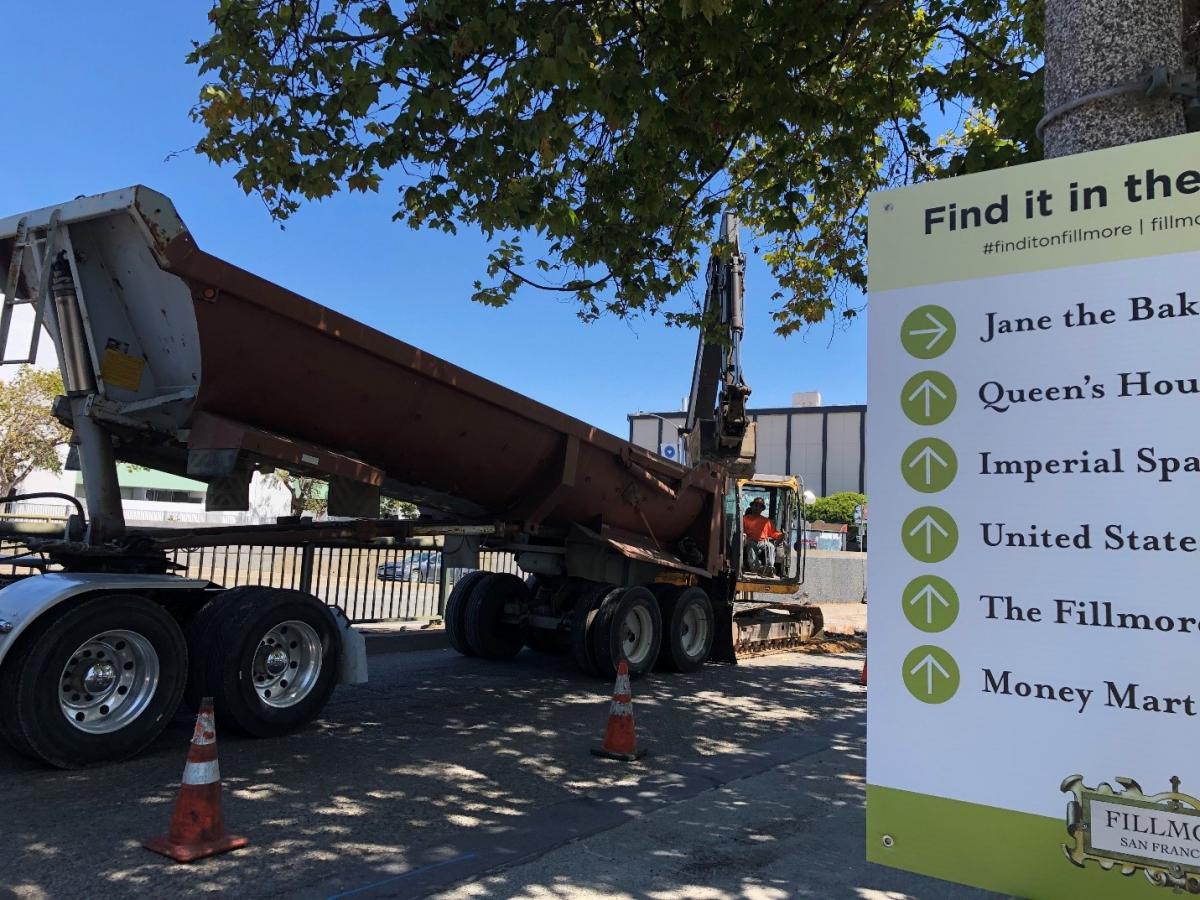
Wayfinding signage next to Construction Crews working in the Fillmore
COVID-19 and shelter-in-place orders only compounded pressure on small businesses already feeling the effects of construction. In response, SFMTA staff and merchant groups worked together to develop new ideas on how to keep customers coming during this challenging time. Small businesses, local events, and COVID-19 resources were featured within the project’s weekly construction forecast, which is sent to over 3,000 subscribers.
Each group also collaborated with staff to determine what type of marketing support would best suit them, and when was the best timing given the changing nature of shelter-in-place restrictions. The results were a mix of traditional and new approaches of promoting local merchants. For example, the Japantown Merchants Group chose an advertising campaign to promote visiting Japantown, featured inside and outside of buses throughout the Muni network. The Tenderloin Community Benefit District took a social media approach and promoted visiting restaurants and stores via targeted Facebook ads.
No matter the chosen method, providing targeted support is a proactive way for the SFMTA to help small business during these trying times, so they are able to remain open as our city begins the re-opening process.
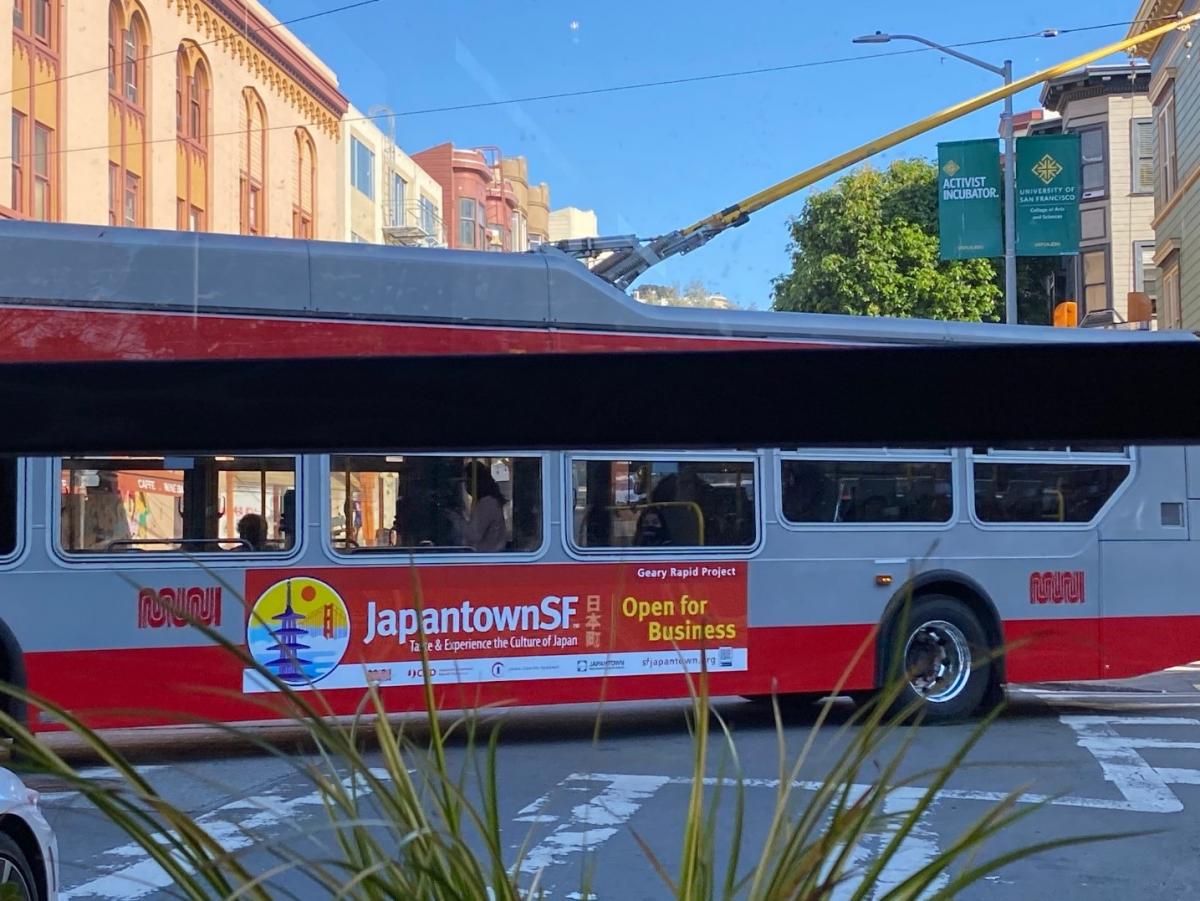
Bus ad produced for Japantown as part of the Geary Rapid Project Business Support Program
Of course, we recognize that in the past not every SFMTA project has been smooth sailing when it comes to construction. However, we have built upon our experience as a lesson for projects currently underway, and for those being planned. We have learned that consistent, personalized outreach and having project staff dedicated to addressing issues directly and quickly are essential to building and fostering meaningful relationships that maximize opportunities, and minimize the impact of construction.
Published March 23, 2021 at 10:00PM
https://ift.tt/2QtB1ZP
Comments
Post a Comment