
The 150 Year History of Muni’s ‘Newest’ Route: The 15

The 150 Year History of Muni’s ‘Newest’ Route: The 15
By Jeremy Menzies

With the return of Muni’s 15 route earlier this year as the 15 Bayview Hunters Point Express, here’s a quick look back at a line that traces part of its lineage back over 150 years.
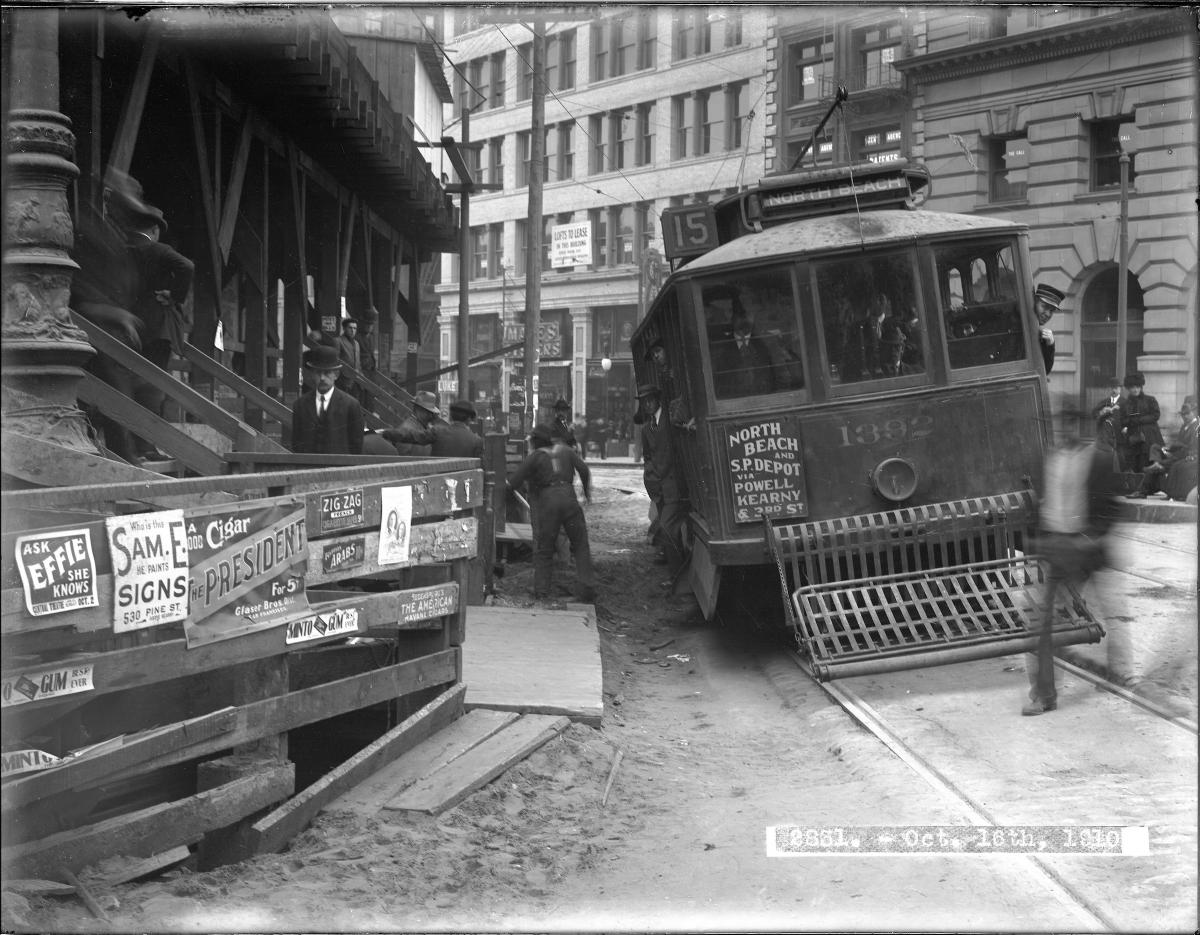
A 15 3rd & Kearny streetcar picks its way through a crowded downtown scene in this 1910 photo.

A 15 3rd & Kearny streetcar picks its way through a crowded downtown scene in this 1910 photo.

In the mid-1800s people began travelling San Francisco’s 3rd Street corridor by stagecoach and horse-drawn streetcars. At the turn of the 20th century, horse car service gave way to electric streetcars, with three lines eventually sharing the work of serving 3rd Street from north to south. Operated by the United Railroads Company, the combined service of the 15 Kearny & North Beach, 16 3rd & Kearny, and 29 3rd & Sansome lines ran from North Beach all the way to the county line in Visitacion Valley.
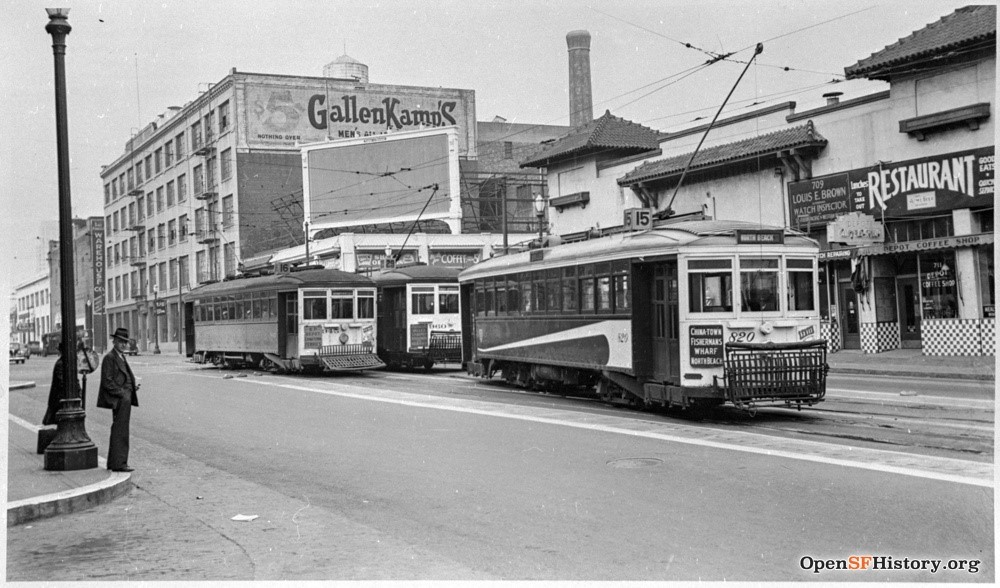
A photo from OpenSFHistory.org showing the 15, 16, and 29 Streetcars outside the Southern Pacific Railroad Depot in 1940, shortly before streetcar service would be replaced with buses.

A photo from OpenSFHistory.org showing the 15, 16, and 29 Streetcars outside the Southern Pacific Railroad Depot in 1940, shortly before streetcar service would be replaced with buses.

In the 1940s, streetcar service was replaced by buses that combined multiple lines into one route.  Like their streetcar predecessors, the buses stopped at key locations along 3rd Street, including the factories in Dogpatch, Southern Pacific Railroad Depot (now 4th & King Caltrain), downtown commercial district, Market Street transit lines and the docks in the North Beach area. 
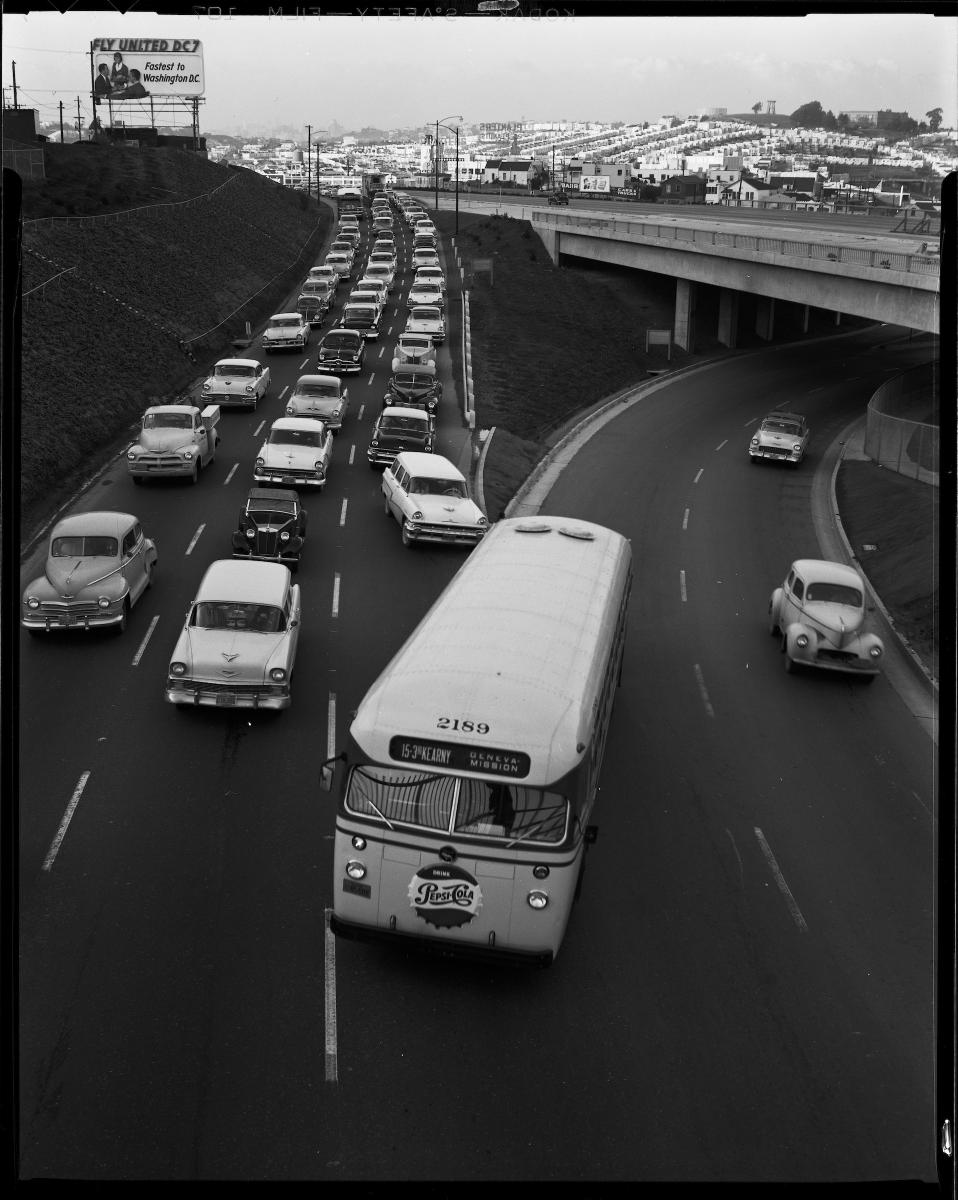
A Muni 15 3rd & Kearny bus makes a lane change on San Bruno & Harkness avenues in this 1957 photo.

A Muni 15 3rd & Kearny bus makes a lane change on San Bruno & Harkness avenues in this 1957 photo.

As the years passed and the city changed, the 15 changed with it, serving different terminals depending on where passengers need to go.  Eventually this expansion led it to become one of Muni’s longest routes, running 11 miles from North Beach all the way to City College. The 15 Third was discontinued in 2007,  after over 60 years of service, when it was replaced by the T Third rail line on Third Street and by a rerouting of the 9x and 9AX routes north of Market Street.
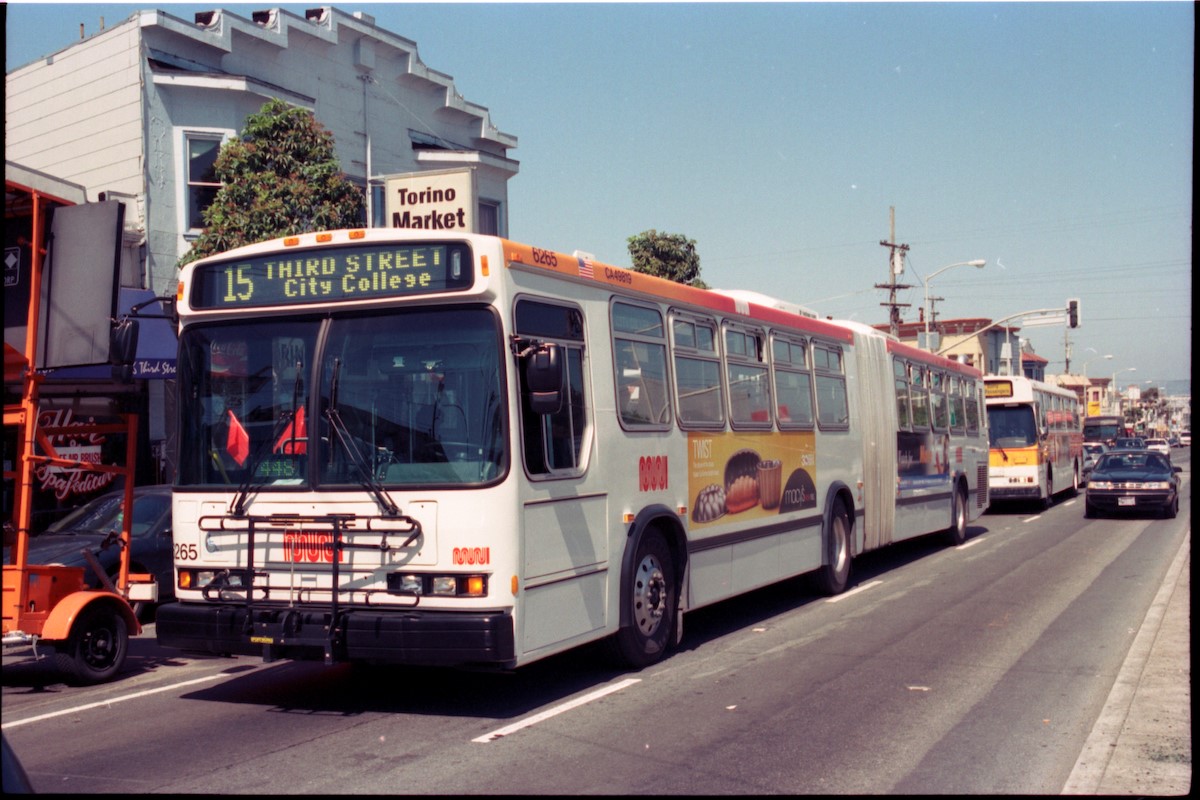
A 15 Third Street coach passes Torino Market at 3rd and Palou on its way out to City College in 2002.

A 15 Third Street coach passes Torino Market at 3rd and Palou on its way out to City College in 2002.

Rapid growth in Mission Bay in recent years has resulted in changing needs for people who travel to and through this corridor. So San Francisco residents began advocating for additional service, particularly through the Southeast Muni Expansion Project in 2018.  Based on public input, that project prioritized a more direct trip to downtown from the Bayview. Responding to these concerns, we established the “new” 15 Bayview Hunters Point Express in January 2021.
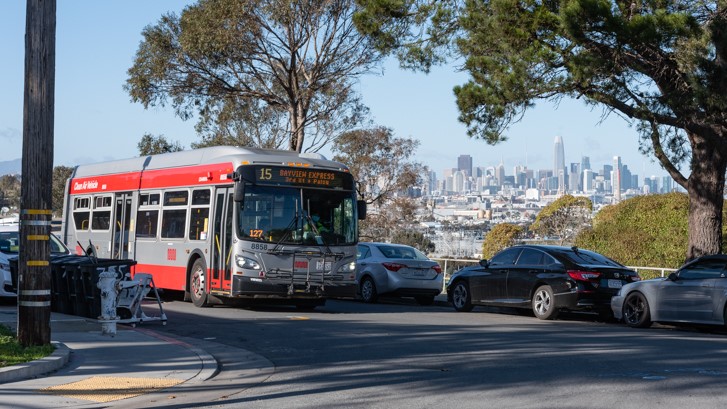
A 15 Bayview Hunters Point Express coach passes a city vista along Jerrold Ave in the Hunter’s Point neighborhood on January 25, 2021.

A 15 Bayview Hunters Point Express coach passes a city vista along Jerrold Ave in the Hunter’s Point neighborhood on January 25, 2021.

Starting out in Hunter’s Point and traveling to the transit hub at 3rd and Palou, the “new” 15 takes riders to locations within the neighborhood and then makes limited express stops to downtown and regional transit connections. The 15 Bayview Hunters Point Express route provides some of the same north-south connections as the original stagecoach and horse car lines back in the mid-1800s.  Just like its predecessors, it builds on a core 3rd Street service and offers a transportation option that seeks to meet the needs of today’s residents. 


Published April 08, 2021 at 06:48AM
https://ift.tt/3t1GUMa

Comments

Popular posts from this blog

150 Years Ago Today – The Cable Car is Born

150 Years Ago Today – The Cable Car is Born By Kelley Trahan August 2, 2023, marks the 150th anniversary of the world’s first successful cable railway, born right here in San Francisco. To celebrate the occasion, we bring you the story of Andrew Hallidie and the very first cable car company, the Clay Street Hill Railroad.  Andrew Hallidie (1834-1900) was a pioneering inventor and entrepreneur who changed urban transportation. In 1852, at the age of 18, Hallidie emigrated with his father from the United Kingdom to San Francisco during the California Gold Rush. His father, an engineer and inventor, had a wire rope patent that played a crucial role in his son's future success.   Portrait of Andrew Smith Hallidie in 1890. Inspired by his father's wire rope business, Hallidie developed a steel cable mineral mine hauling system in 1857. About a decade later, he designed a wire rope aerial tramway for transporting materials over mountainous terrain. Then, after a stint in bridg...

Shared Spaces are Here to Stay. Permit Renewals are Due January 15, 2023.

Shared Spaces are Here to Stay. Permit Renewals are Due January 15, 2023. By Anne Yalon Shared Spaces, amongst many other benefits, allows our residents and families to enjoy safe and social outdoor dining. Seen here are the the owners of Tio Chilo’s Grill and their children in the restaurant’s parklet on 24th Street in the Mission.  San Francisco’s popular Shared Spaces program allows merchants, restaurants and arts and culture organizations to use the curbside, sidewalk and other public spaces to conduct local business activities and stay afloat. What emerged as an economic lifeline during the pandemic is making San Francisco’s streets more energized, engaged and activated. Many of the Shared Spaces parklets have become central gathering places for the local community. “ Our parklet makes me feel like when I go to Mexico, where outdoor seating is everywhere. People end up joining their friends in our parklet. It is a space for our customers and our community," said Liz V...

Tenderloin Streets Transform During COVID-19

Tenderloin Streets Transform During COVID-19 By Kimberly Leung COVID-19 has disproportionately impacted people who live and work in the Tenderloin. As a result, the SFMTA has been working closely with District 6 Supervisor Matt Haney’s office, other city departments, the Tenderloin Traffic Safety Task Force and community members to address the public health issues and unique challenges in the neighborhood through innovative interventions.    The Tenderloin is home to many of our most vulnerable communities including historically marginalized groups such as people with disabilities, residents of SROs and supportive housing and limited-English proficient communities. With every single street in the Tenderloin on the city’s High Injury Network -- the 13 percent of San Francisco streets that account for 75 percent of severe traffic injury collision and fatalities -- thi...