By Jeremy Menzies
Eighty years ago on September 7, 1941, the San Francisco Municipal Railway launched its first all-electric bus route, the R Howard. Today the route no longer survives in its original form but the legacy of the R lives on in our electric trolley bus fleet and bus routes that serve the same area.
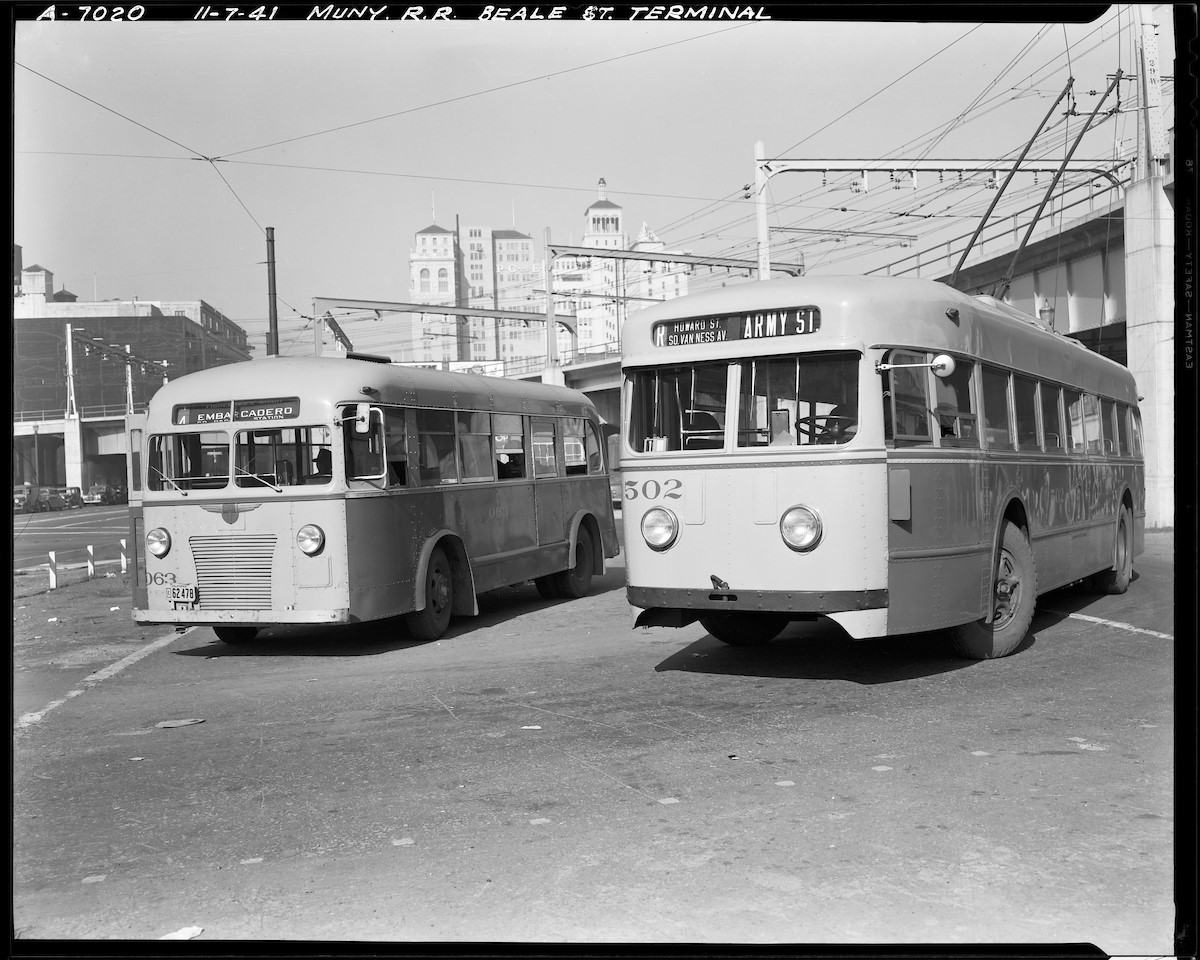 Two Muni buses lay over at the “Bridge Terminal” at Beale and Howard Streets in this November 1941 photograph. At left is the 4 Embarcadero, which ran along the waterfront and the recently established R Howard trolley bus at right.
The R traces its lineage back to the 35 Howard streetcar line, operated by the Market Street Railway Company. This line ran from the Ferry Building to 24th and Rhode Island Streets on Howard and South Van Ness. In 1939, when the company’s agreement to run the 35 expired, the city decided to establish the R Howard in its place. Electric trolley buses were chosen for the new service for their low cost of operation and to test the viability of these uncommon vehicles.
While the privately-operated 33 Ashbury/18th was the very first trolley bus route in the city, the launch of Muni’s R line marked the beginning of a new era for electric buses in San Francisco. Just a few years after starting the R, Muni decided to build on its positive experience with the route by converting many streetcar lines to trolley bus operation. Electric trolley buses were a natural choice for San Francisco because they could handle the hills without problems and utilize (with modification) the existing overhead electrical system that powered the streetcars they replaced. Add to that a lower cost of operation and these buses became the highest earning mode in the Muni system during the early 1950s.
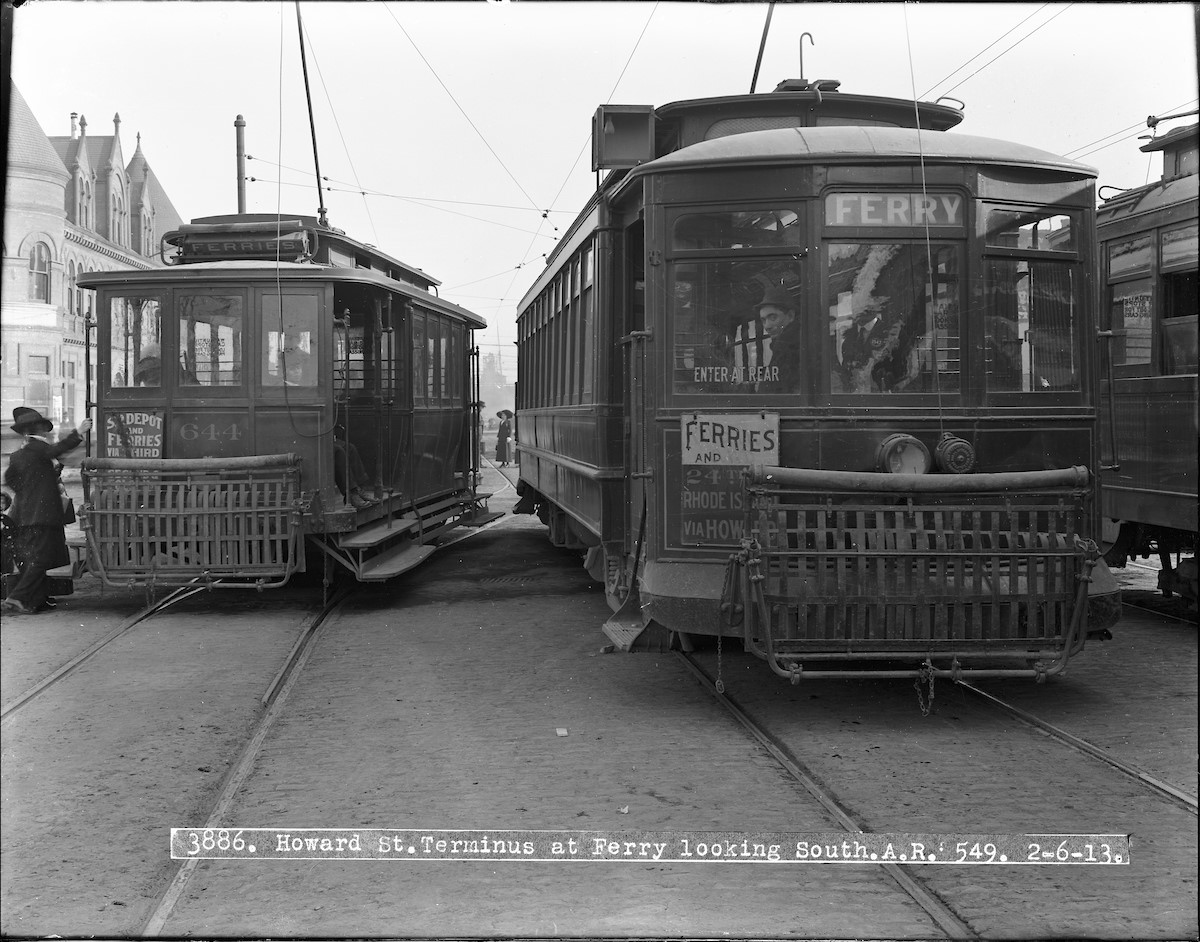 In this 1913 photo, streetcars await passengers at the terminal of the Howard Street Line just south of the Ferry Building.
In 1947, the R was combined with the E Union streetcar line to form the 41 Union-Howard route. Connecting the Presidio to the Mission via Russian Hill and Downtown, the 41 covered nearly 7 miles one-way. Over 20 years later in 1970, the route was modified again when Howard Street was converted into a one-way street. The 41 was split in two with the portion north of Howard remaining the 41 and the southern portion becoming the 12.
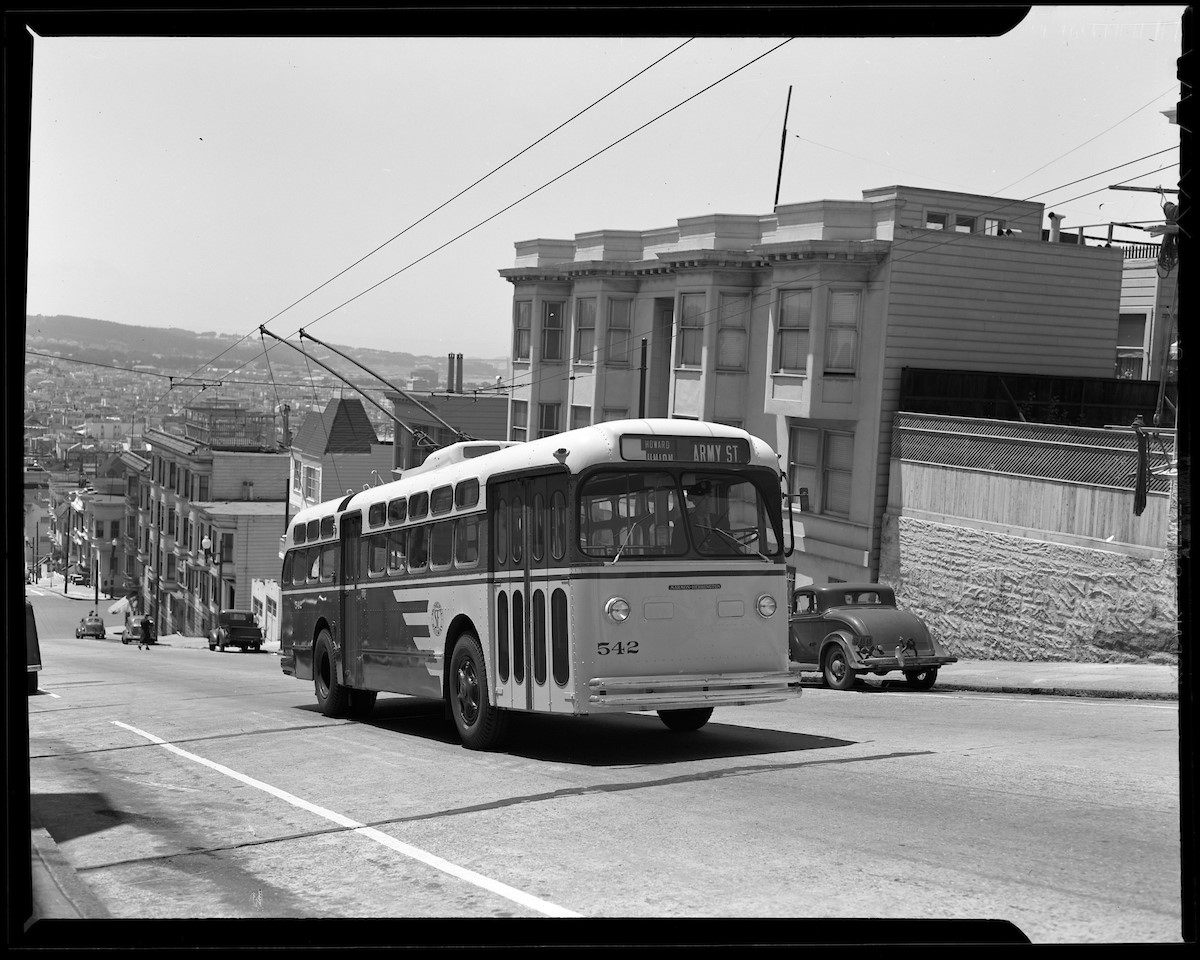 The 41 Union-Howard climbs Russian Hill heading for its terminal in the Mission in this 1948 photo taken on Union Street.
Today, the legacy of the R continues in the 12 Folsom-Pacific, which serves the original area of the R Howard, and in the numerous trolley buses that tirelessly climb hill after hill.
Published September 24, 2021 at 03:29AM
https://ift.tt/3u8p0J3
Comments
Post a Comment