Employee Vaccination Update

Employee Vaccination Update
By

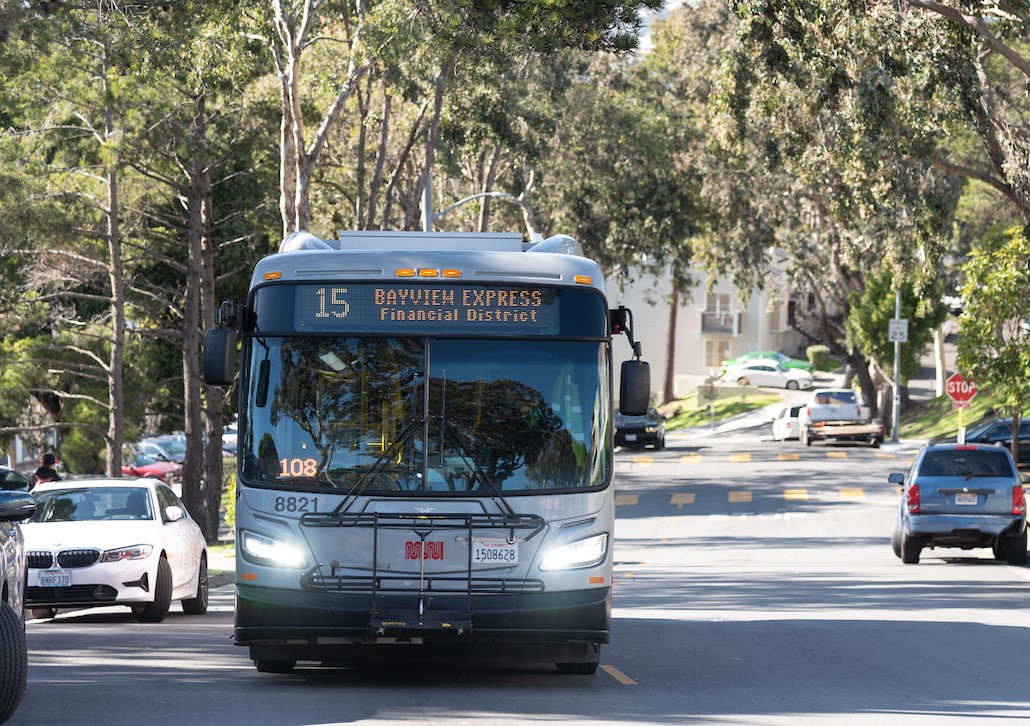
15 Bayview Hunters Point Express bus

As you may be aware, for the health and safety of City and County of San Francisco workers and the public, the city’s Department of Human Resources instituted a policy that all city employees need to be fully vaccinated by Nov. 1. 

The SFMTA fully supports vaccination, as it has been proven to be the best tool to protect each other against the dangers of COVID-19. Since the vaccines received emergency approval at the end of 2020, we have been educating our employees about the safety and efficacy of COVID-19 vaccines, encouraging them to get vaccinated and providing them with opportunities to get vaccinated on work time.  

Unfortunately, as of Sept. 30, we had 640 employees who were either unvaccinated or had not reported their vaccination status, which represents 11% of the SFMTA workforce. 

If several hundred of our employees are still unvaccinated as of Nov. 1 and are terminated, it will significantly impact transit operations and parking control in San Francisco. Up to four schools could be without crossing guards and approximately eight schools could see a reduction in the number of crossing guards serving them. 

Impact on transit operations: The number of unvaccinated transit operators is roughly equivalent to the total number of operators we plan to train and hire between June 2021 and December 2022. If this number is not significantly improved, we will be forced to reduce service back to May 2021 levels. 
 
Impact on parking control: If we can’t reduce the number of unvaccinated parking control officers before Nov. 1, the agency will be forced to partially suspend abandoned vehicle enforcement, booting, and commuter shuttle enforcement as well as reduce residential parking permit enforcement and meter enforcement. It could also impact disabled placard enforcement and shrink our Chase Stadium detail.  

We absolutely do not want any of our employees to lose their jobs or their incomes and are going to keep working to support them in complying with the mandate in every way we can. We have multiple teams working across the agency to improve this situation over the course of the next month, but as we hope and work for a better outcome we are simultaneously planning for the worst. 

We have begun continuity of operations planning based on pre-built scenarios, and it is time for us to inform our city leaders and the public of how this situation may impact the daily lives of our city’s residents. 

We will keep customers and the public updated and will report on this topic in more detail at our Board of Directors meeting today. You can tune in at 1 p.m. at SFGTV. For the latest, please follow us on Twitter @sfmta_muni or Facebook.


Published October 06, 2021 at 01:48AM
https://ift.tt/2ZZCz2B

Comments

Popular posts from this blog

150 Years Ago Today – The Cable Car is Born

150 Years Ago Today – The Cable Car is Born By Kelley Trahan August 2, 2023, marks the 150th anniversary of the world’s first successful cable railway, born right here in San Francisco. To celebrate the occasion, we bring you the story of Andrew Hallidie and the very first cable car company, the Clay Street Hill Railroad.  Andrew Hallidie (1834-1900) was a pioneering inventor and entrepreneur who changed urban transportation. In 1852, at the age of 18, Hallidie emigrated with his father from the United Kingdom to San Francisco during the California Gold Rush. His father, an engineer and inventor, had a wire rope patent that played a crucial role in his son's future success.   Portrait of Andrew Smith Hallidie in 1890. Inspired by his father's wire rope business, Hallidie developed a steel cable mineral mine hauling system in 1857. About a decade later, he designed a wire rope aerial tramway for transporting materials over mountainous terrain. Then, after a stint in bridg...

Shared Spaces are Here to Stay. Permit Renewals are Due January 15, 2023.

Shared Spaces are Here to Stay. Permit Renewals are Due January 15, 2023. By Anne Yalon Shared Spaces, amongst many other benefits, allows our residents and families to enjoy safe and social outdoor dining. Seen here are the the owners of Tio Chilo’s Grill and their children in the restaurant’s parklet on 24th Street in the Mission.  San Francisco’s popular Shared Spaces program allows merchants, restaurants and arts and culture organizations to use the curbside, sidewalk and other public spaces to conduct local business activities and stay afloat. What emerged as an economic lifeline during the pandemic is making San Francisco’s streets more energized, engaged and activated. Many of the Shared Spaces parklets have become central gathering places for the local community. “ Our parklet makes me feel like when I go to Mexico, where outdoor seating is everywhere. People end up joining their friends in our parklet. It is a space for our customers and our community," said Liz V...

Tenderloin Streets Transform During COVID-19

Tenderloin Streets Transform During COVID-19 By Kimberly Leung COVID-19 has disproportionately impacted people who live and work in the Tenderloin. As a result, the SFMTA has been working closely with District 6 Supervisor Matt Haney’s office, other city departments, the Tenderloin Traffic Safety Task Force and community members to address the public health issues and unique challenges in the neighborhood through innovative interventions.    The Tenderloin is home to many of our most vulnerable communities including historically marginalized groups such as people with disabilities, residents of SROs and supportive housing and limited-English proficient communities. With every single street in the Tenderloin on the city’s High Injury Network -- the 13 percent of San Francisco streets that account for 75 percent of severe traffic injury collision and fatalities -- thi...