
Women Pioneers at Muni: Adeline Svendsen and Muni’s First Newsletter

Women Pioneers at Muni: Adeline Svendsen and Muni’s First Newsletter
By Jeremy Menzies

To close out Women’s History Month, here’s a look back at one woman whose work to bring Muni staff together in the late 1940s created a legacy that lives on to this day. Adeline “Addy” Svendsen was founding editor of Muni’s first internal newsletter, “Trolley Topics.”
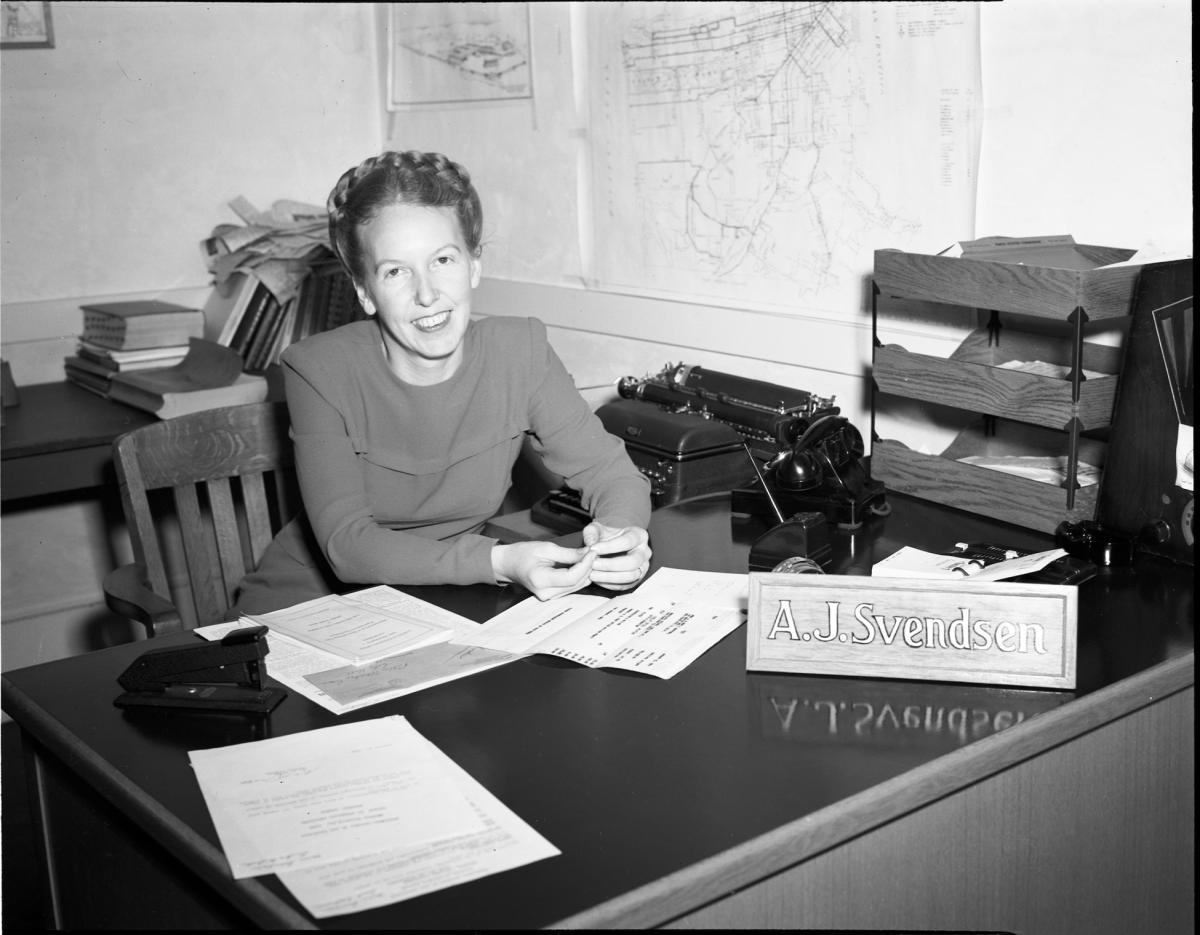
Adeline Svendsen sits at her desk in the Geneva Carhouse office building in this 1949 shot.

Adeline Svendsen sits at her desk in the Geneva Carhouse office building in this 1949 shot.

Trolley Topics was a new venture when it started in February 1946. As Svendsen wrote in the first issue it was created, “to bring a little fun, a little news, and a lot of good will to all our fellow employees in the Railway.”

Just two years prior in 1944, Muni merged with the Market Street Railway Company, expanding the small municipal operation into the largest transit provider in the city with hundreds of employees, vehicles of every shape and size, and dozens of facilities scattered across town. The newsletter was meant to help unite the two workforces (which historically had been in competition with each other) and keep everyone on the same page about what was happening across the railway.
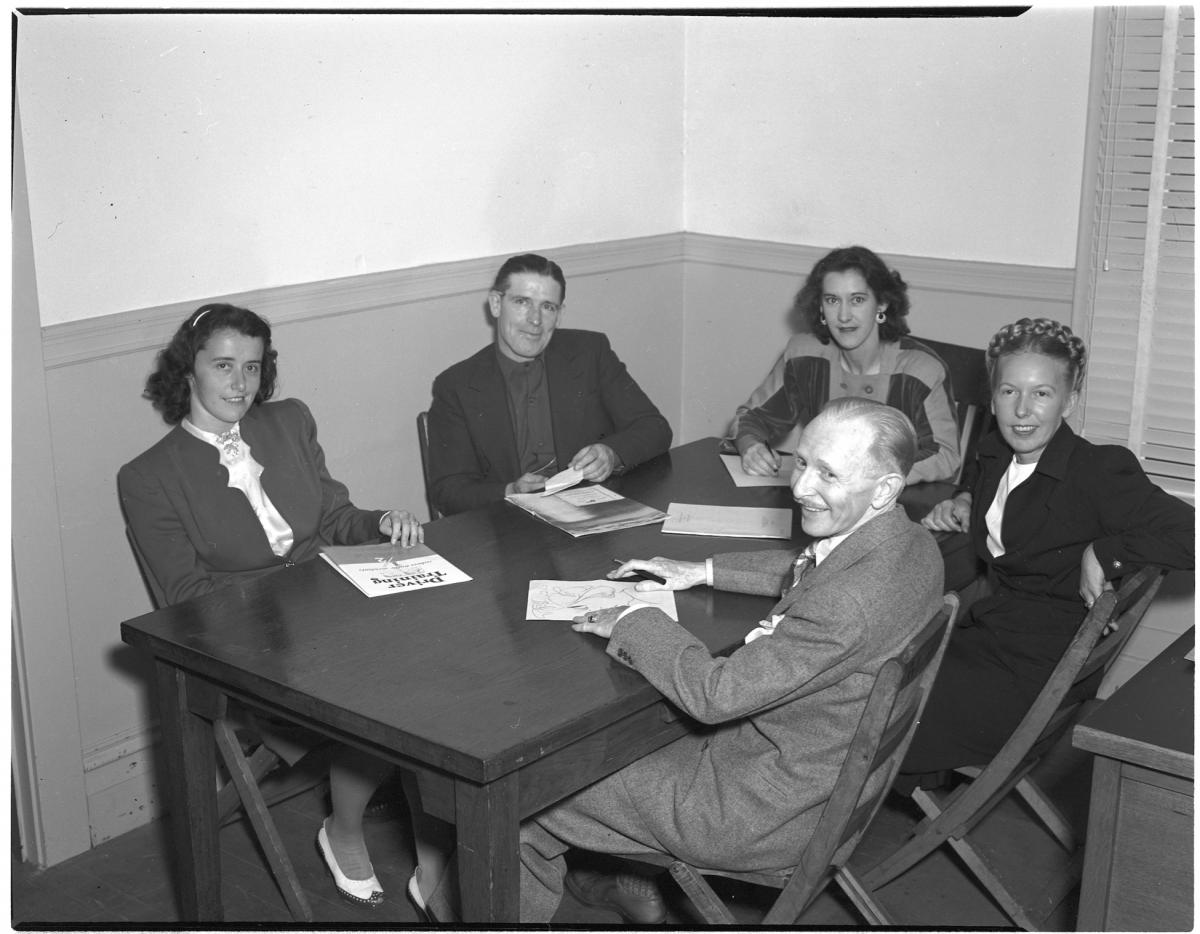
Group photo of Trolley Topics contributing staff in 1946. Clockwise from left: reporters Dolores Shea, Robert Fish, Maybelle Paetzel, editor Adeline Svendsen, and cartoonist Charles Reed.

Group photo of Trolley Topics contributing staff in 1946. Clockwise from left: reporters Dolores Shea, Robert Fish, Maybelle Paetzel, editor Adeline Svendsen, and cartoonist Charles Reed.

Through her perseverance and editorial savvy, Svendsen’s monthly quickly evolved from a bare-bones typewritten handout to a proper paper within just six-months of the first issue. Properly printed with an eye-catching front page, nicely laid out columns and photographs supplied mainly by the Muni Photography Department, Trolley Topics looked much like any professional magazine of the day.

Typically, each issue had sections for employee commendations, news from each division about staff activities, goofy transportation-centric cartoons, and articles about general railway announcements and programs. As the years progressed, the paper expanded its scope to include messages from the mayor, announcements about policy changes affecting city employees, more photos from staff events and awards, and occasional news from other departments.
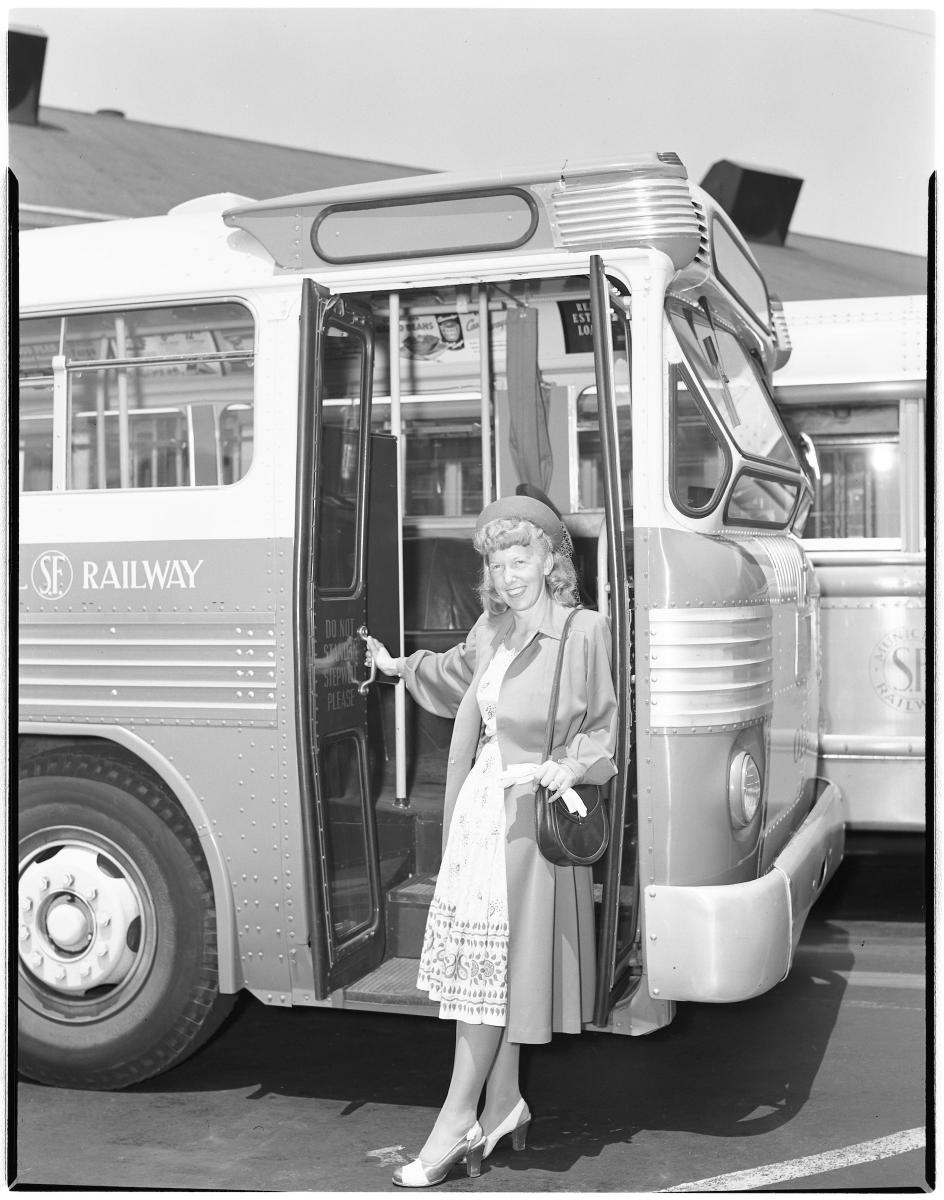
Svendsen poses with one of Muni’s newest buses in this 1947 photo taken at a bus garage once located on 24th and Utah streets.

Svendsen poses with one of Muni’s newest buses in this 1947 photo taken at a bus garage once located on 24th and Utah streets. 

Unfortunately, Adeline Svendsen left the Railway abruptly in 1952 and with her departure, the publication ceased production. Despite the short-lived run of the paper, Svendsen’s nearly seven-year project left an important mark on Muni.

Recognizing the importance of Svendsen’s original Trolley Topics, the newsletter was revived using the same name in 1973. Much like its predecessor, the 1970s Trolley Topics covered staff awards and events but also focused on major programs to improve the system. In mid-1980, the second run of the paper ceased production due to budget problems, with no replacement until the 1990s.

Not only did Adeline Svendsen’s Trolley Topics bring staff together and provide much needed information at the time it was published, her work offers inspiration for our ever expanding efforts to connect our nearly 6,000 colleagues today. Additionally, the stories and photos published in both the original and the revived Trolley Topics give us an invaluable glimpse into the operations and culture of Muni during those times.


Published March 31, 2022 at 02:41AM
https://ift.tt/rvyFWNU

Comments

Popular posts from this blog

150 Years Ago Today – The Cable Car is Born

150 Years Ago Today – The Cable Car is Born By Kelley Trahan August 2, 2023, marks the 150th anniversary of the world’s first successful cable railway, born right here in San Francisco. To celebrate the occasion, we bring you the story of Andrew Hallidie and the very first cable car company, the Clay Street Hill Railroad.  Andrew Hallidie (1834-1900) was a pioneering inventor and entrepreneur who changed urban transportation. In 1852, at the age of 18, Hallidie emigrated with his father from the United Kingdom to San Francisco during the California Gold Rush. His father, an engineer and inventor, had a wire rope patent that played a crucial role in his son's future success.   Portrait of Andrew Smith Hallidie in 1890. Inspired by his father's wire rope business, Hallidie developed a steel cable mineral mine hauling system in 1857. About a decade later, he designed a wire rope aerial tramway for transporting materials over mountainous terrain. Then, after a stint in bridg...

Shared Spaces are Here to Stay. Permit Renewals are Due January 15, 2023.

Shared Spaces are Here to Stay. Permit Renewals are Due January 15, 2023. By Anne Yalon Shared Spaces, amongst many other benefits, allows our residents and families to enjoy safe and social outdoor dining. Seen here are the the owners of Tio Chilo’s Grill and their children in the restaurant’s parklet on 24th Street in the Mission.  San Francisco’s popular Shared Spaces program allows merchants, restaurants and arts and culture organizations to use the curbside, sidewalk and other public spaces to conduct local business activities and stay afloat. What emerged as an economic lifeline during the pandemic is making San Francisco’s streets more energized, engaged and activated. Many of the Shared Spaces parklets have become central gathering places for the local community. “ Our parklet makes me feel like when I go to Mexico, where outdoor seating is everywhere. People end up joining their friends in our parklet. It is a space for our customers and our community," said Liz V...

Tenderloin Streets Transform During COVID-19

Tenderloin Streets Transform During COVID-19 By Kimberly Leung COVID-19 has disproportionately impacted people who live and work in the Tenderloin. As a result, the SFMTA has been working closely with District 6 Supervisor Matt Haney’s office, other city departments, the Tenderloin Traffic Safety Task Force and community members to address the public health issues and unique challenges in the neighborhood through innovative interventions.    The Tenderloin is home to many of our most vulnerable communities including historically marginalized groups such as people with disabilities, residents of SROs and supportive housing and limited-English proficient communities. With every single street in the Tenderloin on the city’s High Injury Network -- the 13 percent of San Francisco streets that account for 75 percent of severe traffic injury collision and fatalities -- thi...