By Jeremy Menzies
This month, our sister agency BART, celebrates its 50th anniversary. BART service changed transportation in the Bay Area forever, connecting communities in a way that hadn’t been done before. For San Francisco, the construction of BART not only provided new travel options within the city and to the East Bay but also built the Muni Metro system.
Here’s a look at some of BART’s history through the SFMTA’s historic photos.
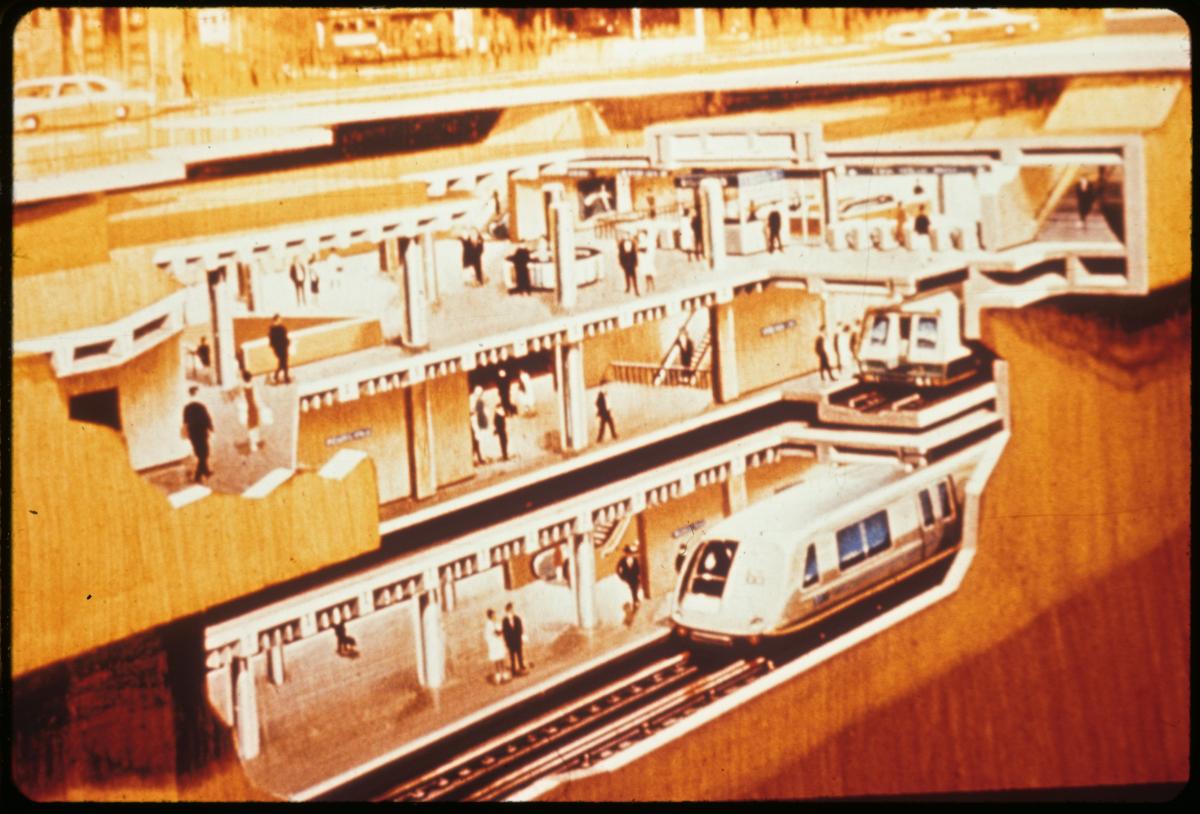 This conceptual drawing from around 1960 shows the combined BART and Muni Metro subway underneath Market Street at Powell.
The story of BART goes back decades before the opening in September 1972. It wasn’t until the early 1960s that a plan and funding were in place for BART to come to fruition.
Originally, five counties formed the Bay Area Rapid Transit District. In a 1960 engineering report, proposed route maps showed lines extending both north across the Golden Gate into Marin and south down the Peninsula to Palo Alto. After Marin and San Mateo counties withdrew from the district, a final plan was drawn up to serve mainly the East Bay and San Francisco.
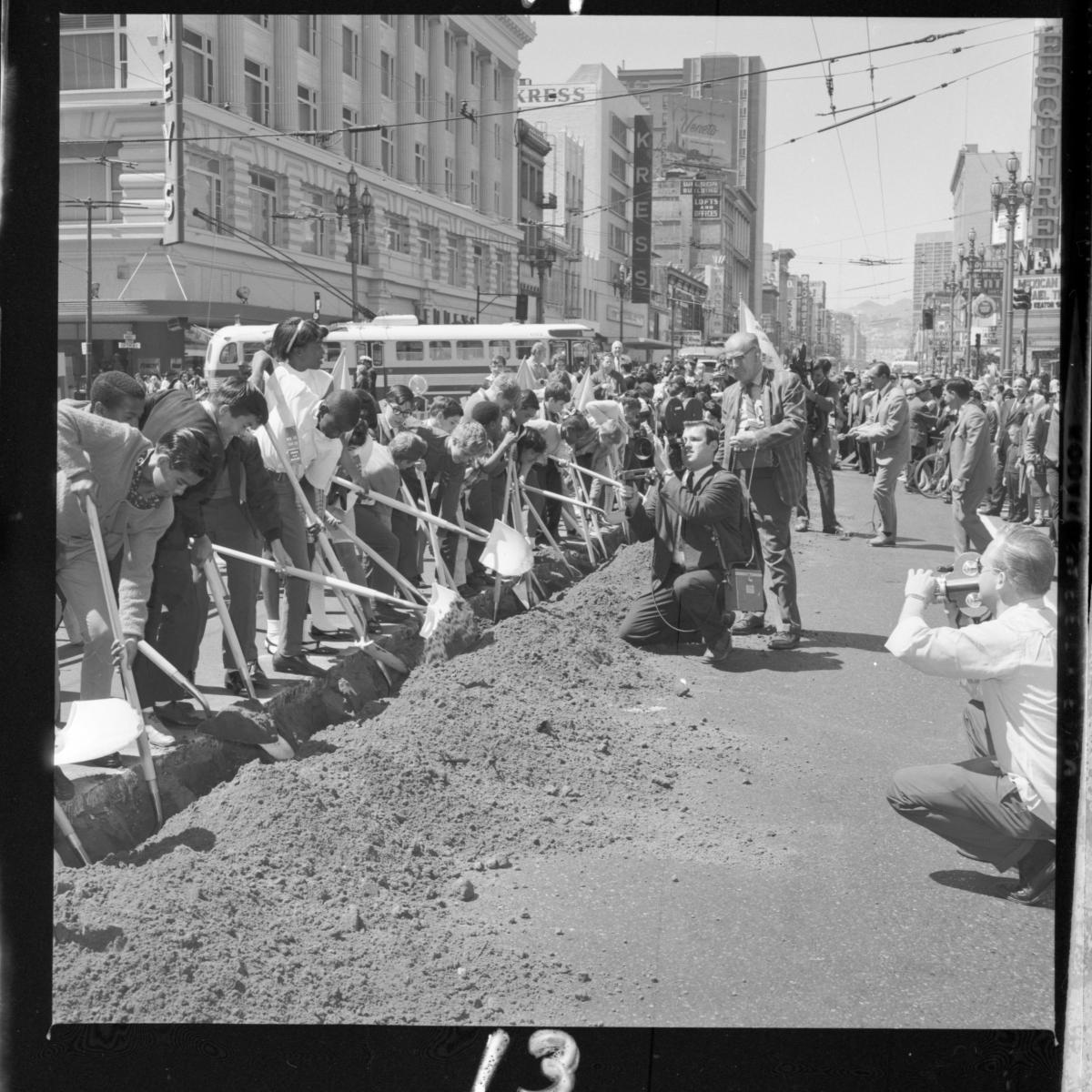
Students with white shovels were on hand for the groundbreaking ceremony for BART/Muni Metro at Market and Powell streets on July 25, 1967.
Groundbreaking on construction for San Francisco’s Market Street Subway took place in July 1967. This construction not only included the main BART stations downtown but also stations for Muni Metro at Church, Castro, and West Portal. Forest Hill Station was modified with new platforms and equipment to fit Muni’s incoming light rail vehicles. The funding and planning power of the BART District brought to life an idea that had been floated since at least 1913.
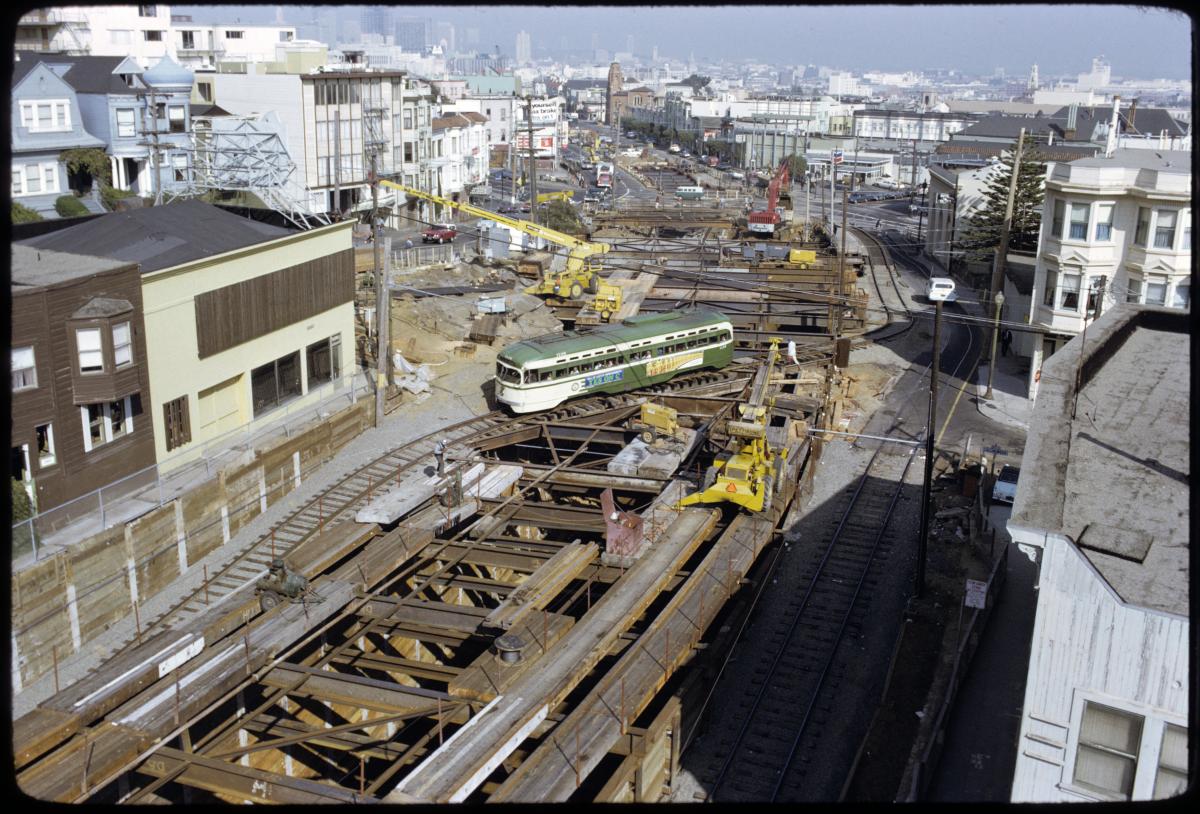
An overhead view looking at the construction of Castro Station in October 1973.
Construction along Market Street was extremely disruptive for the city’s busiest corridor. During construction, Muni streetcars and buses had to navigate constantly shifting reroutes, wooden plank roadways, and sinkholes on top of all the usual street hazards. One of the most dramatic engineering feats was a temporary bridge built over a huge open pit at Collingwood Street. Here, streetcars traveling towards West Portal crossed over top construction on Castro Station to enter the Twin Peaks Tunnel. The temporary ramps built to access the tunnel still exist today and are used for emergency and maintenance needs.
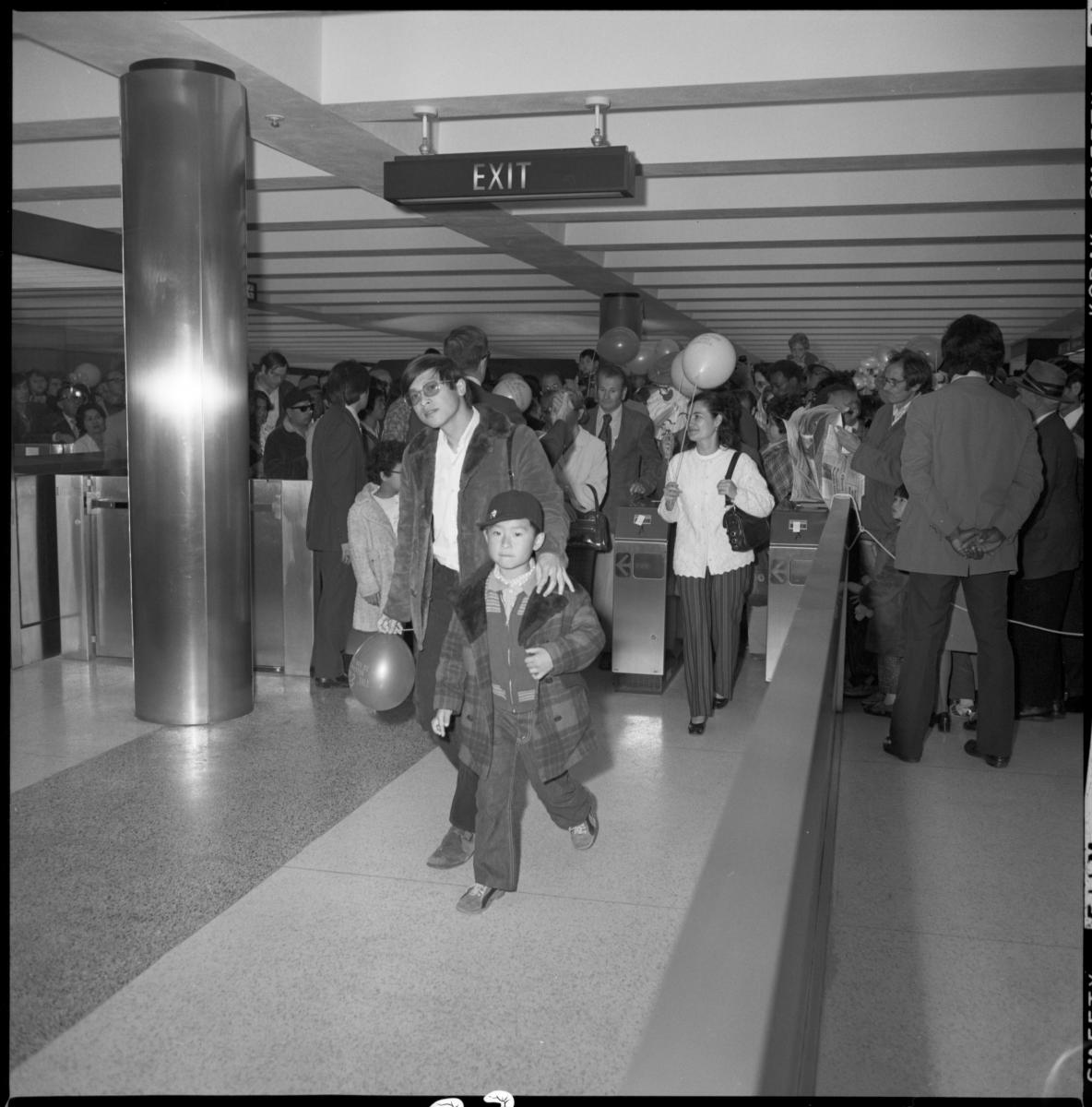
The first passengers pass through Powell Station fare gates at the opening of BART in the city on November 3, 1973.
BART opened in San Francisco on November 3, 1973. For the first time ever, San Franciscans could travel from downtown to the outer reaches of the city on an underground subway system. Service across the Bay opened ten months later in September 1974. BART gave San Franciscans from Balboa Park to downtown improved access to jobs, shopping, and education as well as connections around the region.
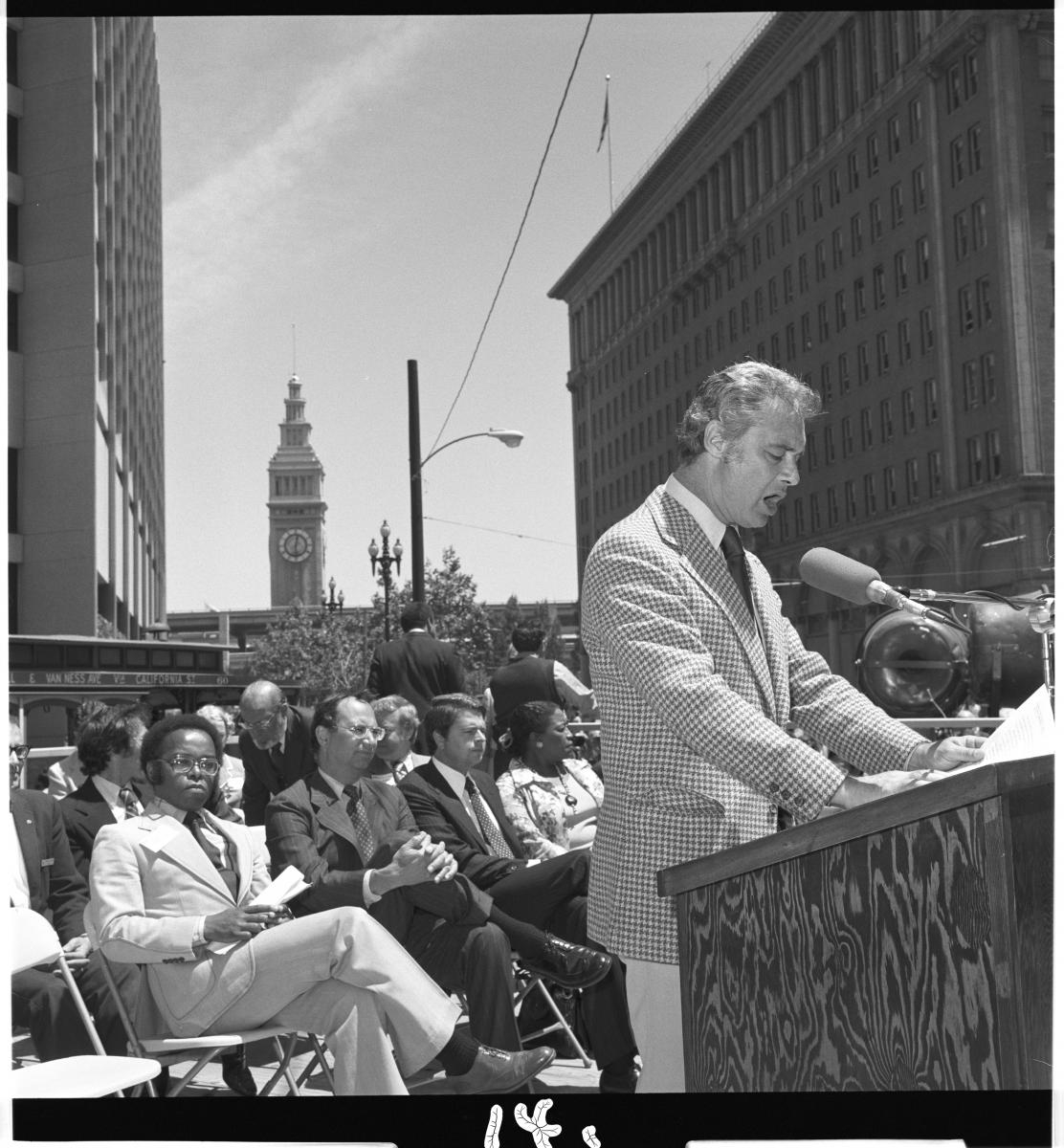
San Francisco Mayor Moscone speaks at the opening of Embarcadero Station at Market and Drumm Streets.
Embarcadero Station, which was not part of the original plan, was built after the main subway. It opened on May 27, 1976, with Mayor George Moscone giving a speech at the end of the California Street cable car line. Today, Embarcadero Station is the busiest in the system, with over 27,000 entries and exits logged in August 2022.
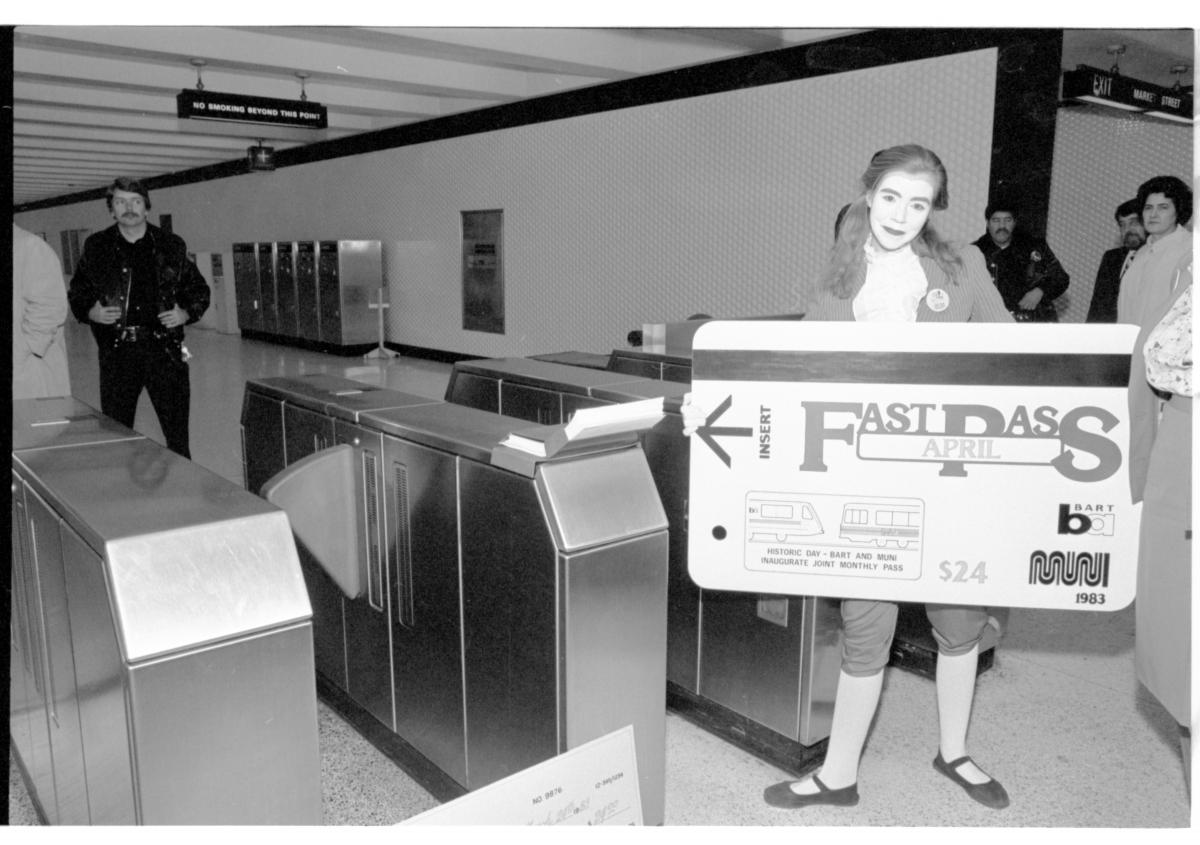
A mime holds up an oversized Muni/BART Fast Pass in Powell Station at the launch of the program on March 24, 1983.
In the early 1980s, Muni and BART partnered to improve transit within the city through a combined Muni/BART monthly Fast Pass. Muni customers could ride BART between Embarcadero and Balboa Park on the same pass, making transfers between the two systems seamless.
Today, BART is a critical part of our regional transportation network. Construction of BART in the mid-century also brought better service to the hundreds of thousands of Muni Metro riders within San Francisco.
As one of our regional transit partners, we congratulate BART on their golden anniversary and look forward to another 50+ years of serving the Bay together! Read more about BART’s first 50 years and check out some amazing historic documents and a timeline 1947-1991.
Published September 29, 2022 at 03:26AM
https://ift.tt/tRboy3V
Comments
Post a Comment