10 Reasons to Love San Francisco Parking Control Officers

10 Reasons to Love San Francisco Parking Control Officers
By Pamela Johnson

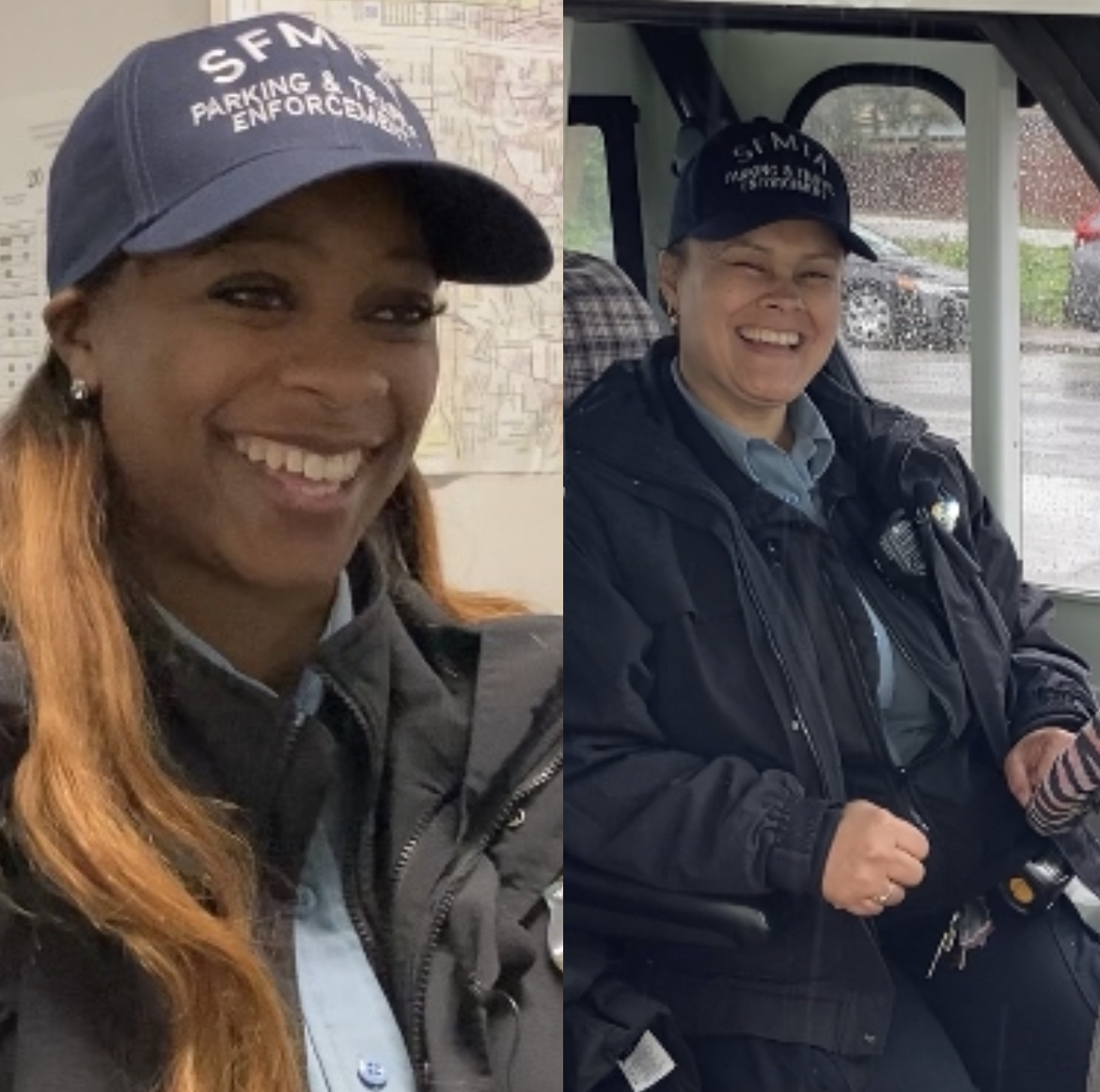
Two Parking Control Officers side by side smiling in an office setting and while sitting in a parking enforcement vehicle.

SMILE, ready for our close ups! To learn more about the day in the life of a hard working Parking Control Officer (PCO), take a look here.

It isn't easy being a parking control officer (PCO) in San Francisco. None of us likes to get a parking ticket, and we sometimes wrongly take out our frustrations on the PCOs who are simply doing their job to keep San Francisco moving.

To help you avoid veering off into negativity during your next encounter with an SFMTA Parking Control Officer, we’re providing you with this list of reasons you should actually love PCOs. Keep your favorite reason in mind next time you see a PCO on the street. Instead of getting angry with them, you might even consider appreciating them for dedicating themselves to this tough job rain or shine.

Top 10 reasons to love San Francisco Parking Control Officers: 

  1. They keep the intersections in the Financial District clear — and pedestrians safe — when commuters are desperately trying to get to the Bay Bridge at the end of the workday. 

  1. They respond to your complaints when someone’s car is blocking your driveway or there’s a vehicle that’s been parked on your street for so long that it might be abandoned. 

  1. They make sure disabled parking spots are available for people with disabilities — and aren’t being taken up by people who shouldn’t be using those spots. 

  1. They direct traffic during major sports events, including the Warriors and Giants games, so fans can get to the game on time. 

  1. They also direct traffic during major events like the Pride parade. On those days, they sometimes work 12-hour shifts to make sure the show goes on. 

  1. They respond in moments of crisis – like during the pandemic when they helped direct traffic in and out of COVID-19 testing and vaccination centers. 

  1. They make sure San Francisco firefighters can get to the fire hydrant when there’s a fire, which means making sure cars aren’t blocking the hydrant. 

  1. They support citywide efforts like the Healthy Streets Operation Center so city workers involved in addressing homelessness and unhealthy street behavior can do their jobs safely. 

  1. They stop people from double parking in the middle of the street, especially on retail corridors, which slows down Muni, creates traffic and can endanger pedestrians and people who bike, scoot, use a wheelchair or skateboard. 

  1. They’re happy to give you directions if you need them. 

There are many other things PCOs do to keep San Franciscans and city visitors safe and able to move around the city. So, let’s celebrate them instead of hating on them! And don’t forget, taking out your anger workers who provide you with a service is not okay. Ever. If you get a ticket you disagree with, contest the citation: Contest a Citation | SFMTA 

Text on a white background saying "Good People Tough Jobs"


Published April 11, 2023 at 10:32PM
https://ift.tt/xoQh59Z

Comments

Popular posts from this blog

150 Years Ago Today – The Cable Car is Born

150 Years Ago Today – The Cable Car is Born By Kelley Trahan August 2, 2023, marks the 150th anniversary of the world’s first successful cable railway, born right here in San Francisco. To celebrate the occasion, we bring you the story of Andrew Hallidie and the very first cable car company, the Clay Street Hill Railroad.  Andrew Hallidie (1834-1900) was a pioneering inventor and entrepreneur who changed urban transportation. In 1852, at the age of 18, Hallidie emigrated with his father from the United Kingdom to San Francisco during the California Gold Rush. His father, an engineer and inventor, had a wire rope patent that played a crucial role in his son's future success.   Portrait of Andrew Smith Hallidie in 1890. Inspired by his father's wire rope business, Hallidie developed a steel cable mineral mine hauling system in 1857. About a decade later, he designed a wire rope aerial tramway for transporting materials over mountainous terrain. Then, after a stint in bridg...

Shared Spaces are Here to Stay. Permit Renewals are Due January 15, 2023.

Shared Spaces are Here to Stay. Permit Renewals are Due January 15, 2023. By Anne Yalon Shared Spaces, amongst many other benefits, allows our residents and families to enjoy safe and social outdoor dining. Seen here are the the owners of Tio Chilo’s Grill and their children in the restaurant’s parklet on 24th Street in the Mission.  San Francisco’s popular Shared Spaces program allows merchants, restaurants and arts and culture organizations to use the curbside, sidewalk and other public spaces to conduct local business activities and stay afloat. What emerged as an economic lifeline during the pandemic is making San Francisco’s streets more energized, engaged and activated. Many of the Shared Spaces parklets have become central gathering places for the local community. “ Our parklet makes me feel like when I go to Mexico, where outdoor seating is everywhere. People end up joining their friends in our parklet. It is a space for our customers and our community," said Liz V...

Tenderloin Streets Transform During COVID-19

Tenderloin Streets Transform During COVID-19 By Kimberly Leung COVID-19 has disproportionately impacted people who live and work in the Tenderloin. As a result, the SFMTA has been working closely with District 6 Supervisor Matt Haney’s office, other city departments, the Tenderloin Traffic Safety Task Force and community members to address the public health issues and unique challenges in the neighborhood through innovative interventions.    The Tenderloin is home to many of our most vulnerable communities including historically marginalized groups such as people with disabilities, residents of SROs and supportive housing and limited-English proficient communities. With every single street in the Tenderloin on the city’s High Injury Network -- the 13 percent of San Francisco streets that account for 75 percent of severe traffic injury collision and fatalities -- thi...